REVIEW · LA GOMERA DAY TRIP
VIP tour of La Gomera from Tenerife
Book on Viator →Operated by Get Holiday · Bookable on Viator
A long ferry day can be worth it. This VIP La Gomera trip turns a tough island to reach into a smooth, well-paced route with an official guide and a small group. You’ll get taken off the main tourist path on narrow roads, so the island feels like more than a checklist.
What I like most is the mix of stops: big rock scenery at Roque de Agando, then a real walk inside Garajonay National Park at La Laguna Grande. You also get hands-on cultural moments in Chipude and El Cercado, with breaks to sample local treats and see traditional crafts.
One drawback to factor in: it’s a long day (about 11 hours) and the transport is a small minibus. One tall passenger reported tight legroom, so if you’re on the taller side, plan for a “sit and enjoy the ride” kind of day.
In This Review
- Key highlights you’ll feel on this tour
- The big idea: why La Gomera from Tenerife feels practical
- Price and value: what $168.36 buys you on a full-day island hop
- Getting started smoothly in Los Cristianos (and why it matters)
- Stop-by-stop: San Sebastián to Roque de Agando (rocks that explain the island)
- San Sebastián de La Gomera (first look at the island)
- Roque de Agando (the “emblematic rock” moment)
- Chipude: church break, local products, and a fortress turned natural monument
- El Cercado and the Loceras pottery tradition (craft you can actually see)
- From Mirador Punta del Belete to La Laguna Grande: microclimates in one long day
- Mirador Punta del Belete (deep ravines + human history)
- La Laguna Grande (Garajonay National Park laurel forest walk)
- Mirador de Juego de Bolas: the new visitor center and a cookie stop
- San Sebastián again: old-town time plus the return ferry to Tenerife
- What to wear and pack for a day of viewpoints and forest
- Who should book this VIP La Gomera tour
- Final verdict: should you book?
- FAQ
- How long is the VIP tour of La Gomera from Tenerife?
- What is included in the price?
- Is lunch included?
- How many people are on the tour?
- Where is the meeting point in Tenerife?
- What time does the tour start?
- Do I need to bring an ID for boarding?
- Is the tour suitable for everyone?
- Does the tour require specific weather?
- What is the cancellation policy?
Key highlights you’ll feel on this tour
- Small group size (max 18), with reports of even smaller groups in practice
- Official guide in the Canary Islands style, plus a host who guides with care (Basso is repeatedly mentioned by name)
- Garajonay National Park at La Laguna Grande, including time to relax and listen for the gomero whistle
- Multiple viewpoints that show how La Gomera changes with altitude and weather
- Pottery culture in El Cercado, via the Loceras tradition carried forward by women artists
- Newer visitor center stop at Mirador de Juego de Bolas (opened end of August 2024)
The big idea: why La Gomera from Tenerife feels practical
La Gomera is one of those islands that rewards slow travel. But most people visiting Tenerife don’t have slow days to spare. This tour solves that problem by doing the hard part for you: the ferry and the full ground routing.
You start in Tenerife (Los Cristianos area) and head to San Sebastián de La Gomera, then you work through a route that hits geology, culture, and viewpoints in a logical order. The pacing is what makes it click. You’re not stuck on one road for hours without stops, and you’re not rushed through every photo spot either.
The VIP angle is less about fancy extras and more about group size and planning. With up to 18 people—and often smaller in practice—you get a quieter bus ride and more chances to ask questions. That matters on an island where the details (rocks, microclimates, traditional land use) are the whole point.
You can also read our reviews of more tours and experiences in Tenerife

Price and value: what $168.36 buys you on a full-day island hop
At $168.36 per person, you’re paying for a full day that includes: pick-up, air-conditioned vehicle, ferry, and an official guide. Lunch isn’t included, so budget for that extra cost if you want a sit-down meal.
When I size up the value, I ask two questions:
1) Are the big logistics handled? Yes—pickup plus ferry are included, and you don’t have to coordinate schedules between islands and buses.
2) Are you getting meaningful stops? Yes. The route includes major landmarks (Roque de Agando, viewpoints over deep ravines, Garajonay’s laurel forest) plus cultural stops (Chipude church break; El Cercado’s Loceras pottery tradition).
If your alternative is trying to DIY this by renting a car, you’d spend time sorting timing and driving on winding mountain roads. Here, your driver and guide already know the flow, and you’re dropped at viewpoints and cultural stops at the right moments.
Getting started smoothly in Los Cristianos (and why it matters)
Your day begins at the Fred. Olsen Express meeting point in Los Cristianos, specifically Puerto de los Cristianos, Zona embarque B. Pickup is offered, which is a big deal when you’re trying to beat the day’s first ferry timing without stress.
You start at 9:00 am, and you’ll need an identity document or passport to board the ferry. You’ll also receive a mobile ticket, so it’s one less thing to print.
One small practical note: the day runs long, so make the morning comfortable. Bring a light layer for the island’s changing weather. You’ll be outdoors at viewpoints, and fog or haze can roll in quickly on mountainous terrain.
Stop-by-stop: San Sebastián to Roque de Agando (rocks that explain the island)
San Sebastián de La Gomera (first look at the island)
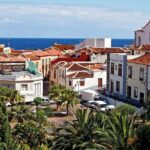
This is your kick-off point after arriving by ferry. You get a 20-minute stop in San Sebastián de la Gomera, a compact start that helps you adjust to the island’s rhythm before the bigger scenery moments.




Roque de Agando (the “emblematic rock” moment)
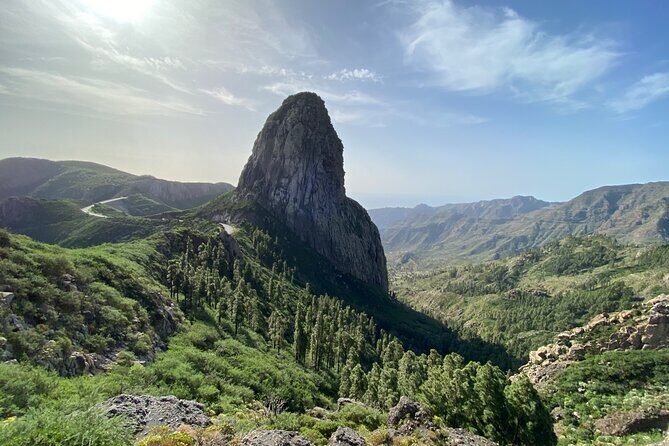
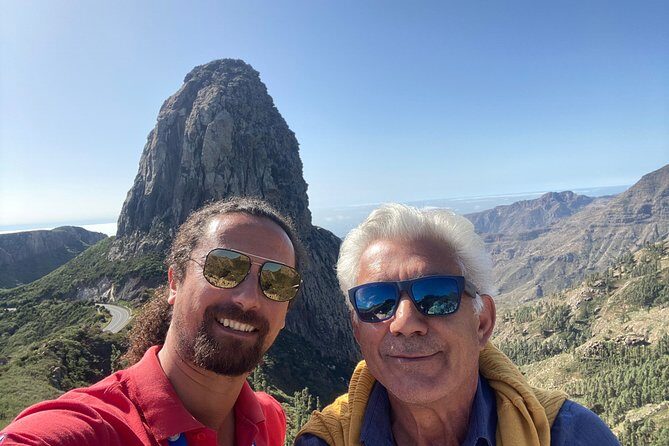
Next comes Roque de Agando, where you admire the monument of rocks and that standout formation: a phonolitic python about 1,250 meters high. Even without technical geology, it’s a powerful way to understand how La Gomera’s terrain was shaped.
The timing is short—about 20 minutes—but it’s enough to get photos and listen to the guide’s explanations. This is where a good guide helps you read the island instead of just looking at it.
Chipude: church break, local products, and a fortress turned natural monument
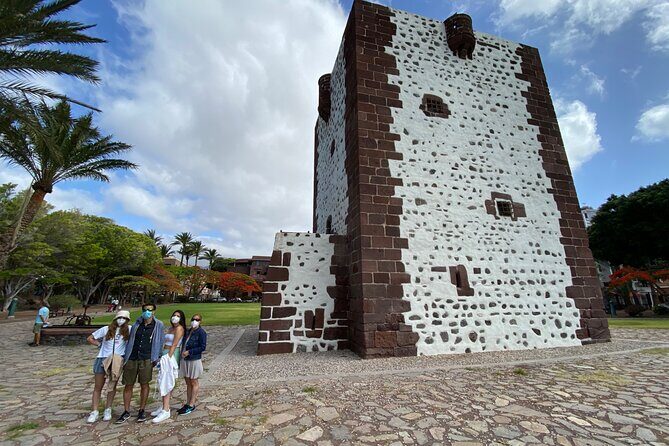
Chipude is one of those stops where the tour slows down just enough to feel local. You have a 30-minute break in the main square to visit the church of La Candelaria and take time for a palate break with typical La Gomera products.
Then you head to the Fortress area, which today is protected as a natural monument. The way this works is smart: you get culture (church and village square) and you get land history (fortress as a natural, protected feature), all without adding extra driving time.
If you care about authentic textures—church fronts, village life, and small-scale food sampling—this stop is a good “reset” between long scenic stretches.
El Cercado and the Loceras pottery tradition (craft you can actually see)
At El Cercado, you visit the museum dedicated to the Loceras—a group of women who keep pottery tradition alive. The stop is 30 minutes, which means you won’t be stuck for an hour in one room, but you’ll have time to understand what the tradition is and why it continues.
This is one of the most worthwhile cultural stops on the route because it’s not just a photo spot. Pottery is a craft tied to place—materials, techniques, and generational work. Seeing it in a focused museum format helps the island feel lived-in, not staged.
Practical tip: bring a little patience for this segment. Museums need a slower mindset than viewpoints do.
From Mirador Punta del Belete to La Laguna Grande: microclimates in one long day
Mirador Punta del Belete (deep ravines + human history)
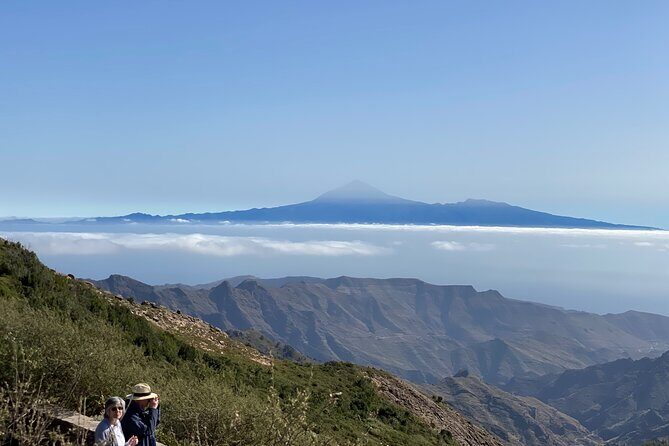
At the viewpoint you can admire El Palmarejo, associated with César Manrique, and then you look down into what the guide calls the deepest ravine of La Gomera. You’ll hear about the layers of lava—how the land’s history is written into geology.
There’s also a human layer here: the tour mentions how past farmers used the best of every inch of soil for sugarcane production, which ties the scenery to daily life instead of treating it as decoration.
This stop is brief—10 minutes—but it’s a high-impact one. Viewpoints work best when you can pause, not sprint.
La Laguna Grande (Garajonay National Park laurel forest walk)
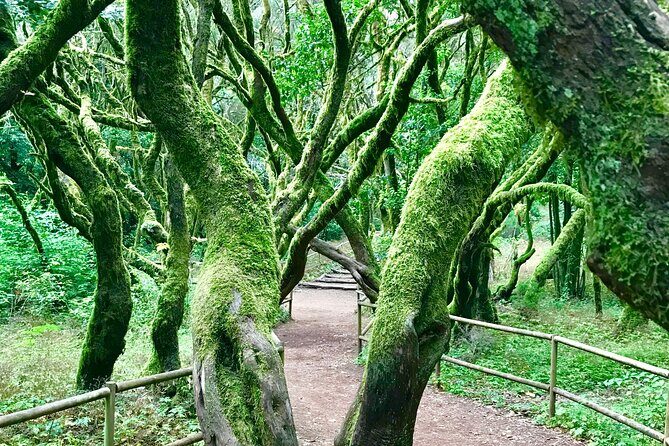
Then you shift into Garajonay National Park at La Laguna Grande, where you’ll walk along a path through the laurel forest ecosystem. This segment is 1 hour 30 minutes, including time at the restaurant area.
That matters because the park experience isn’t only about walking. You’ll also have time to taste typical food and listen for the gomero whistle, the local language element recognized as a World Heritage Site.
If you want a “La Gomera feels different here” moment, this is it. The forest changes the whole tone of the day—cooler, softer, more sheltered. Even on days when weather is tricky, the forest walk tends to deliver.
Mirador de Juego de Bolas: the new visitor center and a cookie stop
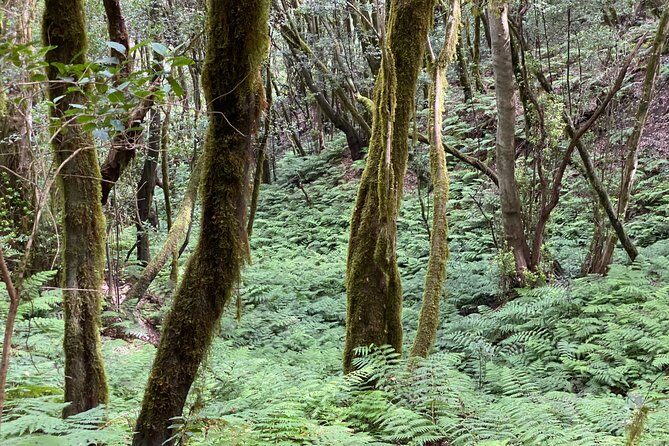
Mirador de Juego de Bolas includes 35 minutes at the new visitor center, opened at the end of August 2024. You can explore geological age explanations for La Gomera and you can buy and taste gomera cookies.
There’s also a viewpoint above the center where you can see the National Park greenery. This is a “small but smart” stop. It bridges the earlier rock and ravine story with a more guided explanation of the island’s formation and how people lived with it.
If you enjoy learning during downtime—rather than only at the bus window—this center stop will feel like a good use of time.
San Sebastián again: old-town time plus the return ferry to Tenerife
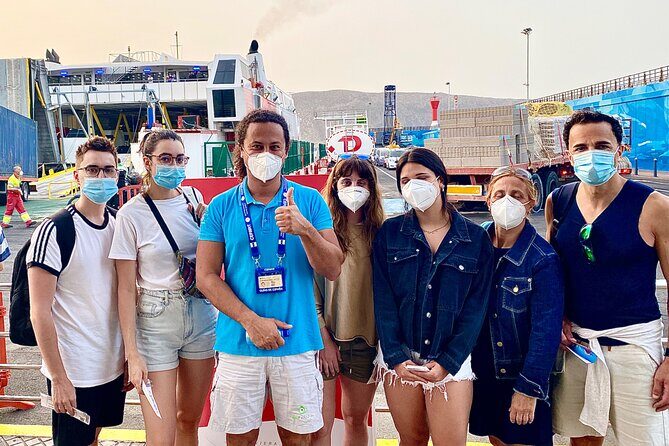
On the way back, you have 45 minutes of free time in San Sebastián de la Gomera. This is when you can look around the old town and visit the tower of the count, described as the oldest military building in the entire Atlantic Ocean.
Then you head back to Puerto de San Sebastián de La Gomera and take the ferry to Tenerife. The ferry portion is 1 hour, and once you’re back, the tour ends back at the meeting point area.
This late-day structure helps. You get a first look early, then you return with daylight and enough time to wander without feeling like you’re missing your ride back.
What to wear and pack for a day of viewpoints and forest
Because the route hits exposed viewpoints and then sheltered forest, you need layers. Even when the forecast looks fine, mountain fog and haze can roll through.
What I’d pack:
- A light rain layer or windbreaker
- Comfortable walking shoes for the path at La Laguna Grande
- Sunglasses and sunscreen, just in case the sun clears
- Water for the bus and stops (lunch isn’t included)
And if you’re tall: pay attention to comfort. One passenger reported that the bus felt tight, especially in legroom.
Who should book this VIP La Gomera tour
This tour is best for you if:
- You want a guided, efficient way to see La Gomera without sorting ferry times and driving routes yourself
- You like a small group and prefer asking questions without a crowd
- You want a blend of geology, culture, and nature in one day
- You value Garajonay National Park and the gomero whistle experience
It’s less ideal if:
- You strongly prefer slow travel and lots of free time each stop
- You dislike long seat time in a small vehicle (especially if legroom is a concern)
Final verdict: should you book?
If your goal is to experience the best of La Gomera while staying based in Tenerife, I’d book this. The official guide, the small group size, and the way the route balances viewpoints with Garajonay’s laurel forest make the day feel worth the time.
Just go in with realistic expectations: it’s long, it’s full, and lunch is on you. But if you want the island’s highlights organized for you—and you’re okay with a packed-but-not-panicked schedule—this VIP format is a very solid deal.
FAQ
How long is the VIP tour of La Gomera from Tenerife?
It lasts about 11 hours.
What is included in the price?
The tour includes an air-conditioned vehicle, pickup, the ferry, and an official guide.
Is lunch included?
No, lunch is not included.
How many people are on the tour?
The group is limited to a maximum of 18 travelers.
Where is the meeting point in Tenerife?
The meeting point is Fred. Olsen Express, Puerto de los Cristianos, Zona embarque B, Los Cristianos, Santa Cruz de Tenerife.
What time does the tour start?
The start time is 9:00 am.
Do I need to bring an ID for boarding?
Yes. You must present your passport or identity document to board the ferry.
Is the tour suitable for everyone?
Most travelers can participate. Still, it involves long sitting time in a small minibus, so comfort may vary.
Does the tour require specific weather?
Yes. It requires good weather. If canceled due to poor weather, you’ll be offered a different date or a full refund.
What is the cancellation policy?
Free cancellation is available up to 24 hours in advance for a full refund.