REVIEW · EVENING EXPERIENCES
Tenerife: Teide National Park Sunset & Stargazing Tour
Book on GetYourGuide →Operated by Tenerife Stars · Bookable on GetYourGuide
Teide turns the night into front-row seats. This Tenerife Stars tour pairs a sunset stop above the clouds with Ozzy-style astronomy hosting and powerful telescopes aimed right at the sky. It’s a strong mix of volcanic scenery, guided star explanations with green laser pointers, and real observing—though the night can get very cold, so plan for layers.
I like that the group doesn’t just look up and guess. You get guided targets (from the Moon to nebulae and clusters, depending on the night) plus telescope time where you can actually see details, not just stars as pinpricks. One more thing I appreciate: you’re trying for the best sky conditions possible, not a fixed script.
The main consideration is simple: clouds and sky conditions can change the show. Even on a good night, the Moon’s brightness and seasonal planet visibility affect what you’ll get, and there are nights when the sky feels less dramatic than you hoped.
In This Review
- Key things you’ll notice fast
- What this tour really gives you: sunset plus guided telescope time
- Pickup, travel time, and how the evening is paced
- Dinner stop: good for energy, a mixed bag for vibes
- The viewpoint and sunset above the clouds (your best “wow” target)
- Teide National Park: what the guided portion is like
- Telescope targets: Moon, Saturn, nebulae, and what changes by season
- Shooting stars and laser-pointer constellation time
- The guide factor: why Ozzy (and others) changes everything
- Cold weather reality check: how to dress so you enjoy it
- Price and value: is $47 a good deal?
- Logistics to plan around: no toilets where you might hope
- Who should book this tour, and who should skip
- Should you book Tenerife Stars’ Teide Sunset & Stargazing Tour?
- FAQ
- How long is the Tenerife Teide sunset and stargazing tour?
- Does the tour include pickup from the north of Tenerife?
- What can I see through the telescopes?
- Are planets always visible during the tour?
- When can I see the Milky Way?
- Is the dinner included, and are there kid options?
Key things you’ll notice fast
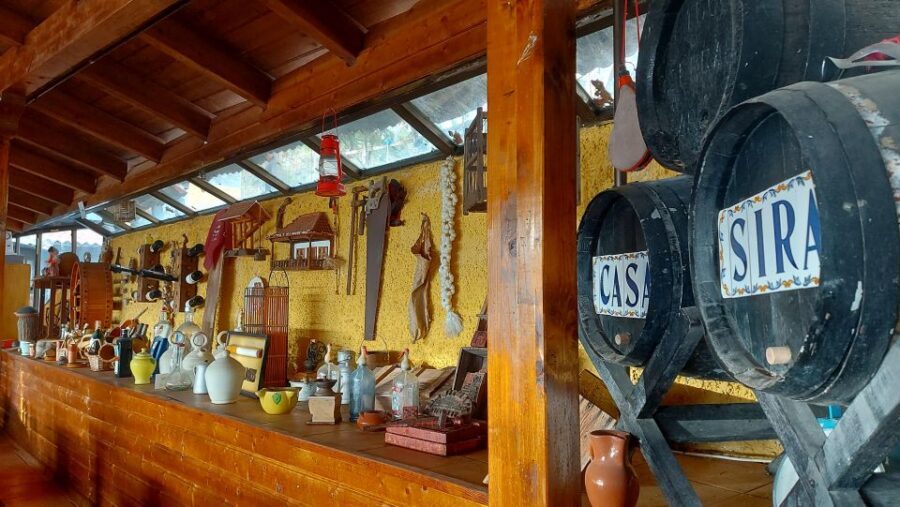
- Teide’s certified-dark-sky setting means less light pollution and better views through a telescope
- Green laser pointers help you map constellations quickly, even if astronomy isn’t your hobby
- Telescope targets vary by season and moon phase, so the guide explains what’s realistic that night
- Sunset above the clouds is the best fixed moment; it can be stunning when the cloud layer sits right
- Cold-weather comfort matters: you’ll want gloves, a scarf, and more than a light jacket
- Optional pro photos are available, but you’ll pay extra if you want the upgrade
What this tour really gives you: sunset plus guided telescope time
If you’re in Tenerife and you want one “only-here” memory, Teide National Park is the move. The tour is built around the contrast: first that big sunset moment above the clouds, then the switch to night-sky observing in a low-light area.
What makes it worth your time is the pacing. You don’t rush straight into stargazing; you spend time settling into the evening, then you get structured guidance so you understand what you’re seeing. And when you get to the telescopes, you’re not just staring—you’re using the instruments with a guide who points and explains.
You can also read our reviews of more evening experiences in Tenerife
Pickup, travel time, and how the evening is paced
You start with pickup from selected meeting points in the south—Costa Adeje, Playa de las Américas, and Los Cristianos are the big hubs. If you book the option with transportation, you’ll ride in an air-conditioned vehicle, and your exact pickup spot is confirmed by the provider in the morning of the tour day.
Once you’re on board, the schedule flows in a few chunks. There’s a short drive, then a meal stop (if you chose the meal option), then a sunset/photo viewpoint, and finally Teide National Park for the guided stargazing segment.
One practical note: some timing depends on the day and season. The tour’s duration can run from about 3 hours up to around 6.5 hours, and pickup times shift with daylight and weather.
Dinner stop: good for energy, a mixed bag for vibes
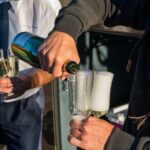
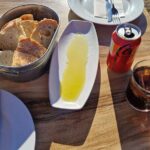
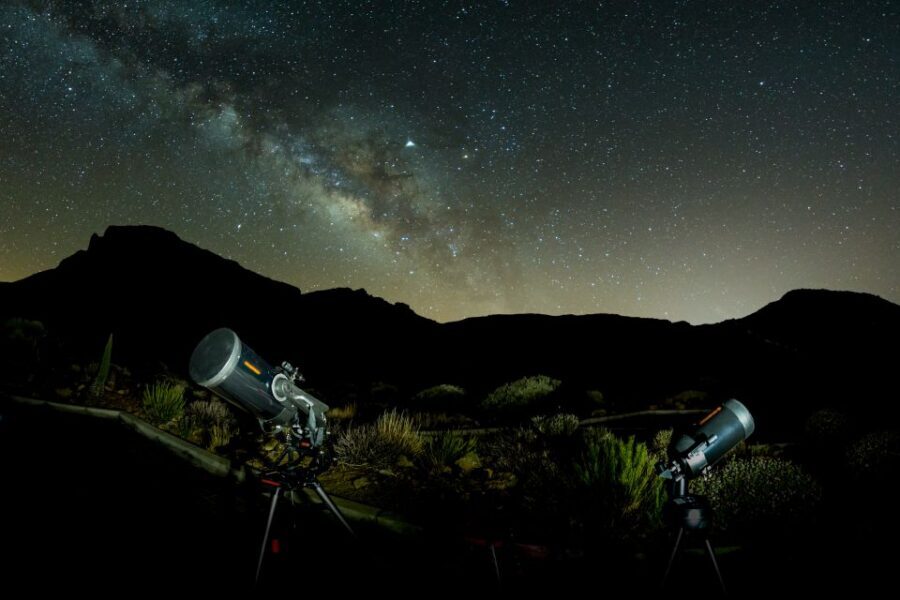
If you select the 3-course dinner option, you’ll stop at a traditional village restaurant for about 75 minutes. The meal described is pumpkin soup, roast chicken with canary potatoes and salad, and chocolate mousse, with soft drinks, water, and wine included. Vegetarian and vegan options are available, and gluten-free/celiac options are possible. Kids get a children’s meal (chicken nuggets and French fries).
If you don’t choose the meal, the tour still includes time at the restaurant area—about an hour of free time for the rest of your group to eat. You can buy drinks at the bar or terrace with sea views, and you can bring your own snack or picnic if you want.
The big thing to know is how this stop affects your evening comfort. The temperature drops quickly at altitude, so fueling up helps. On the downside, the restaurant area isn’t set up for wandering, and there’s no mention of toilets during the bus or national-park portion. So if you’re picky about restroom breaks, plan ahead.
The viewpoint and sunset above the clouds (your best “wow” target)
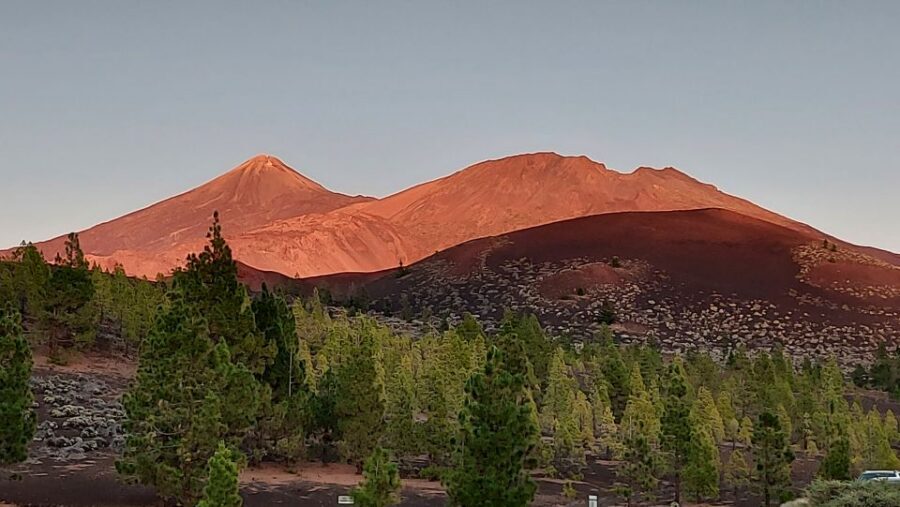
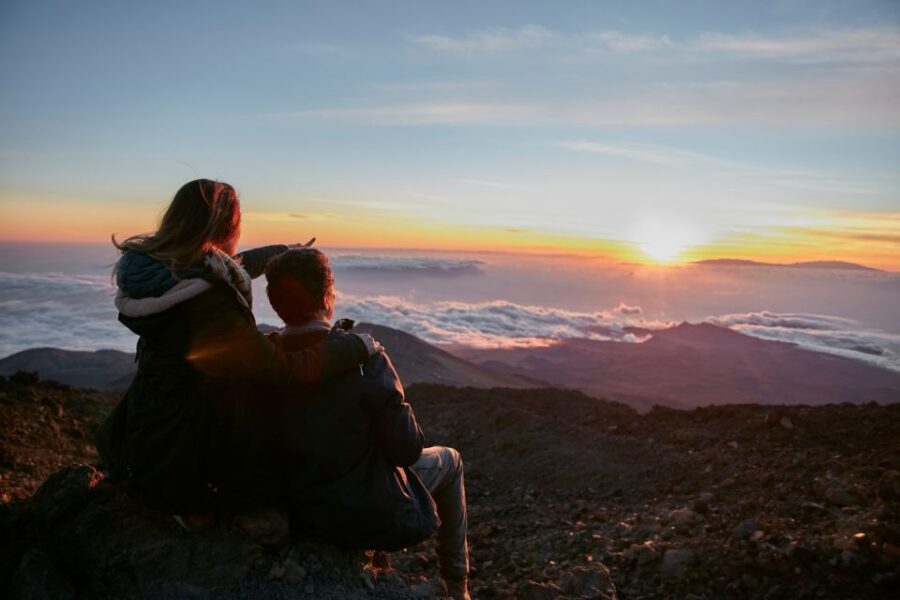
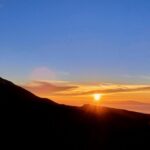
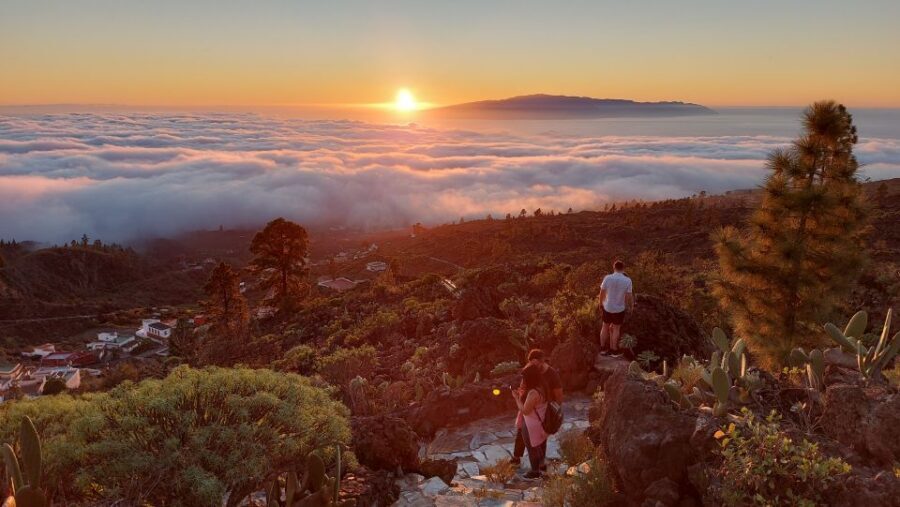
The sunset stop is built around one idea: get above (or close to) the cloud layer so the sky can do its thing. The schedule includes a photo stop and scenic viewing on the way, then a dedicated window at the viewpoint of about 30 minutes for sunset watching and photos.
When the cloud height lines up well, it feels like the island drops away. You get that layered look—sunset colors in the sky, a sea of clouds below, and Teide looming in the background on a clear evening.
Reality check: if traffic is heavy or weather/cloud layers aren’t cooperating, you may not get the exact same sunset moment. On the plus side, the team selects where to go based on conditions for the night sky later, so you’re not doing this just for one photo.
Teide National Park: what the guided portion is like
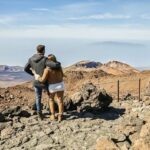
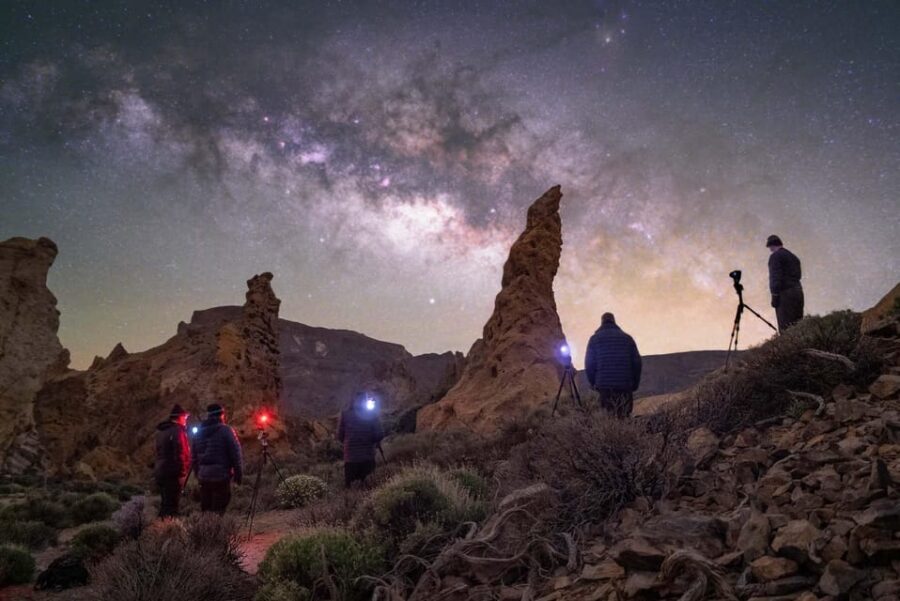
Once night falls, you head into Teide National Park for a guided portion lasting about 1.5 hours. This is where the tour shifts from scenery to “what’s up there, and how do we see it.”
Teide’s volcanic setting matters because it’s not just for drama. Being in a protected area with low light pollution is what makes telescope time genuinely effective. This is also a Starlight-certified destination, which means the sky is treated as a priority environment for astronomy.
During the national-park segment, you’ll get explanations about the sky and celestial navigation. Expect the guide to use green laser pointers to point out key stars and help you connect the patterns you see with the constellations you hear about.
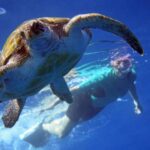
Telescope targets: Moon, Saturn, nebulae, and what changes by season
Here’s the core promise of the tour: you use telescopes to see the night sky in a way your eyes can’t do alone. Depending on the night, that can include the Moon’s surface and craters (when it’s visible), planets depending on the time of year (mainly autumn to winter), nebulae, star clusters, and double stars.
Sometimes you may even see the Andromeda Galaxy when conditions allow. The Milky Way can be visible from summer through winter depending on the night’s conditions, which is why the guide pays attention to the schedule and sky conditions instead of claiming the same view every time.
Also, the Moon matters. From two days before until the full moon, the Moon dominates the sky. That can make some deep-sky views harder to see, even if the night sky is still beautiful and the telescopes still deliver plenty.
One detail I really like: the guides don’t just name objects. You’ll usually get context—why that object is there, how it fits into star patterns, and how to recognize it again later.
Shooting stars and laser-pointer constellation time
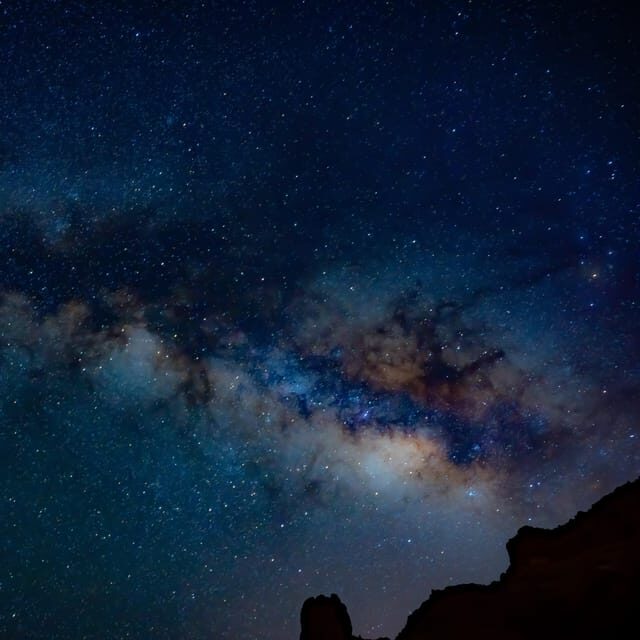
If you like surprises, this is where the tour can feel special. Guests often mention seeing shooting stars with the naked eye, then getting a second act through the telescopes once the telescopes are set up and calibrated.
The laser-pointer part is also practical. If you’ve ever tried to learn constellations by yourself, you know it’s easy to get lost. With a guide pointing in real time, you can follow along and actually connect the stories to the shapes overhead.
The guide factor: why Ozzy (and others) changes everything
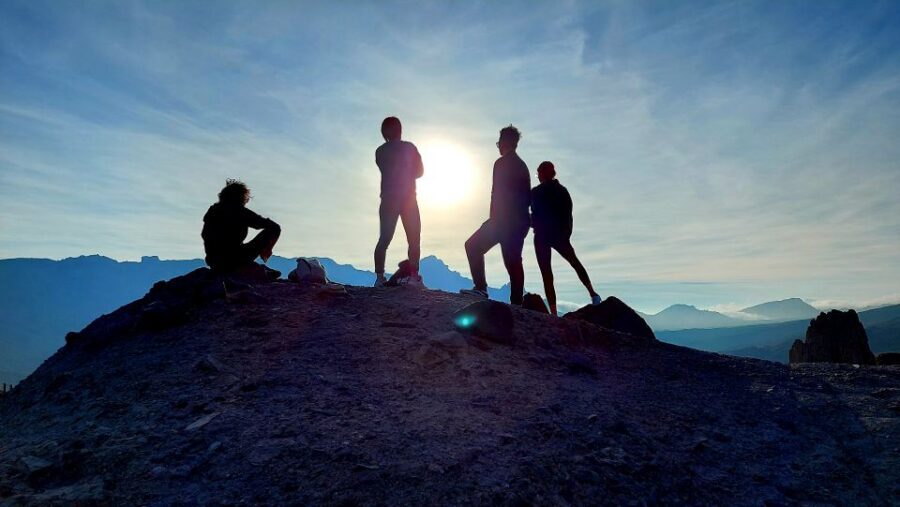
A tour lives or dies by the guide, and this one has a reputation for fun plus focus. In many recent experiences, the lead guide is Ozzy, described as funny, multilingual, and deeply passionate about astronomy—an entertainer who still explains clearly.
You might also hear familiar names behind the scenes. One guest mentioned Je Marc handling telescope calibration, and another mentioned Daniella helping with pre-event communication. That mix can matter: when telescopes are set up well and calibrated quickly, your observing time feels smoother.
If you want a single reason to prioritize this tour over a general bus excursion, it’s the way the guide turns waiting time into learning time. The jokes aren’t just for laughs; they help the group stay engaged while the sky settles in and objects rotate into view.
Cold weather reality check: how to dress so you enjoy it
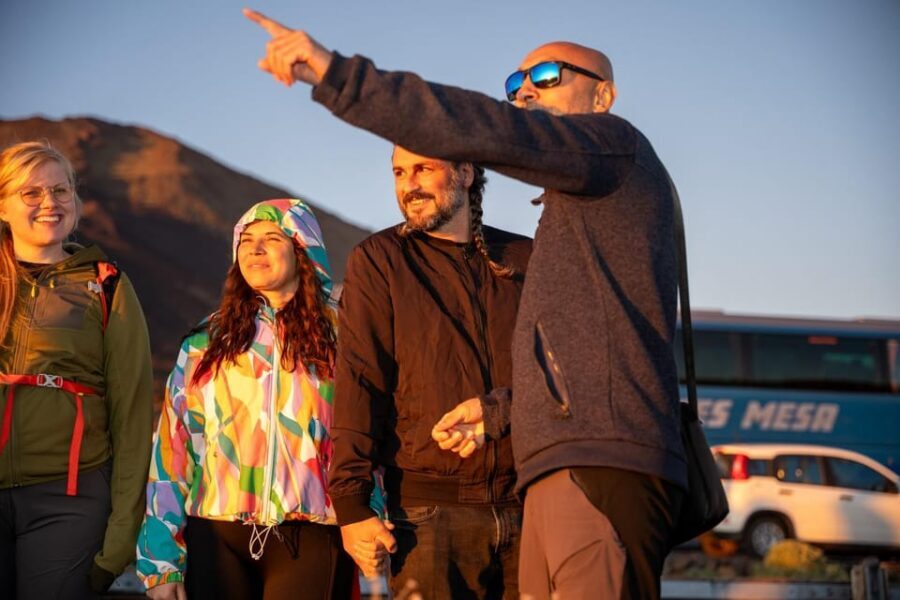
The number one thing I’d warn you about is the temperature. Multiple guests call it very cold once night falls, and they recommend warm clothing, scarves, gloves, and a blanket if you have one. Jackets and warm layers are listed as essential, and water is also a must.
Here’s my practical advice: don’t dress like you’re going for dinner. Dress like you’re watching the stars outdoors in winter weather. If you run cold, bring more layers than you think you need, because your body chills faster when you stop moving to look through a telescope.
Also remember: there’s no mention of jackets or blankets being provided. So if you forget the warm stuff, your experience can turn into endurance instead of enjoyment.
Price and value: is $47 a good deal?
At about $47 per person, the value depends on which option you book. The tour includes guided stargazing with telescopes and laser pointers, plus pickup/drop-off from the south if that option is selected. If you choose the meal option, you also get a full 3-course dinner with drinks and wine described in the tour details.
In practical terms, you’re paying for three things you can’t easily replicate on your own: access to a dark-sky area, telescope time, and guided interpretation. If you’ve ever tried to DIY stargazing from a hotel balcony, you know how limited it is.
Where the value can feel less perfect is the parts you can’t control. Cloud cover, the Moon’s phase, and seasonal planet timing can reduce the “wow” factor of specific targets. Also, optional extras like professional photos cost more, and those are separate from the core experience.
Logistics to plan around: no toilets where you might hope
One downside that deserves a straight answer: toilets are not available on the bus and not at the national park. One guest noted that after the restaurant stop, it could be several hours before another restroom opportunity during the return period.
So if you’re traveling with kids, seniors, or anyone who needs predictable restroom access, plan for it. Use the restaurant stop wisely, then dress and settle in for the long look-up session.
Who should book this tour, and who should skip
You should book if you want a guided stargazing night in Teide National Park with telescope time and an entertaining host who helps you understand what’s overhead. It’s a great pick for couples, groups, and families—especially since there’s a kids’ menu and guests describe the guides as engaging for younger travelers too.
Skip (or at least reconsider) if you hate cold weather or you need guaranteed rooftop-clear skies and a specific planet/galaxy every time. The tour is built around changing conditions, and the experience varies nightly.
Should you book Tenerife Stars’ Teide Sunset & Stargazing Tour?
Yes—if you dress for cold, treat sunset and stars as the main event, and you like the idea of learning as you observe. For about $47, you’re getting a focused guided night with telescopes, laser-pointer constellation guidance, and a high-probability chance at a stunning sunset above the clouds.
I’d book especially if you’re astronomy-curious but not an expert. The guide work—often led by Ozzy—turns a sky you might otherwise overlook into something you can actually name, track, and remember.
But if you’re sensitive to temperature, or you don’t want the lack of toilets during the park/bus portion to be part of your plan, choose accordingly. Bring warm layers, plan restroom timing with care, and you’ll get the best version of the Teide night.
FAQ
How long is the Tenerife Teide sunset and stargazing tour?
It runs for about 3 to 6.5 hours depending on the option and starting time.
Does the tour include pickup from the north of Tenerife?
Pickup is optional only from the south. The provider confirms the exact pickup location and time by WhatsApp or phone call in the morning.
What can I see through the telescopes?
Depending on the night, you may see the Moon’s surface (when visible), planets (mainly autumn to winter), nebulae, star clusters, double stars, and sometimes the Andromeda Galaxy.
Are planets always visible during the tour?
No. Planet visibility depends on the time of year, so what you’ll see changes seasonally.
When can I see the Milky Way?
The Milky Way is visible from summer through winter, depending on conditions.
Is the dinner included, and are there kid options?
A 3-course meal is included only if you choose the meal option. Kids have a children’s menu (chicken nuggets with French fries), and vegetarian/vegan options are available.