REVIEW · SURFING LESSONS
Tenerife: Surf Lesson at Playa de Las Americas
Book on GetYourGuide →Operated by Rocky Point Surf Experience · Bookable on GetYourGuide
A first wave in Tenerife is a real confidence boost. This surf lesson pairs step-by-step coaching with a small group, so you spend your energy actually learning, not waiting. I like that you’re taught in a way that works for total beginners, and that the session is timed around getting you into the water conditions that make sense, with sweeping views including Teide. One thing to consider: the exact time can shift with weather, and the lesson can be rescheduled if the ocean is rough.
What I’d call the best part is the teaching rhythm. You get a short safety briefing, then you move straight into practice, with instructors keeping an eye on you the whole time. A minor drawback is also common to surf lessons everywhere: if tides and waves aren’t cooperating, you may catch fewer waves than you hoped.
In This Review
- Key things to know before you go
- Surfing at Playa de Las Américas with the Teide view
- Getting oriented fast: meetup and a focused safety briefing
- The 100 minutes in the water: your beginner game plan
- What you’ll likely practice
- Equipment that makes or breaks your surf lesson
- Instructors you can trust: Edu and Rafa’s coaching style
- Where value really shows: price, inclusions, and what you get
- Timing and ocean conditions: why your start time can shift
- Who should book this surf lesson, and who should skip it
- Should you book this Tenerife surf lesson?
- FAQ
- FAQ
- How long is the surf lesson?
- How many students are in the group?
- What’s included in the price?
- What should I bring with me?
- What languages are the instructors?
- Is this lesson good for true beginners?
- Are there age or swimming restrictions?
Key things to know before you go
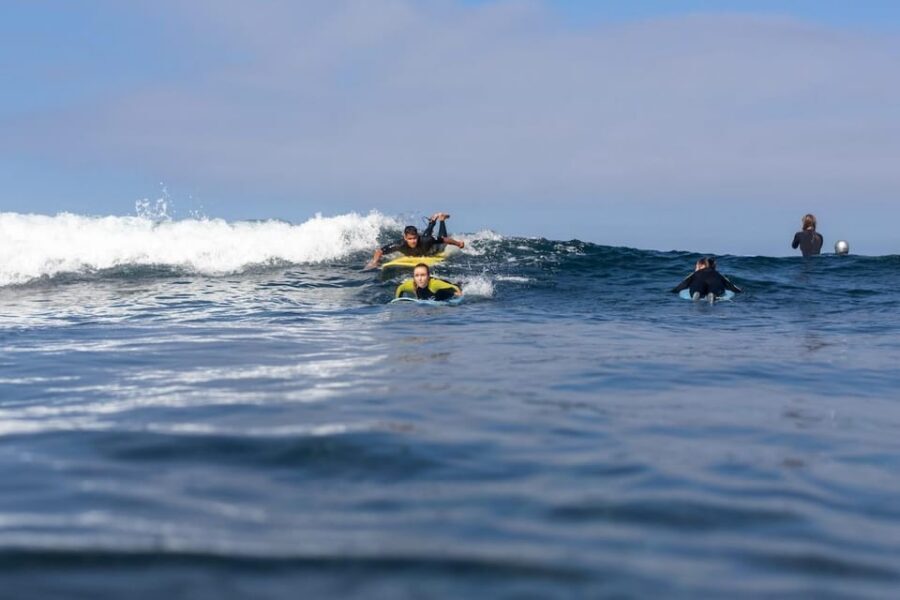
- Small group up to 5 students, so you’re not lost in a crowd
- Beginner-friendly instruction that aims for your first stand on a real wave
- Gear included: softboard, wetsuit, and reef boots
- Safety comes first with a 20-minute briefing before you hit the water
- Teide-area views from Playa de Las Américas during the session
- High satisfaction from prior surfers, with an overall 4.7 rating from 76 reviews
Surfing at Playa de Las Américas with the Teide view
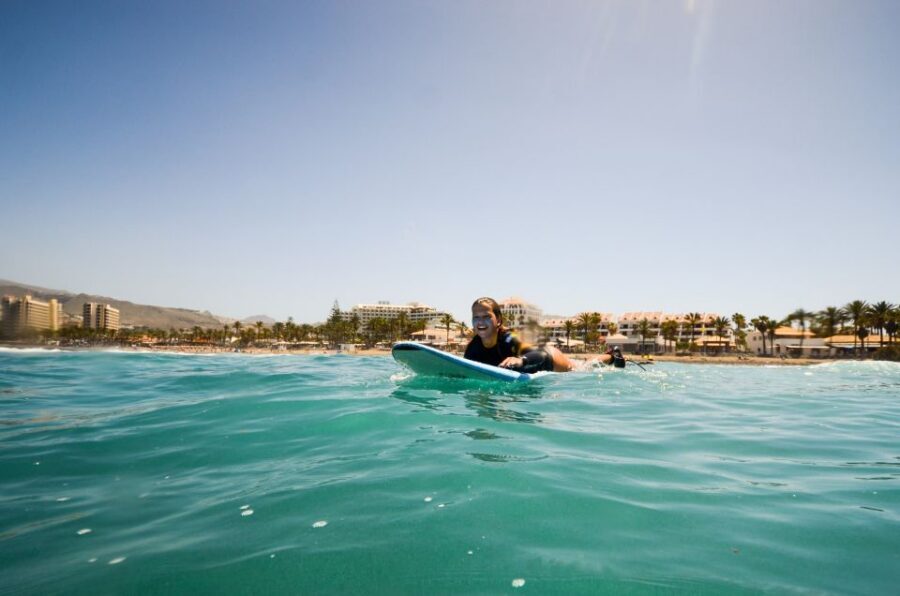
Playa de Las Américas is the kind of beach setting that makes you want to walk slower. The water vibe here fits surf lessons because the area is built for visitors, so the whole experience feels easy to join. And Tenerife adds a bonus: you’re in a landscape where Teide can show up in the scenery, which turns an ordinary training session into a “wait, this is pretty” moment.
This lesson is specifically designed for the people who are brand new. That matters, because beginner surf can go two ways. Either you get left with a board and a hope, or you get clear instruction that connects what you do on land to what you do on the wave.
The promise here is simple: learn the basics, then work toward standing on your first wave. If you’ve ever been nervous to try surfing, you’ll probably appreciate that the course is set up around making the learning curve manageable.
You can also read our reviews of more tours and experiences in Tenerife
Getting oriented fast: meetup and a focused safety briefing
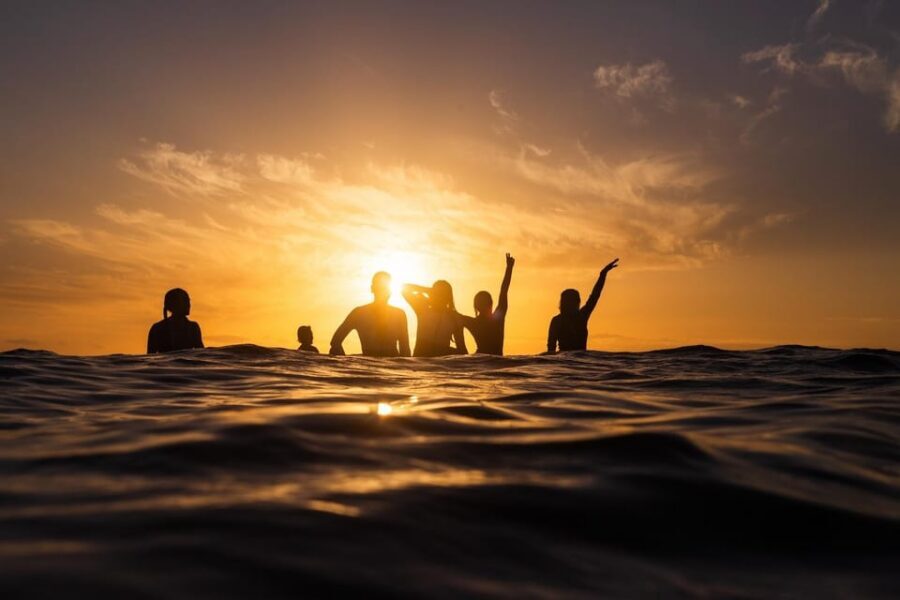
Your session starts at a clear meeting spot: take the big stairs next to the BBVA bank, go downstairs, walk straight, then turn right. You’ll find Local 61 at the end of the corridor. The directions are specific enough that you won’t be wandering for long, and that helps on a trip day when you’re also doing sunscreen, towel, and shoe logistics.
Then you get the part that makes surf lessons actually work: a 20-minute safety briefing at the visitor center. The point isn’t to lecture you. It’s to set you up with the basics you need to be safe in the water and effective once you’re paddling.
In a small group, that briefing becomes more useful because instructors can tailor reminders. If you’re unsure about anything, you’re more likely to get a direct answer before you ever stand up.
The 100 minutes in the water: your beginner game plan
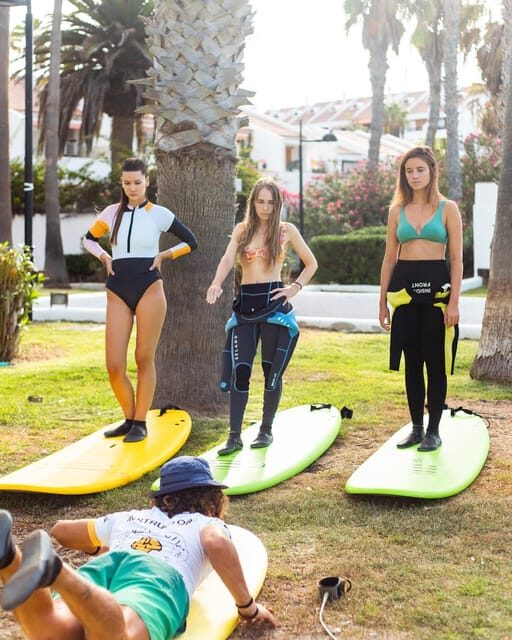
After the briefing, the core of the class is in Playa de Las Américas for about 100 minutes. That’s where you’ll shift from theory to movement: how to paddle, how to position yourself, how to time the wave, and how to increase your chances of getting up.
What I like about this structure is the pacing. You’re not stuck listening for half the lesson. You move into the water, learn by doing, and get coached in the moments that matter.
For total beginners, the key goal is not perfect surfing. It’s first-wave success. The lesson is explicitly built to help you stand up on a first wave, which is the confidence milestone that usually makes everything click. Even if you don’t stand on every attempt, you’re building the muscle memory and wave-reading habits that make later attempts better.
Also, this course is described as a group lesson with up to five students. That means you’ll likely get more than one person-at-a-time attention, especially when you’re learning a new skill.
What you’ll likely practice
You can expect the lesson to cover both in-water practice and basic theory, with step-by-step guidance throughout. The equipment included (more on that below) is part of the plan: the softboard and wetsuit are meant to make learning more comfortable and safer as you experiment.
Equipment that makes or breaks your surf lesson
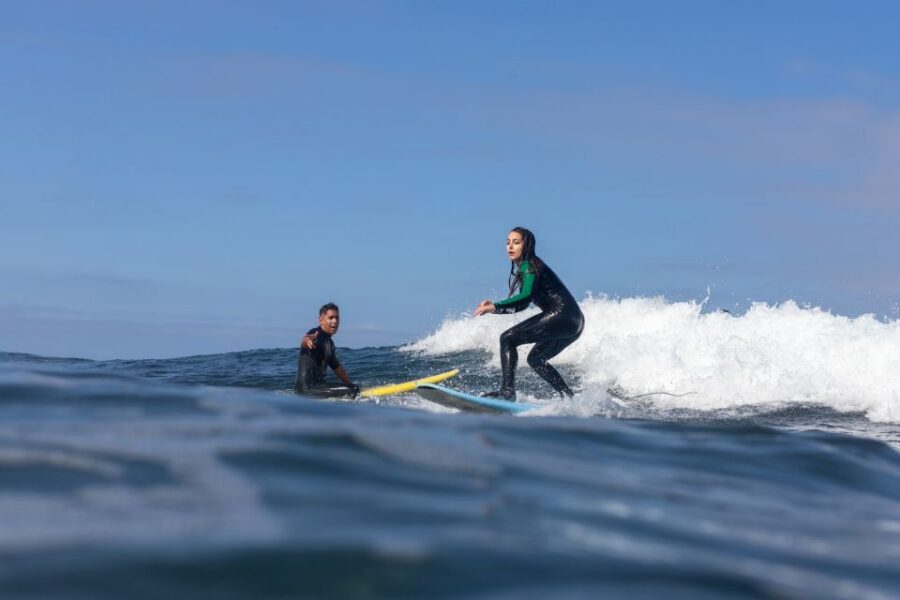
A lot of surf pricing goes up when you start adding rentals. Here, the essentials are included: a softboard, a wetsuit, and reef boots. That’s a big value point for beginners because you’re less likely to arrive under-prepared.
Why softboard matters: it’s designed to be more forgiving when you’re learning balance. If you’ve never done this before, you’ll feel the difference immediately. The board is part of why “trying” turns into “actually learning,” instead of turning into constant wipeouts without improvement.
The wetsuit and reef boots also matter more than people think. In Tenerife, you still want protection so your energy goes toward surfing rather than dealing with discomfort. Reef boots help with foot safety when you’re stepping around the surf zone.
What to bring is refreshingly simple:
- Swimwear
- Flip-flops
You’ll still want a practical plan for towels and a place to change, but the core surfing gear is handled for you.


Instructors you can trust: Edu and Rafa’s coaching style
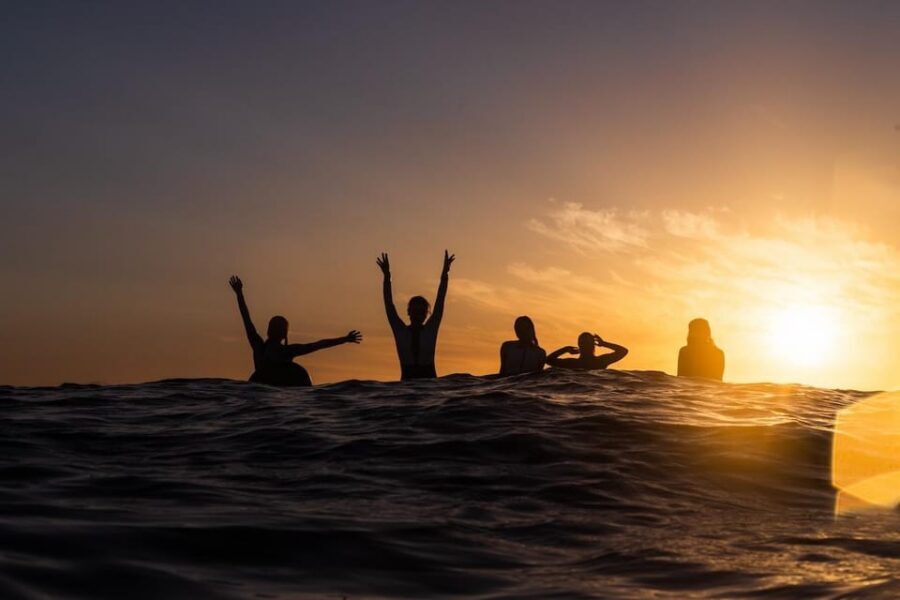
A surf lesson lives or dies by the coach’s ability to spot what you’re doing wrong and fix it fast. In this class, that’s where it really shines.
In multiple high-rated experiences, instructors including Edu and Rafa are mentioned for making beginners feel confident. The consistent theme is that they keep a close eye on each student in the small group, and they teach in a way that helps you actually improve within a short session.
One beginner-focused detail I appreciate from the feedback pattern is patience. Multiple accounts point to instructors being friendly, staying attentive, and explaining technique in a way that doesn’t overwhelm you. That’s crucial when you’re trying to do things like paddle, watch the horizon, and time your pop-up all at once.
If English or Spanish is your preference, you’re covered too. The instruction languages include English and Spanish, so you’re not forced into one-size-fits-all signals.
Where value really shows: price, inclusions, and what you get
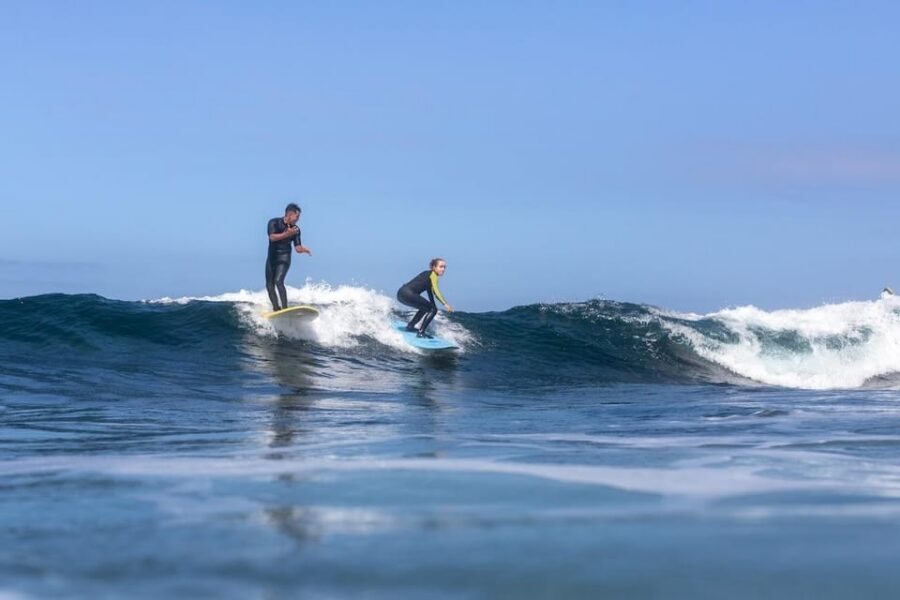
At around $41 per person for a 2 to 3 hour experience, this lesson is priced like a smart entry into surfing, not like a premium private training session. And the value improves because the included items reduce your “arrival costs.” You’re getting:
- a professional surfing instructor
- theory plus in-water practice
- softboard, wetsuit, and reef boots
- insurance in case of accident
That last part is a quiet win. Surf involves risk in normal conditions, even when the class is beginner-focused, so having accident insurance included takes some stress off you and your travel plans.
Two things that are not included:
- photos from the lesson
- transportation
So if you want a photo, plan to bring your own phone strategy or accept that it’s more about the experience than getting a souvenir set.
Also, the class format helps with value. A small group up to five students means you spend more time learning and less time waiting for your turn.
Timing and ocean conditions: why your start time can shift
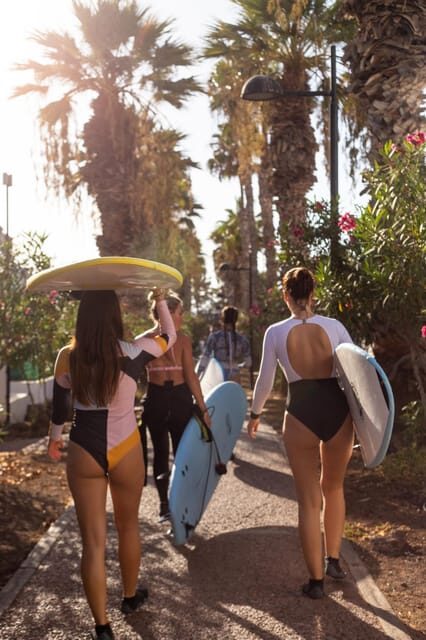
Surf in Tenerife is a weather-and-swell game. The lesson time depends on conditions, and the surf school can change the start time after you book. You’ll get notified by email or WhatsApp, and the lesson can also be rescheduled or canceled if the ocean conditions aren’t safe or workable.
If you build your day around this, do it with a bit of slack. That’s especially true if you have tight connections or a strict itinerary. The upside is that a course like this is usually better when it waits for the right window rather than forcing it.
This is also why you should treat the session length as 2–3 hours, not a fixed minute-by-minute event.
Who should book this surf lesson, and who should skip it
This lesson is designed for beginners, and it’s a great match if you want:
- a structured first attempt at surfing
- a small-group class where you can get feedback
- pro gear and safety support without extra rentals
It’s also specifically noted as not suitable for:
- children under 14
- pregnant women
- non-swimmers
So if you’re coming with a family member who doesn’t meet those requirements, you’ll need an alternate plan. And if you’re not confident in the water, this isn’t the right starting point.
If you’re an adult who can swim and you want a fun, active day rather than a long sightseeing routine, this is exactly the kind of activity that tends to deliver big satisfaction per hour.
Should you book this Tenerife surf lesson?
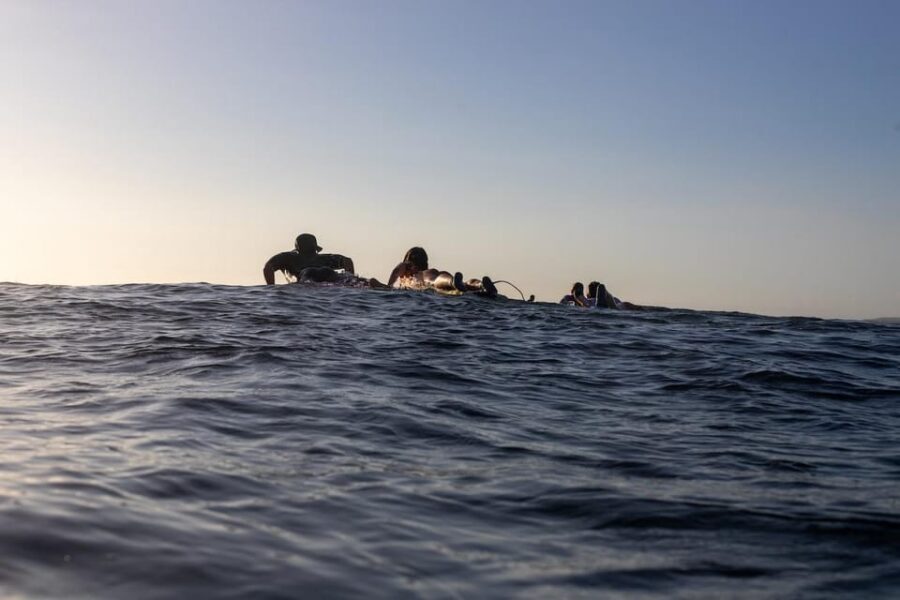
If your goal is to try surfing in a way that feels safe and guided, I’d strongly consider booking. The combination of small group size, included gear, and instructor-led coaching makes it a smart first-step experience, especially at a price point that doesn’t feel inflated for beginners.
Book it if you:
- want your best chance at standing on a first wave
- prefer hands-on teaching over vague instructions
- like the idea of learning with Tenerife scenery and a realistic ocean-focused session
Skip it (or pick something else) if:
- you don’t swim comfortably
- you need a perfectly fixed start time
- you’re expecting professional photo coverage
FAQ
FAQ
How long is the surf lesson?
The lesson lasts about 2 to 3 hours.
How many students are in the group?
It’s a small group of up to 5 students.
What’s included in the price?
You get a professional surfing instructor, theory and practice in the water, a softboard, a wetsuit, reef boots, and insurance in case of accident.
What should I bring with me?
Bring swimwear and flip-flops.
What languages are the instructors?
The instructor languages are English and Spanish.
Is this lesson good for true beginners?
Yes. It’s described as perfect for people who never surfed before and want to practice under an experienced surf instructor.
Are there age or swimming restrictions?
Yes. It’s not suitable for children under 14, pregnant women, or non-swimmers.