REVIEW · TENERIFE
Tenerife: Los Arcos Canyoning Tour with Guide
Book on GetYourGuide →Operated by Outdoor activities tenerife · Bookable on GetYourGuide
Rappelling into Tenerife canyons is a grown-up playground. This Los Arcos de Chimoche tour turns orange volcanic canyon walls into a hands-on lesson with about 8 rappels, guided step-by-step by local instructor Jorge. The catch: it’s definitely not for you if you’re afraid of heights, because you’ll be hanging and descending a lot.
I also love the small-group feel. With a limit of 8 participants, Jorge can slow down for questions, check your setup, and keep the whole day calm, confident, and fun. Plus, you get photos of your experience, not just a vague memory.
In This Review
- Key highlights you’ll actually care about
- Los Arcos Canyoning, Explained Like a Friend
- Where You Meet and How to Get There Without Stress
- Safety Briefing First: Then the Canyon Lets You Play
- The 45-Minute Approach: From Forest Track to “Oh, Here We Go”
- First Rappel and the Canyon’s Volcanic “Why It Looks Like This”
- The Main Event: 8 Rappels Through Los Arcos
- After the Last Drop: Chimoche Track and the Walk Back
- Gear, Shoes, and Clothing: What to Bring for Real Comfort
- Who This Tour Is Best For (and Who Should Skip It)
- Price and Value: Is $82 Worth It?
- Logistics Tips That Make the Day Go Smoothly
- Should You Book Los Arcos Canyoning?
- FAQ
- Where is the meeting point for the Los Arcos canyoning tour?
- How long is the tour, and how much rappelling happens?
- What’s included in the price?
- What should I bring for the day?
- What languages are the guides?
- Who can’t join this activity?
Key highlights you’ll actually care about
- Small group, up to 8 people: more coaching, less waiting around.
- 8 rappels in a dry canyon: real vertical time, not just a walk-and-watch.
- Mossy orange walls shaped by volcanic ash and erosion: unusual color, great photo angles.
- Jorge’s safety-focused teaching: gear checks and patient instruction for first-timers.
- Guided geology + local nature: you’ll learn what you’re looking at as you go.
- Photos included: helpful if canyoning becomes a blur of adrenaline.
Los Arcos Canyoning, Explained Like a Friend
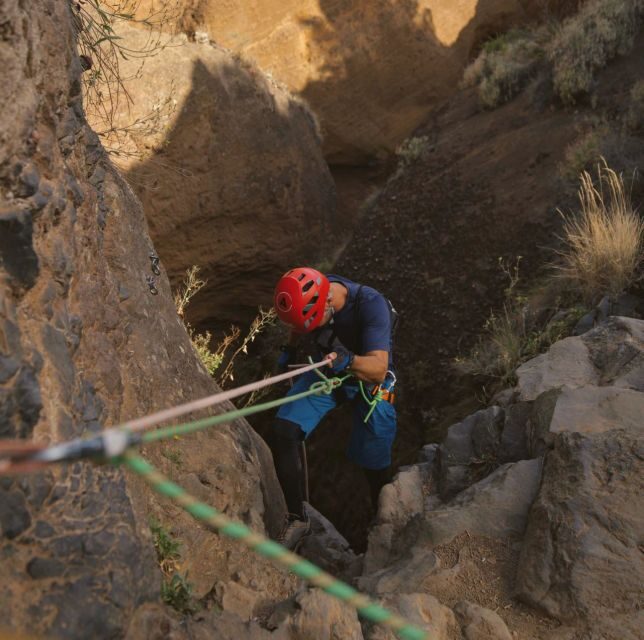
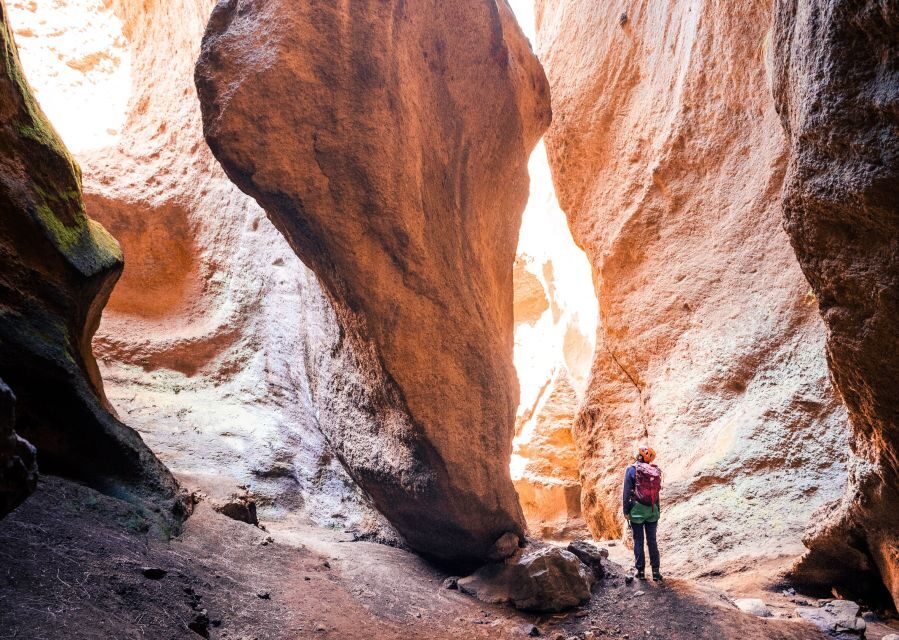
If you’re craving something active in Tenerife that’s not another beach day, this canyoning tour hits the sweet spot: it’s physical, it’s visual, and it teaches real skills with real safeguards. The canyon you’ll descend is Barranco Los Arcos de Chimoche, a dry canyon route with multiple rappels, set against warm orange rock that’s often softened by moss.
Here’s what makes the experience stand out. First, the canyon is formed by the long-term story of volcanic ash accumulation and erosion. You can see the results as you go—light hits the mossy orange walls, and shadows shift as the canyon narrows. Second, the guiding style really matters on a day like this. Jorge’s approach, based on lots of consistent feedback, is patient and detail-oriented. That means you spend less time guessing and more time doing.
One more honest note: you’re in and around uneven terrain, and you’ll be using rope systems. So even though it can feel beginner-friendly with the right guide, it’s still a serious outdoor activity.
You can also read our reviews of more guided tours in Tenerife


Where You Meet and How to Get There Without Stress
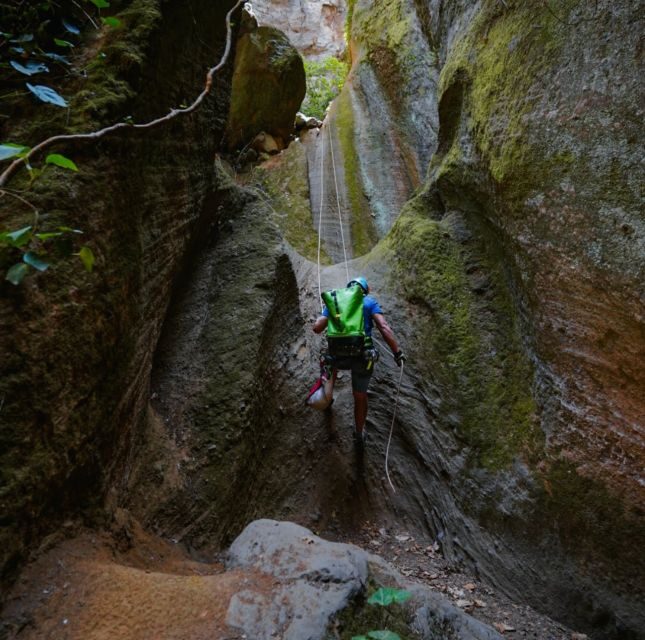
You meet your guide at the Mirador de La Bermeja. If you’re driving from the north of Tenerife (think La Orotava side), follow TF-21 and signs toward El Teide.
A small practical warning: GPS sometimes tries to cut via steep, narrow roads. When roads get tight, it’s easy to lose time (or get stressed). If that happens, trust the signed route instead of the shortest-looking shortcut.
And yes, this matters more than it sounds. With a 6-hour block and a day that starts with a walk approach, you want to arrive early enough to gear up without rushing.
Safety Briefing First: Then the Canyon Lets You Play
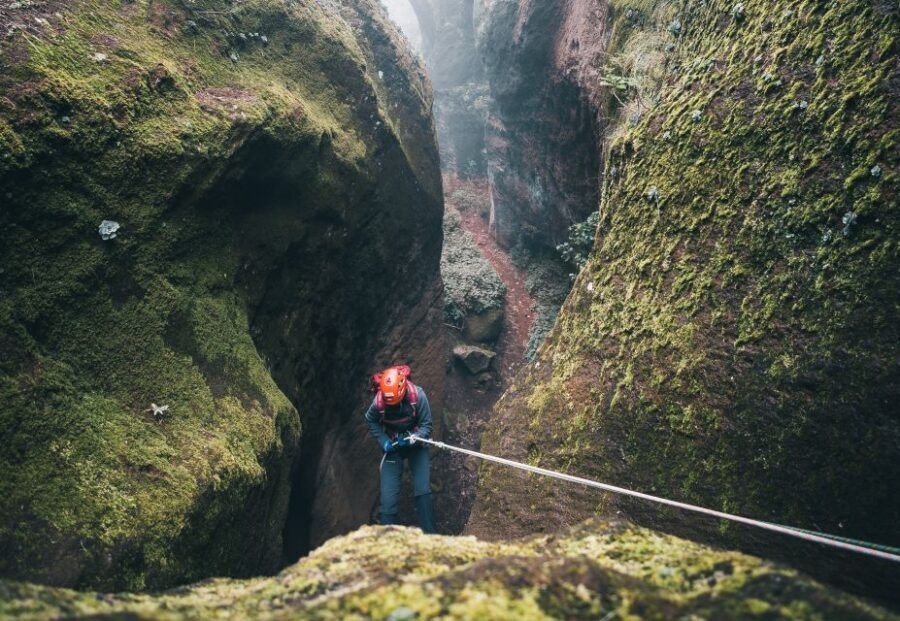
The tour starts with a 15-minute safety briefing. This is where you’ll get the ground rules for the ropes, your harness/gear checks, and how to handle the descent steps. Even if you’ve never canyoned before, the tone is set here: you’re not being thrown into the deep end.
After the briefing, your guided time runs about 3.75 hours, including the active descent portion. This is the heart of the day, where you go from “I’m watching” to “I’m controlling my movement.”
If you’re a first-timer, you’ll likely appreciate that the guide doesn’t just point and go. The overall pattern is clear: do the basics, get comfortable, then repeat the technique until it clicks.
The 45-Minute Approach: From Forest Track to “Oh, Here We Go”
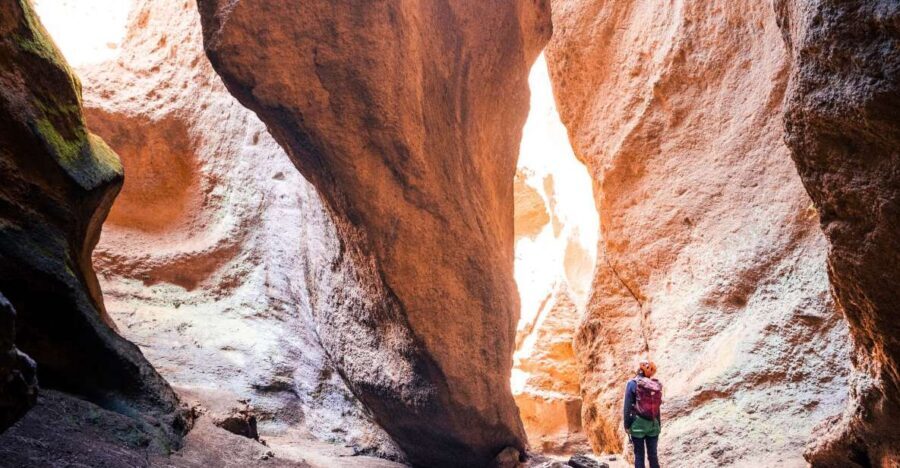
Before any big drops, you earn the view. The approach is about 45 minutes on a forest track with a gentle slope. It’s not a marathon hike, but it does get your body warm and your legs ready for uneven footing.
This walk also gives you something mentally useful: you can spot what kind of canyon terrain you’re walking toward, and you’ll have a chance to get used to the gear before you start rappelling.
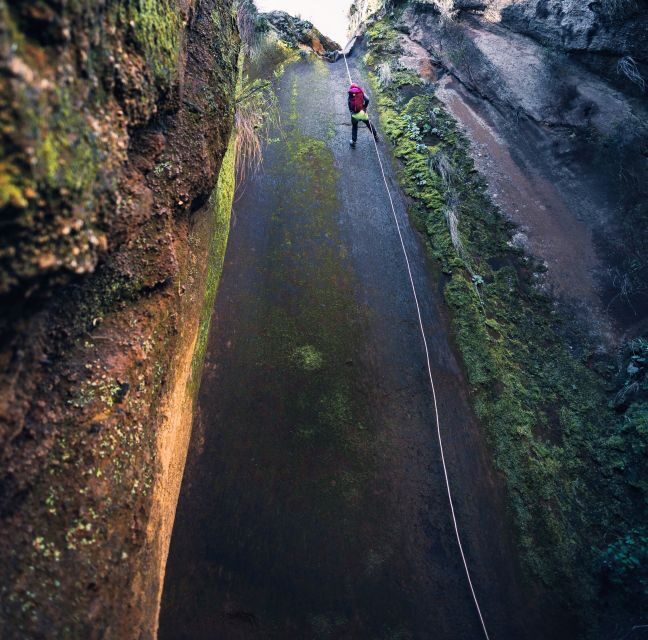
Then the dry canyon starts for real with the first rappel—around 22 meters—and the canyon walls rise right out of the orange rock world.
First Rappel and the Canyon’s Volcanic “Why It Looks Like This”
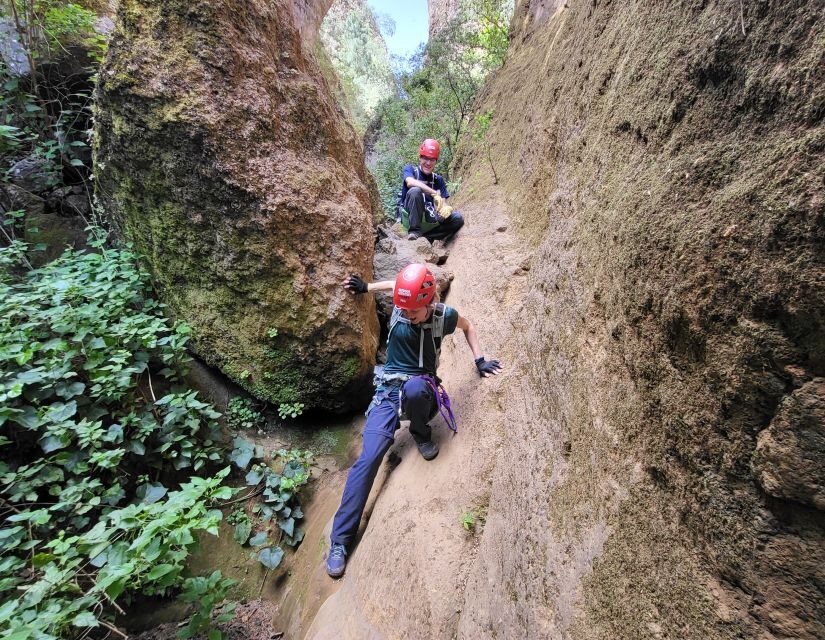
That first vertical moment is where a lot of people feel their nerves. The good news is that this tour is structured for control, not chaos. Jorge’s coaching style is repeatedly described as calm, and that matters when you’re figuring out how to manage your position with a rope system.
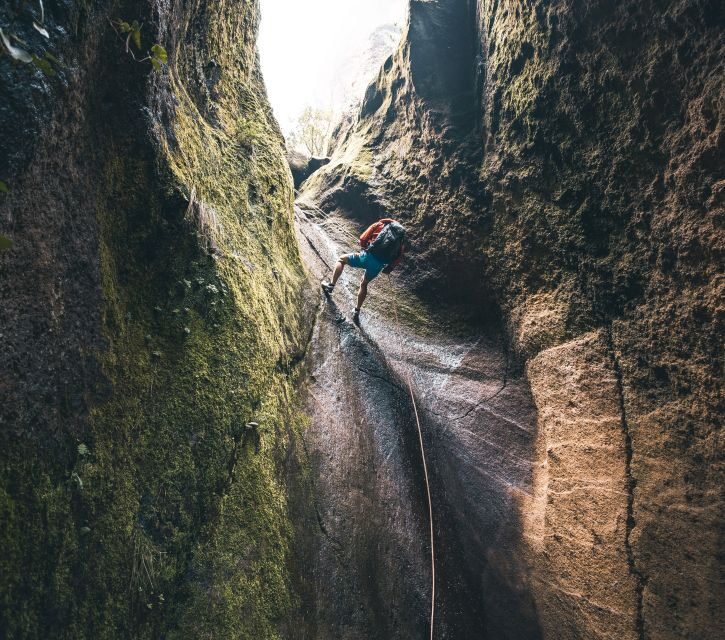
Once you’re descending, pay attention to the canyon surfaces. The rock isn’t just pretty—it’s part of the canyon’s origin. You’ll be able to observe how the canyon formed through volcanic ash accumulation and erosion over time, creating a channel where passages and shapes look almost sculpted.
The visual payoff is big here. Light plays off moss-covered orange walls, creating different shades as you change angles. It’s one of those places where photos look good, but seeing it in motion is even better.






The Main Event: 8 Rappels Through Los Arcos
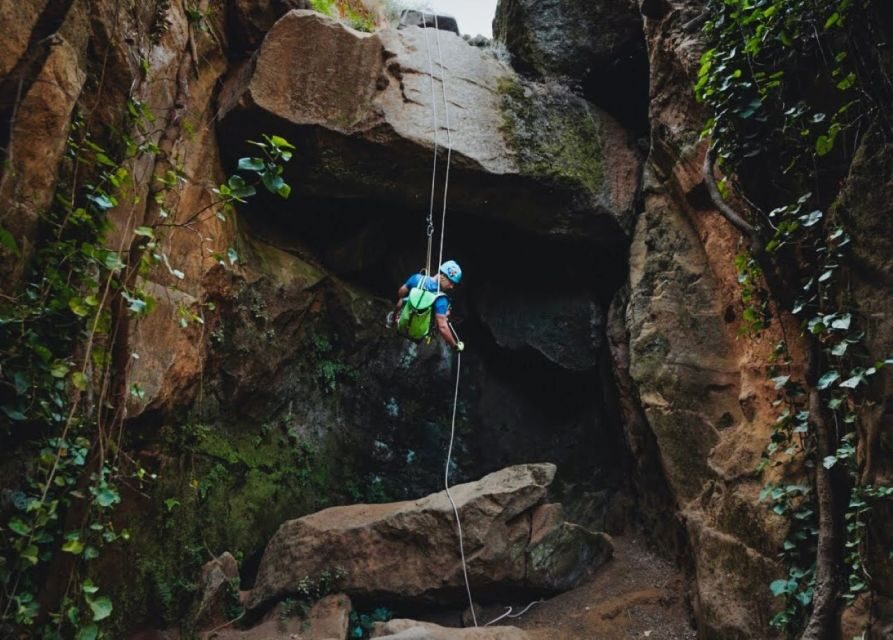
You’ll complete 8 rappels total. That’s the defining feature of this tour, and it’s where canyoning stops being a walk and becomes an activity.
Each rappel is its own mini-challenge:
- You manage your rope position.
- You follow technique cues for safe, smooth movement.
- You transition from one descent point to the next under guide supervision.
From the feedback I’m using to inform what you should expect, Jorge is attentive about comfort and readiness. That doesn’t mean you’ll never feel exposure—it means you’ll get help when you need it, and you won’t feel rushed.
Also, keep your eyes open for local nature. Several people highlight that Jorge shares details about flora and fauna, including endemic life. On a canyon day, that kind of interpretation turns “cool scenery” into something more meaningful.
After the Last Drop: Chimoche Track and the Walk Back
After you finish the rappels, you exit into the Chimoche track, which concludes the descent. Then it’s back on foot for roughly 30–35 minutes to return to the starting area.
This is where you’ll feel what most adrenaline days hide: your arms and legs are doing work. The walk back is not technical, but it can feel longer once you’re tired. Bring water, stay steady, and let your heart rate come down gradually.
The terrain can include vegetation and rocky bits, so this isn’t the time to wear brand-new shoes or anything that makes you nervous on uneven ground.
Gear, Shoes, and Clothing: What to Bring for Real Comfort
You’ll be provided with all canyoning equipment, plus you get accident insurance. That covers the core gear needs for rope work.
Still, you decide what goes on your feet and body. Here’s what to bring:
- Warm clothing
- Rain gear (yes, even for a canyon outing that’s described as a dry canyon)
- Water
- Food
- Hiking shoes
- Long pants (not required, but strongly smart for comfort)
- Daypack
Shoe rules are strict for safety: only allowed are hiking shoes or trail running shoes, and long trousers are optional.
One useful option: hiking boots can be rented by request, but you need to contact the provider. If you don’t have the right footwear, this is a workable plan.
One more practical item that’s worth listening to: stinging nettle can be present in the area. That’s exactly why I’d rather you choose long pants and be slightly over-prepared than tough it out with bare legs.
Who This Tour Is Best For (and Who Should Skip It)
This is the part where I’m going to be blunt, because it’s what keeps canyoning enjoyable.
This tour is not suitable for:
- children under 13
- pregnant women
- people with back problems
- people with mobility impairments
- people with heart problems
- people with epilepsy
- people afraid of heights
- people over 65
- people over 110 kg / 243 lbs
And even if you’re technically allowed to go, canyoning isn’t “casual fitness.” You’re exposed to heights during rappels, and you’re moving on rough terrain while wearing gear.
If you’re the type who likes learning a skill on the spot—rope control, safe descent habits, and reading what the canyon environment is doing—this will feel like a full-day win. Many people also say this is beginner-friendly when the guide sets you up right.
Price and Value: Is $82 Worth It?
The price is $82 per person for a 6-hour outing.
On value, here’s what you’re paying for:
- a live canyoning guide (English and Spanish)
- all equipment
- photos included
- accident insurance
- a small group capped at 8 participants
If you’ve ever tried to piece together an adventure day yourself, you know how fast costs rise when you add gear, a qualified instructor, insurance, and time. Here, those essentials are bundled. You also get a guided structure that turns the day into a progression: briefing, approach hike, rappels, then return walk.
Food and drinks aren’t included, so you’ll want to budget for that or bring snacks. But for the core canyoning cost, $82 feels like a fair exchange for a guided, multi-rappel experience where safety and coaching are part of the package.
Logistics Tips That Make the Day Go Smoothly
A few practical things will make your canyoning day smoother:
- Eat before you start, then bring extra food for later. Lunch isn’t provided.
- Bring water. You’re working and sweating, even if the canyon feels shaded.
- Wear hiking shoes or trail running shoes, not flimsy sneakers.
- Pack rain gear and warm layers. Mountain-weather logic works here: conditions can shift.
- If you’re unsure about footwear, request the hiking boot rental ahead of time.
- Don’t ignore nettle risk—choose long pants if you want to avoid itchy surprises.
And one timing thing: because you’re doing an approach walk before the first rappel, being late doesn’t just inconvenience you—it changes how the day feels once you start dangling from ropes.
Should You Book Los Arcos Canyoning?
Book it if you want:
- a skills-based adventure with real vertical action
- a guided day in a canyon shaped by volcanic processes
- a small group where you can get coaching and not feel lost
- the orange-moss look that makes the canyon memorable from every angle
Skip it if:
- heights make you spiral (this includes fear of heights during rappels)
- you fall into the listed medical or mobility categories
- you’re not ready for a full 6-hour active outdoor day with walking and rope work
- you don’t want to bring your own food and water
My final take: this is the kind of tour that feels like an experience, not a checkbox. With Jorge’s patient, safety-forward coaching and a canyon that looks like it was made by geology with a flair for color, it’s easy to see why people rate it so highly.
FAQ
Where is the meeting point for the Los Arcos canyoning tour?
You meet your guide at the Mirador de La Bermeja.
How long is the tour, and how much rappelling happens?
The tour lasts about 6 hours, and the descent includes 8 rappels. The first rappel is about 22 meters.
What’s included in the price?
Included are the canyoning guide, all canyoning equipment, photos of your experience, and accident insurance.
What should I bring for the day?
Bring warm clothing, hiking shoes, water, food, rain gear, a daypack, and long pants (long trousers are optional, but they can help with comfort).
What languages are the guides?
The live tour guide speaks English and Spanish.
Who can’t join this activity?
It’s not suitable for children under 13, pregnant women, people with back problems, mobility impairments, heart problems, epilepsy, or fear of heights, and it isn’t recommended for people over 65 or over 110 kg / 243 lbs.