REVIEW · OBSERVATION DECKS
Teide: Guided Planet Observation Tour with Telescope
Book on GetYourGuide →Operated by Teide Stars · Bookable on GetYourGuide
One of the best ways to understand the night sky is to see it close up. This Teide guided planet observation tour takes place in Teide National Park’s starlight-protected darkness, with an astrophysicist guiding you to telescope views. You’ll get real contrast on planets and constellations, not just a quick glance.
I especially like the professional telescope focus: Saturn’s rings and Jupiter’s moons are the headline targets. I also like that you’re led by an astrophysicist, so the explanations are grounded in how astronomy actually works. The tour is only about 2 hours, so if you’re hoping for a long, slow night-sky session, you may find the pace brisk.
One drawback to consider is that this experience depends on weather, and it’s run seasonally from October through winter. Also, I’d be ready for possible last-minute updates, because at least one past participant reported confusion after a meeting time/place change.
In This Review
- Key things that make this tour work
- Teide National Park Starlight Reserve: the reason the sky looks different
- Meeting at Minas de San José and getting to darker skies
- Telescope time: what you should expect with Saturn and Jupiter
- The Andromeda option: great if conditions cooperate
- Constellation stories with the laser-pointer option
- Duration, timing, and weather reality (read this before you go)
- Value for $34: what you’re paying for
- Who this tour is best for
- What to do before and after the tour
- Should you book the Teide Stars planet observation tour?
- FAQ
- Where is the meeting point for the tour?
- How long is the planet observation tour?
- What’s included in the price?
- Do I need hotel pickup or drop-off?
- Can I choose what we observe besides Saturn and Jupiter?
- What languages are the guides?
- What should I know about weather and cancellations?
Key things that make this tour work
- Teide National Park Starlight Reserve darkness helps planets and faint targets show better than in typical city skies
- Astrophysicist guide means explanations you can actually use at the telescope
- Saturn and Jupiter through a telescope are built into the experience, not left to chance
- Optional Andromeda observation depends on conditions and the option you book
- Laser-pointer constellation tour is included in the enhanced option for easier star-hopping
- Meet at Minas de San José and end back at the meeting point, with no hotel pickup
Teide National Park Starlight Reserve: the reason the sky looks different
You’re not just going outside to see stars. You’re going to an area designed to protect night skies, which matters because light pollution can wash out everything except the brightest points.
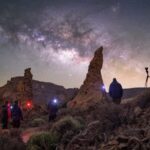
Teide National Park’s stargazing reputation isn’t marketing fluff when you’re at the telescope. In darker conditions, Saturn and Jupiter look more “real,” and constellation patterns become easier to recognize with your naked eye first—then confirm through the eyepiece.
The timing is also important. This runs from October through the end of winter, so plan for colder nighttime temperatures, especially if you’ll be standing outside for part of the tour.
You can also read our reviews of more guided tours in Tenerife
Meeting at Minas de San José and getting to darker skies
The tour starts at Minas de San José and ends back at the meeting point. Expect to meet your guide, then move on foot to a spot with less light pollution.
That walking portion sounds small, but it changes the whole experience. You’ll typically get a better view once you’re away from the brightest nearby lights, and the guide can also choose the safest, clearest spot for that night.
One practical tip: arrive a little early, even if your start time looks fixed. On at least one occasion, a participant reported an abrupt meeting time and location change and ended up waiting with no guide showing up. You don’t need to panic—but do check your messages close to departure, and keep an eye out for updates.
Telescope time: what you should expect with Saturn and Jupiter
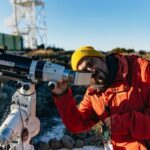
This tour is built around telescope views of Saturn and Jupiter, and that’s exactly what I’d want if I only had two hours.
With Saturn, the big moment is the rings—when conditions are steady, you can usually see why astronomers get excited about this planet. Even if you’ve seen photos before, a telescope view feels different: you’re seeing an object in real time, with the sky’s darkness doing the heavy lifting.
With Jupiter, the highlight is typically the planet plus its moons. The guide can point out what you’re looking at and how to track changes. That’s a big part of the value here: you’re not just “looking through glass,” you’re learning how the system behaves.
Also note the guide’s role. An astrophysicist can help you understand what you’re seeing without turning it into a lecture you can’t use. Expect explanations tied to the moment—what the telescope is showing right now and why it looks the way it does.
The Andromeda option: great if conditions cooperate
You have a choice. One tour option focuses on observing Saturn, Jupiter, and the Andromeda galaxy. The Andromeda part can be a big win because it’s one of the most famous deep-sky targets—often discussed in astronomy classes—but it’s also one that’s sensitive to conditions.
If you book the option that includes Andromeda, what you’re really booking is an attempt to show you a faint target in a dark place. That’s why starlight reserve conditions matter: you’re giving the galaxy a better chance to appear through the haze (or absence of it).
Keep expectations flexible. Even with a great guide and telescope, visibility depends on weather and night clarity. If the sky isn’t cooperating, the guide will likely focus harder on the planets, since those are the most reliable targets for a short tour.
Constellation stories with the laser-pointer option
If you choose the enhanced option, you’ll add a laser-pointer constellation tour. This is one of those upgrades that feels simple, but it changes how fast you can orient yourself.
A laser pointer helps you connect what you’re hearing with what you’re seeing. Instead of guessing where the guide means, you can follow along in real time—then look again with your naked eye and recognize the patterns on your own.
The result is that you leave with more than “I saw Saturn.” You’ll likely know how to find a few constellations again later, which is useful back at your accommodation when you want to keep playing astronomer.
The downside: in cloudy or windy conditions, the guide might have less room to point things out. You may lose some of the learning time if visibility drops, even if you still get telescope views.




Duration, timing, and weather reality (read this before you go)
The tour lasts about 2 hours. That’s a sweet spot for many people: long enough to get telescope moments and guidance, short enough that it’s still realistic after dinner.
Still, plan for the fact that nights in winter can be cold. You’ll be standing outside near the park’s dark-sky areas, and you may wait a bit while the guide sets up or while conditions change.
Weather is explicitly part of the equation. The tour may be subject to weather conditions, so if you’re choosing between multiple activities, don’t schedule anything tight right afterward that depends on you being warm and able to move quickly.
One more logistics note: there’s no hotel pickup or drop-off. You’ll need to get yourself to Minas de San José, which is a straightforward plan if you already have local transport sorted.
Value for $34: what you’re paying for
At $34 per person, the big question is whether you’re getting enough “telescope plus expertise” to make it worth your time.
Here’s what you are getting, based on the experience info:
- An astrophysicist guide
- A stargazing tour focused on planet observation
- A processional telescope (a professional viewing setup is part of what you’re paying for)
Two-hour stargazing tours can be hit-or-miss if they’re just a dark field and a few quick points. This one is more structured because Saturn and Jupiter are clearly the core targets, not a vague promise.
So for the value side, I see this as best if:
- You want telescope views, not just a sky-watching walk
- You like learning while you’re actually looking
- You want an easy, single-session astronomy experience in a place known for night skies
Who this tour is best for
This is a smart fit for first-timers who want a guided introduction with actual telescope results. It’s also a good choice for families and couples who want an organized plan and don’t want to spend hours fiddling with maps and equipment.
Choose the laser-pointer option if you want help building a mental map of the sky. Choose the Andromeda-included option if you want a deep-sky goal in addition to the planets.
If you’re a serious astronomer who travels with your own gear and wants long observational sessions, this may feel short and heavily guided. But for most visitors, the structure is the point.
What to do before and after the tour
Before you go, dress for cold nighttime standing. You’ll be outdoors in winter season, and comfort is what lets you actually enjoy the telescope instead of focusing on shivering.
After the tour, I recommend taking a minute to look back at what you remember seeing. When a guide explains planets and constellations in context, it helps a lot to do a quick mental recap while it’s still fresh.
And if you’re relying on the exact meeting time, double-check your confirmation details close to departure. One report included last-minute changes that left someone waiting for hours. You can’t control that, but you can control your vigilance.
Should you book the Teide Stars planet observation tour?
Yes, I think you should book if you want a guided, telescope-centered stargazing experience in Teide National Park and you’re excited about seeing Saturn’s rings and Jupiter’s moons. At $34 for a two-hour experience with an astrophysicist and a professional telescope, it’s a solid value for most people.
I’d book with slightly more caution if you’re visiting during marginal weather. The tour is weather-dependent, and your experience will depend on how clear the night is. Also, make a habit of checking for any meeting updates, since at least one participant had problems after a time/place change.
If you match those expectations—cold night, short session, planets first—you’re very likely to come away with a real astronomy moment, not just a look at stars.
FAQ
Where is the meeting point for the tour?
The tour starts at Minas de San José and ends back at the meeting point.
How long is the planet observation tour?
The duration is 2 hours. Starting times depend on availability.
What’s included in the price?
The tour includes an astrophysicist guide, a stargazing tour, and a processional telescope.
Do I need hotel pickup or drop-off?
No. Hotel pickup and drop-off are not included, so you’ll need to make your own way to the meeting point.
Can I choose what we observe besides Saturn and Jupiter?
Yes. You can choose an option that includes observing Saturn, Jupiter, and the Andromeda galaxy, and there’s also an enhanced option that adds a laser-pointer tour of the constellations.
What languages are the guides?
The live tour guide is offered in English, Italian, and Spanish.
What should I know about weather and cancellations?
The activity may be subject to weather conditions. There’s free cancellation up to 24 hours in advance for a full refund.