REVIEW · TENERIFE
Santa Cruz de Tenerife Palmetum Entry Ticket
Book on GetYourGuide →Operated by PARQUE MARITIMO SANTA CRUZ S.A. · Bookable on GetYourGuide
Palm trees on a former landfill.
This Palmetum turns a 12-hectare reconstituted dump into a calm botanical walk packed with palm collections and big ocean-to-city viewpoints.
I also like how the park is designed for lingering. You’ll find lots of benches facing the sea, and the gardens bring in birds and butterflies that make the stroll feel alive without being crowded.
One thing to plan for: parts of the grounds can feel uneven, so if you use walking sticks or need smooth paths, give yourself extra time and take it slow.
In This Review
- Key highlights you’ll actually care about
- Palmetum Santa Cruz de Tenerife: what it is and why it feels meaningful
- The palm collection: the main reason to go
- Island territories: how the layout helps you understand what you’re seeing
- Water features and the rock garden effect
- Views over the ocean and the city: where to stop and why
- Wildlife sightings: birds and butterflies along the paths
- Timing and how long to plan for
- Getting around inside the park (and where it may feel hard)
- Food, coffee, and what to bring
- Price and value: is $7 a fair deal?
- Rules that can affect your day
- Who this is best for (and who should reconsider)
- Should you book the Palmetum entry ticket?
- FAQ
- FAQ
- What is the Santa Cruz de Tenerife Palmetum?
- How much does the entry ticket cost?
- How long is the experience?
- What’s included with the ticket?
- Is food and drinks included?
- Where do I meet for the entry?
- Are pets and drones allowed?
- Is the Palmetum wheelchair accessible?
Key highlights you’ll actually care about
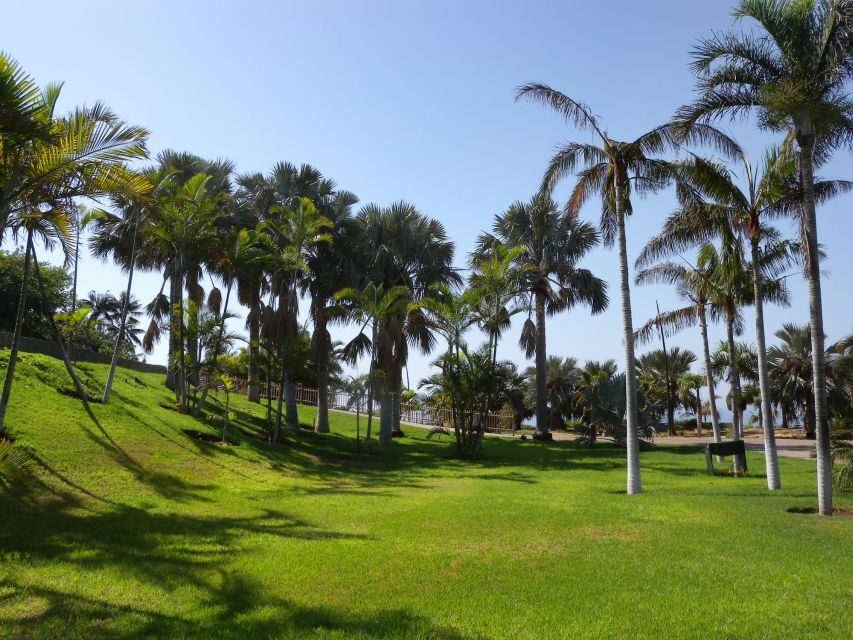
- Europe’s top palm collection vibe, with hundreds of palm types arranged for easy browsing
- Island territory sections showing palms from places like Madagascar, the Caribbean, and Polynesia
- Sea and city views from higher viewpoints, with seating built into the outlooks
- Water features including lakes, a stream, and waterfalls that add cool spots for breaks
- Wildlife-friendly garden feel, with butterflies and birds often seen around the paths
- Great value at about $7 per person for a full garden walk day
Palmetum Santa Cruz de Tenerife: what it is and why it feels meaningful

The Palmetum of Santa Cruz de Tenerife is a botanical garden built on a site that used to be a municipal rubbish dump. The result isn’t just a pretty garden. It’s a “how did they do that?” kind of place, where you can literally walk from a harsh past into an orderly, planted landscape.
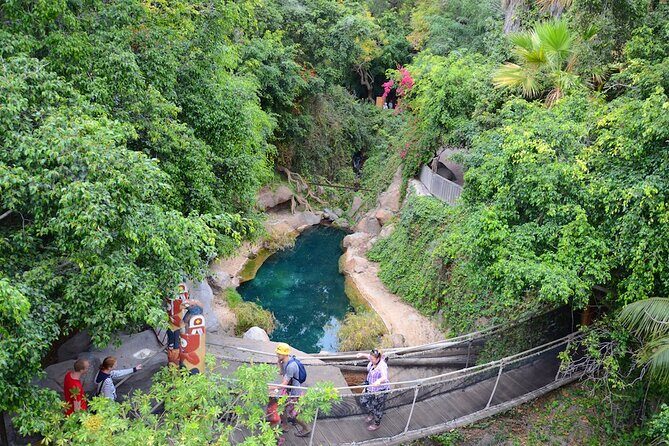
The park covers about 12 hectares, and the design uses natural features and big volcanic rocks as visual anchors. It also uses water in multiple ways, with two lakes, a stream, and three waterfalls spread through the grounds. That matters because it creates micro-areas: shady-looking corners, places where you can hear water, and spots where the air feels cooler during a warmer day.
What you should take away is this: the Palmetum isn’t trying to be a museum. It’s trying to be usable, walkable nature. And it’s palm-focused enough that you’ll get that satisfying sense of theme instead of “a bit of everything.”
You can also read our reviews of more tours and experiences in Tenerife



The palm collection: the main reason to go
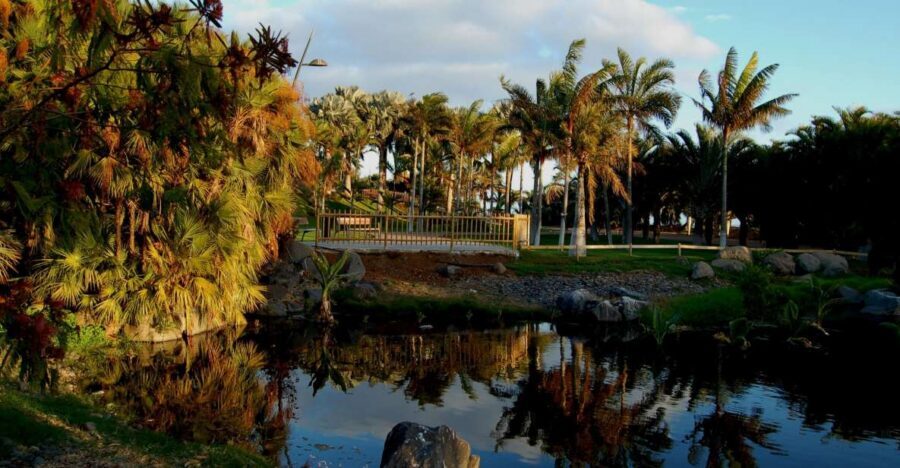
If you love palms, this is where you’ll spend most of your time. The collection is organized around the palm family, Arecaceae (Palmae), which is the most represented group in the park.
The numbers are part of the fun. You’re looking at over 600 palm species spread across the park, sorted by geographic origin. That means you’re not only seeing palms that look similar—you’re learning that palms come from different islands and regions, and the park gives you a way to compare them.
Then there’s the bigger plant picture. The Palmetum also includes about 3,000 plant species from tropical and subtropical climates from around the world. So yes, you’ll be in palm territory most of the time, but you’ll also notice other plants filling out the scene, especially in areas built to reflect island habitats.
One practical tip: pace your walk by “zones,” not distance. The park is set up so you naturally move from one plant theme to the next. If you try to rush like it’s a straight-line trail, you’ll miss the satisfaction of comparing palms side-by-side.
Island territories: how the layout helps you understand what you’re seeing
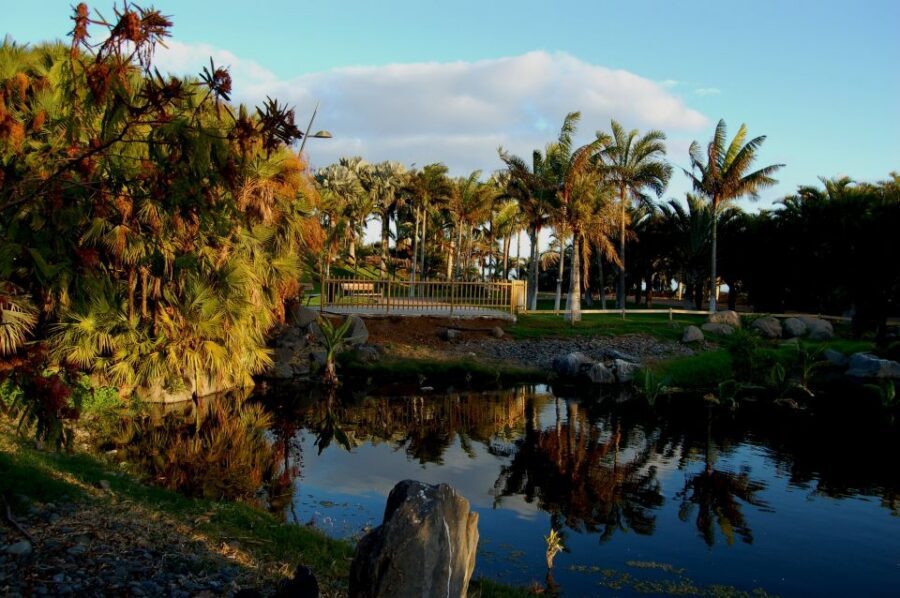
A key feature of the Palmetum is that most of the area is dedicated to island territories. That’s more than a decorative idea. It’s a way of presenting collections that feel connected instead of randomly planted.
In practice, you’ll come across sections that represent island regions such as Madagascar, the Caribbean, and Polynesia. That helps you interpret the garden as a living library of origins. You’re not just photographing pretty fronds. You’re seeing how the park groups plants by where they come from, so your brain starts to label what you’re looking at: “this looks like it belongs to that region.”
If you enjoy reading plant signs, you’ll get extra value here. Some signage can look a bit worn, so don’t expect every label to look brand-new, but the overall organization is clear enough that you can still follow the concept.
Water features and the rock garden effect
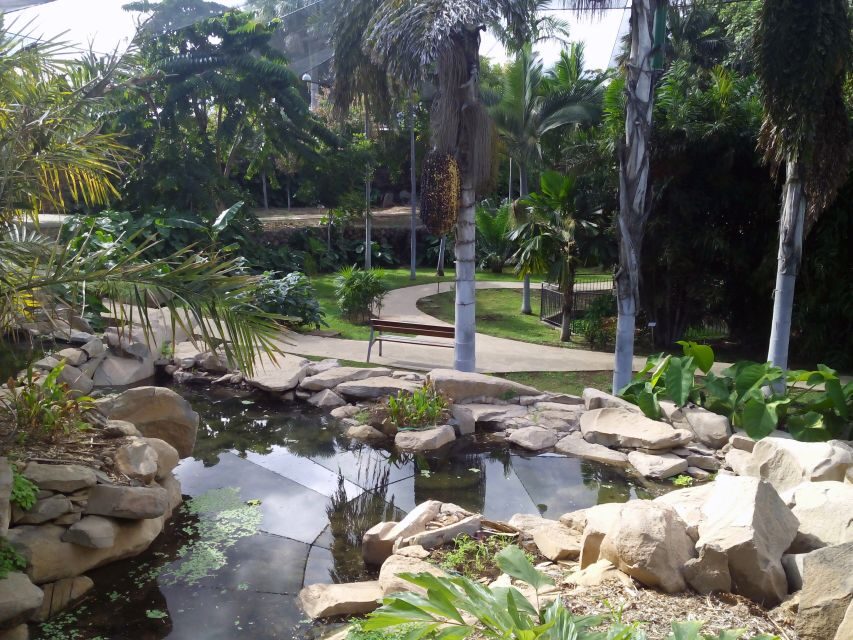
The park’s water isn’t a single pond you walk past. You’ll encounter multiple water moments: lakes, a stream, and three waterfalls. These act like waypoints. When you see water, you know you’re at a “pause here” section of the walk.
Water also helps the gardens feel more planted and more engineered. The volcanic rock sections create dramatic texture and give the plants a “stage,” especially where the path curves around larger rock formations.
A heads-up from real-world experience: a few ponds may look less polished than you’d expect. That doesn’t ruin the visit, but it’s worth knowing if you’re the type who reads every detail with a microscope. You can still enjoy the views and the overall garden design even if one water feature isn’t photo-perfect that day.
Views over the ocean and the city: where to stop and why
The Palmetum climbs enough that you get the payoff: sea and city views. You’ll find outlooks from higher ground, and they come with seating—so you’re not forced into a “stand and stare” tourist routine.
This is one of the most relaxing parts of the visit because the scenery changes as you move. From palm-heavy sections, you’ll gradually see more horizon and more coastal detail, and the viewpoints help you understand why this garden works in Santa Cruz de Tenerife. You’re not sealed inside greenery. You’re stepping into it, while the ocean stays visible in the background.
For a smart visit, I’d plan breaks at benches facing the views, then use the next stretch to “earn” the next outlook. That pacing keeps your legs fresh and keeps your photos better organized.






Wildlife sightings: birds and butterflies along the paths
The Palmetum feels good for people who enjoy small nature moments. You can often spot birds and butterflies moving between plant groupings. In particular, you might notice active bird behavior around open areas near water and seating spots.
If you’re into birdwatching, keep your eyes up and scan along the edges of the paths rather than only staring at the tallest trees. One highlight to watch for is a bird-of-prey moment—visitors have reported seeing a kestrel hunting. You may also catch hoopoes up close in the right spots.
Even if you don’t spot anything special, the garden atmosphere is still worth it because birds and insects add motion to a place that’s otherwise quiet and walk-focused.
Timing and how long to plan for
Your ticket is valid for 1 day, so you can tailor the visit to your schedule. Many people treat it like a half-day garden walk, and others stretch it longer once they get into the palm sections and start stopping at viewpoints.
A practical clue for planning: morning visits often feel calmer, while it can get busier later in the day. If you’re visiting on a day trip or cruise schedule, a calm start gives you more space for photos and slow reads of the plant labels.
Also, consider that the park is walkable from the cruise-port area for many visitors. One traveler described a roughly 30-minute walk along a pleasant pathway. That means you can often build this into a low-effort day with minimal transit.
Some visitors report there may be a lift at the start that helps you reach the higher beginning of the walk. Don’t count on it as the only option, but it can be a useful detail if you’re trying to reduce climbing.
Getting around inside the park (and where it may feel hard)
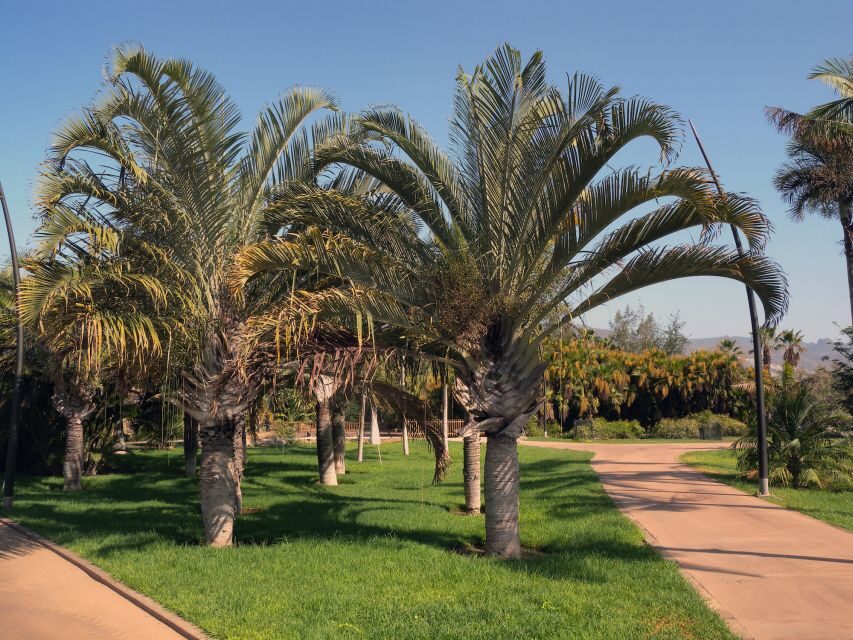
The Palmetum is designed for walking, and it’s wheelchair accessible. That’s great, but “accessible” doesn’t always mean “totally flat.” You may still encounter uneven ground, slopes, and steps depending on the route you choose.
If you’re using walking sticks or you have mobility limits, don’t feel pressured to do every corner. Choose the viewpoints and the main palm areas first, then decide if you want to keep going.
A good strategy is to decide your personal must-sees before you enter. If your priority is the sea-city overlook and the palm zones, you’ll naturally get a strong visit without needing to push through the entire park in one go.
Food, coffee, and what to bring
Food and drinks are not included in your ticket. That’s the key logistics line, and it matters because the park does not position itself as a full-day restaurant stop.
That said, you might find a mobile snack bar in the middle area near a pond, and some visitors describe a small coffee area. Treat that as a bonus, not a guarantee of a full menu.
So for comfort, I’d come prepared with water and something small to snack on. Even if you find a snack bar, having your own basics keeps you from altering your pace just to find refreshments.
Price and value: is $7 a fair deal?
At around $7 per person, an entry ticket to the Santa Cruz de Tenerife Palmetum is easy to justify. The park is about 12 hectares, and it focuses on a single major theme—palms—while also sprinkling in other plant families.
Here’s why that price feels like good value: you’re paying for a walk-through education you can experience at your own speed. You’re not rushed through. You’re not paying for timed entry into a showroom with limited viewing.
The only catch is you’ll still want to budget for your own drinks and any extras you choose to buy inside the park. But compared to many attractions in Europe, this is one of the simpler “one ticket, lots of time outside” deals.
Rules that can affect your day
The Palmetum has a straightforward set of rules that keep the garden safe and respectful. Things not allowed include smoking, drones, and pets (assistance dogs are allowed).
You also shouldn’t expect to bring bikes, alcohol, or drugs into the park, and there are rules against littering, feeding animals, and making fires. Skateboards, scooters, and skates are also not permitted.
If you’re the type who travels with a handheld fan and treats rules casually, pause here. The restrictions are part of why the park stays calm and nature-friendly.
Who this is best for (and who should reconsider)
This ticket suits you if:
- you love plants, especially palms
- you want a low-cost outing in Santa Cruz de Tenerife with big scenery payoff
- you enjoy easy walking plus viewpoint breaks
- you like quiet “nature time” rather than a crowded attraction
You might reconsider if:
- you need fully even, step-free ground the whole way
- you expect food and drinks included in the entry price
- you’re looking for a guided tour format (this is entry to explore)
If you’re traveling with family, it can work well because it’s visual, theme-based, and full of benches. If you’re doing a cruise day, it also fits because you can often reach it on foot and plan a flexible duration.
Should you book the Palmetum entry ticket?
Yes, book it if your goal is an outdoor garden day in Santa Cruz that doesn’t cost much and gives you plenty to look at. For about $7, you’re getting access to a major palm collection, plus water features and sea-city views—without the pressure of a timed tour.
Skip it only if you’re not into plants or you need a very controlled, predictable route with guaranteed smooth walking everywhere. If you can handle a garden walk and you want a theme-driven place to explore, this one is worth your time.
FAQ
FAQ
What is the Santa Cruz de Tenerife Palmetum?
It’s a palm-focused botanical garden on a 12-hectare reconstituted landfill site. The park includes lakes, a stream, waterfalls, volcanic rock areas, and a large collection of tropical and subtropical plants.
How much does the entry ticket cost?
The entry ticket is priced at about $7 per person.
How long is the experience?
Your entry is valid for 1 day. You can check available starting times to plan your visit.
What’s included with the ticket?
The ticket includes entry to the Palmetum.
Is food and drinks included?
No. Food and drinks are not included in the ticket price.
Where do I meet for the entry?
Meet at the entrance of the Palmetum park.
Are pets and drones allowed?
No. Pets are not allowed (assistance dogs are allowed). Drones are also not allowed.
Is the Palmetum wheelchair accessible?
Yes, it’s wheelchair accessible.