REVIEW · TEIDE STARGAZING & SUNSET
Tenerife: Teide Stargazing with an Astrophysicist
Book on GetYourGuide →Operated by A donde vamos hoy · Bookable on GetYourGuide
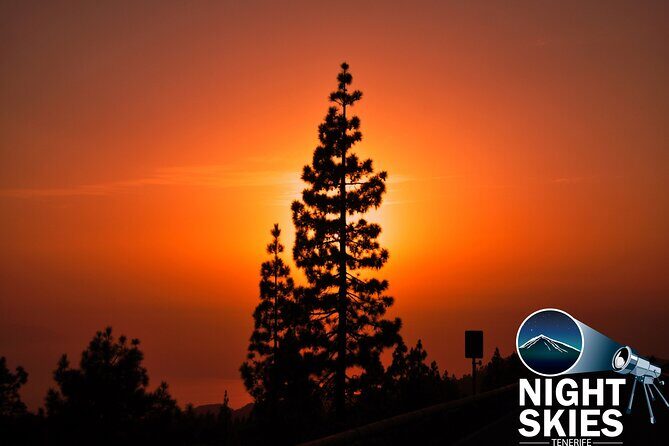
There are nights when the sky feels close enough to touch. From Teide National Park on Tenerife, this 1.5-hour session pairs a trained astrophysicist with a high-end 20 cm (8-inch) telescope for real views, plus a plain-language tour of what you’re seeing.
What I love most is the small group limit (max 10), which means you’re not shouting questions across a crowd, and the guide’s mix of science with stories—constellations, history of astronomy, and what modern astrophysics is actually working on.
One practical thing to weigh: you’ll need serious warmth and patience with mountain weather, because conditions at altitude can be chilly or lead to cancellation.
In This Review
- Key takeaways before you go
- Teide National Park at night: why this sky feels different
- The 20 cm (8-inch) telescope: what it means for your actual views
- How the 1.5 hours plays out from the Parador
- What Adal brings to the sky: constellations, science, and humor
- What you might see: planets, stars, and deep-sky objects
- Weather and temperature: what to pack so you enjoy the whole 1.5 hours
- Price and value: is $47 worth it on Tenerife?
- Who should book this Teide stargazing tour (and who should skip it)
- Should you book it? My call
- FAQ
- Where does the stargazing tour meet?
- How long is the experience?
- How big is the group?
- What languages are offered?
- What telescope equipment is included?
- Is transport included?
- Do I need to bring anything?
- Is the tour suitable for children?
- Is the tour ever canceled due to weather?
- What’s the typical start schedule?
Key takeaways before you go
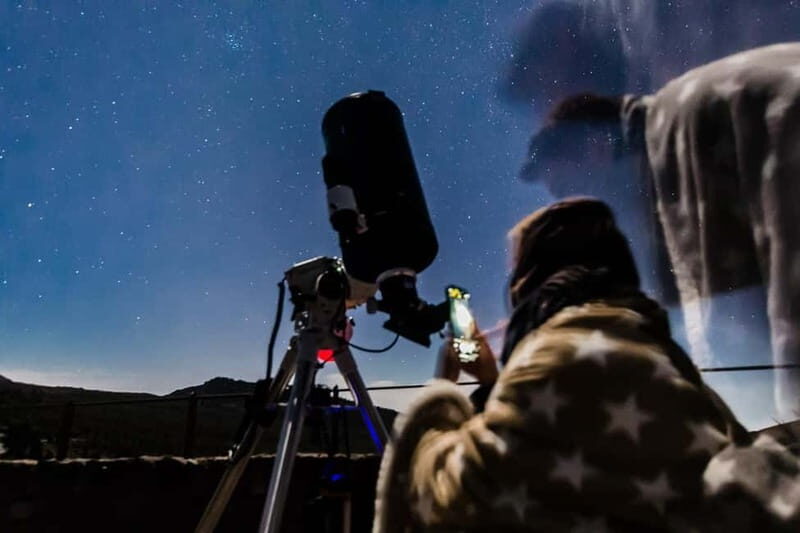
- Astrophysicist guide + small group (up to 10): You get answers, not a lecture you can’t interrupt.
- 20 cm / 8-inch telescope: Big enough to show satisfying detail (including planets and moon features, depending on night conditions).
- Laser guidance and lantern: Helpful when setting up and moving around in the dark near Teide.
- Constellations, myth, and modern research: You’ll connect the sky you recognize with the science you might not.
- Bring warm layers: The tour is short, but the temperature drop at Teide is real.
- Weather can cancel: Safety comes first, and refunds are offered when the operator cancels.
Teide National Park at night: why this sky feels different
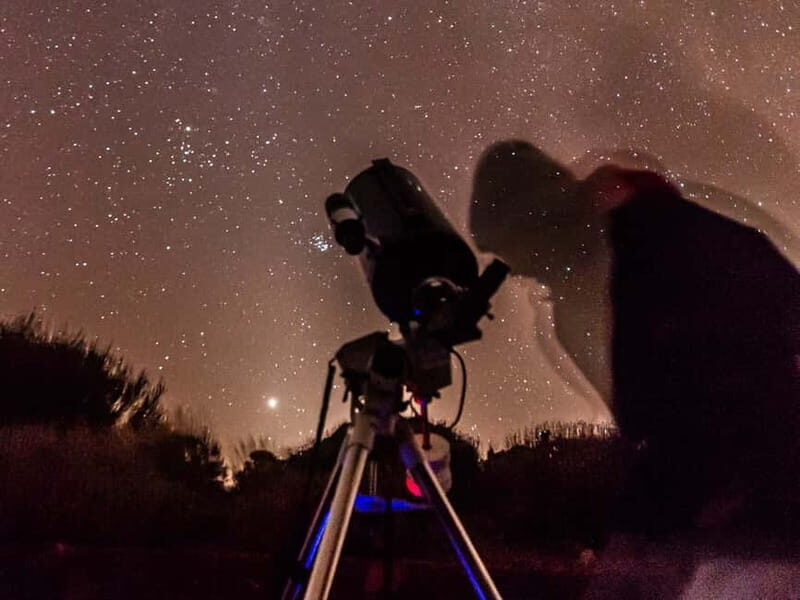
Teide National Park is one of the places people come to when they want the real deal in stargazing: darker skies, dramatic views, and a setting that makes the night sky feel like a destination—not just a background. The tour is built around that idea. You’re not stuck watching from the edge of town. You’re in the Teide area, under conditions meant for seeing far more than what you’d notice with the naked eye.
The best part is that the guide doesn’t treat astronomy like trivia. Instead, you get the sky explained in a way that makes it easier to follow along even if you’re a total beginner. You learn what to look for, how a telescope changes what your eyes can gather, and why the night might look different from one session to the next.
And because it runs in a small group, the experience stays human-scale. You’re close enough to hear the explanation, and the guide can adapt to what the sky is doing that particular night—clouds, clarity, and even where you end up pointing the scope.
You can also read our reviews of more tours and experiences in Tenerife.
The 20 cm (8-inch) telescope: what it means for your actual views
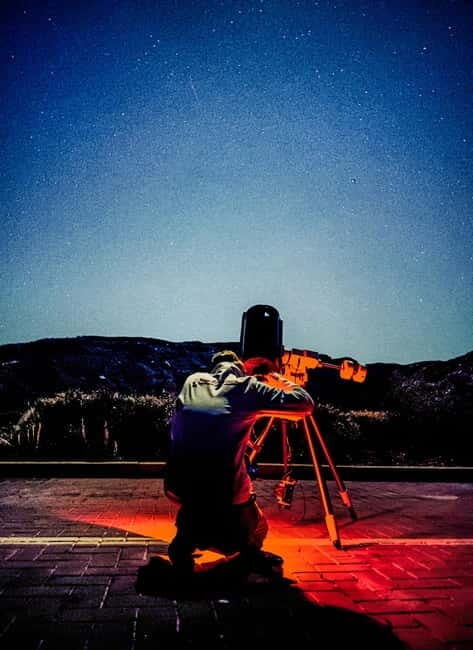
A telescope this size matters for two reasons: brightness and detail. A larger scope can pull in more light and show finer features, which is especially helpful for planets and the Moon. From the experience, you should expect views that go beyond a “wow, stars” moment.
Here’s what the tour is set up to do with the equipment:
- Moon views: The Moon is often a star of the evening because it’s bright and shows texture—craters and surface detail are exactly the kind of thing a telescope can make dramatic.
- Planets (when conditions cooperate): You might see brighter planets such as Jupiter and Saturn, including Saturn’s rings and some of its moons when the night allows.
- Deep-sky targets: The guide can point out nebulae and galaxies and also explain what you’re looking at, not just the names. People also mention star clusters and binary-star-type targets.
Important reality check: astronomy depends on the night. You can have a perfect sky and still have moments where clouds or haze limit what you can see. That’s why the guide’s job isn’t only “turn on the telescope.” It’s also reading the conditions and steering the session so you leave with good views and a clearer understanding.
Also, the included laser guided experience is there for a reason. When you’re trying to find objects in the dark, pointing by hand is slow. Laser guidance helps you lock in faster so you spend more time looking through the telescope.
How the 1.5 hours plays out from the Parador
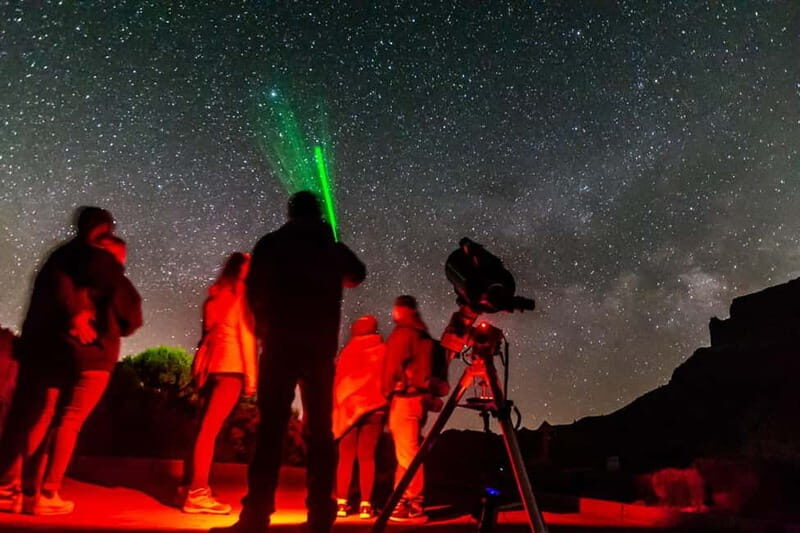
The meeting spot is the Parador de Cañadas del Teide, at the entrance or outdoor patio. The tour is about 1.5 hours, and it returns you to the same area.
In that timeframe, the flow tends to follow a simple rhythm:
- Get oriented in the dark: With a lantern and guidance, you’ll adjust fast. This matters more than it sounds. Night vision takes time, and the group is watching for small changes.
- Learn the telescope basics: You should expect a clear walkthrough of how the equipment is used, and what the guide is doing while pointing. This is one of the most practical parts of the session, because it teaches you how to interpret the view rather than just stare at it.
- Guided stargazing in rounds: The guide will rotate through targets and explain each one. You’re not just waiting your turn; you’re learning what to notice while you look.
Because the group is small (max 10), the guide can actually explain what each person is seeing. That’s a big deal. In larger tours, you often catch only fragments of the explanation. Here, you can ask questions and stay part of the action.
One small consideration: you’ll be outside around a mountain location at night. The experience is short, but the cold can sneak up on you—especially if you stop moving while waiting for clouds to clear or for the telescope to cool and settle.
What Adal brings to the sky: constellations, science, and humor
The tour’s core value isn’t only the telescope. It’s the way the astrophysicist explains what’s up there—and what’s actually happening in the science behind it.
A name you’ll hear in many bookings is Adal (sometimes written as Adel). Across different evenings, people consistently note three things about his style:
- He explains concepts at different levels, so beginners don’t feel lost and amateur astronomy folks still get fresh angles.
- He handles questions without making you feel silly, which is huge when you’re trying to learn.
- He uses a warm, energetic tone—often with humor—so the whole evening stays fun, not stiff.
You also get a layered approach to the sky. The guide connects:
- Constellations and mythology (what people saw and why they named it that way)
- Telescope equipment basics (so the view makes sense)
- Modern astrophysics research (what research is trying to answer now)
That last piece is quietly valuable. A lot of stargazing tours point out objects but stop at “pretty.” Here, you’re shown the bridge between what older astronomers mapped and what modern astrophysics studies—so the night sky feels more like a living field of work than an old museum display.
And if you’re a couple, a solo traveler, or a family with older kids, this matters because the guide can keep everyone engaged. The session can run through science without turning into a textbook.
What you might see: planets, stars, and deep-sky objects
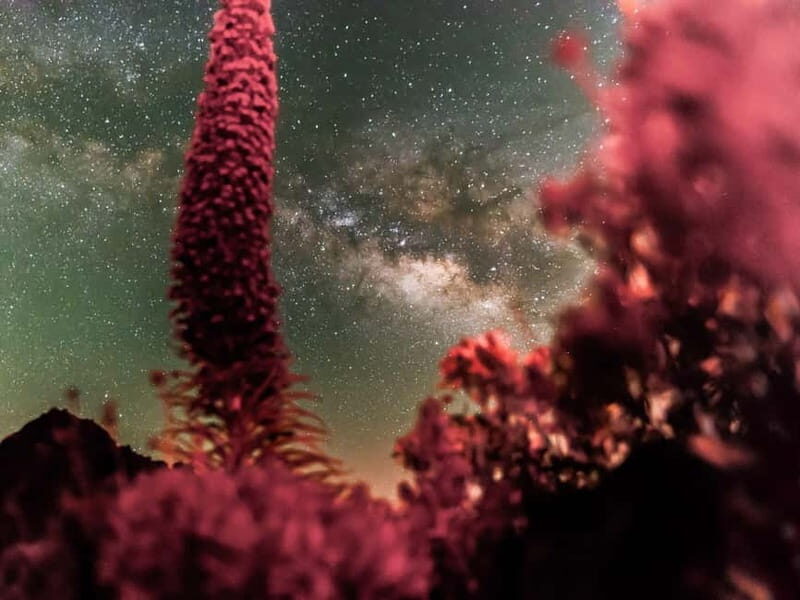
No two nights are identical, but you can expect a mix designed to satisfy different types of curiosity—bright targets you can recognize and fainter ones that feel like a discovery.
Based on what’s commonly described from the experience:
- Jupiter and Saturn can appear, with Saturn’s rings sometimes clearly visible.
- Neptune may be pointed out on nights when it’s practical to observe.
- The Moon is often shown for crater detail.
- You may get views of star clusters, binary-star-type targets, and nebulae (including reflection-nebula references).
- A galaxy may be included, depending on the conditions and the observing plan.
Here’s the tip I’d give you, even before you arrive: treat the night like a guided “what am I seeing and how do I know?” session. The guide’s explanations help you tell the difference between what your eyes can catch and what the telescope brings out.
Also, don’t rush. Some of the best moments come after you’ve been told what to look for, then you look again and realize you’re noticing specific details you wouldn’t have spotted on your first glance.
Weather and temperature: what to pack so you enjoy the whole 1.5 hours
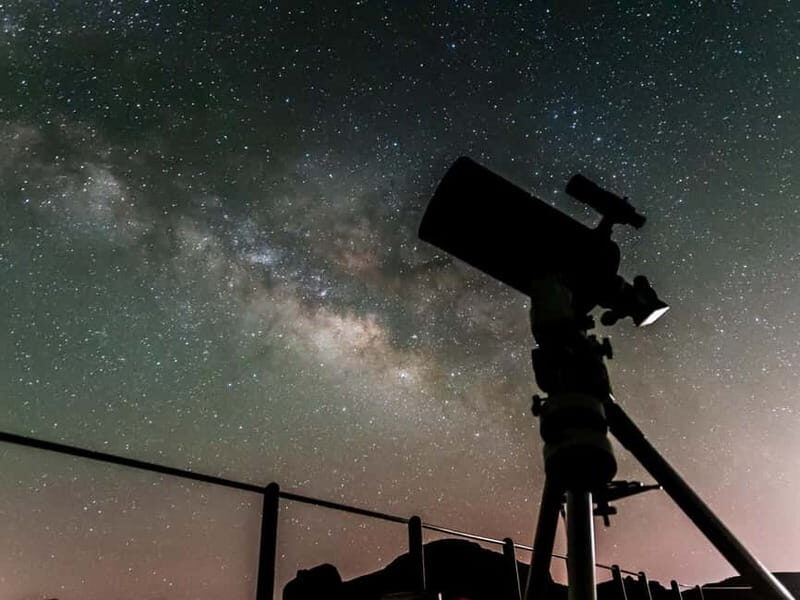
If you remember one thing, remember this: dress for cold. Teide nights can drop fast, and you’re outside for long enough that comfort matters.
Bring:
- Warm clothing
- Thermal layers
- Warm shoes
- Water
- Comfortable clothes you can move in
Temperature guidance included for planning:
- 0–4°C from October to March
- 10–15°C from April to September
Even if it’s milder in your daytime plans, Teide at night can feel sharper. I’d rather you arrive over-prepared than spend the whole evening wishing you’d packed gloves or another layer.
And a heads-up on age fit: the experience may not be appropriate for kids under about 7–9, and it’s listed as not suitable for children under 8. If you’re traveling with younger kids, this likely won’t match their stamina for cold and darkness.
Price and value: is $47 worth it on Tenerife?
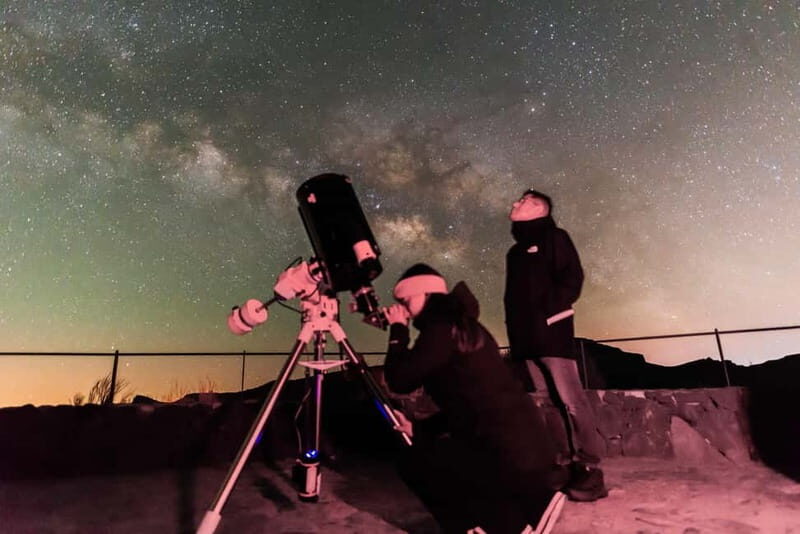
At $47 per person, the big question is what you get for that money. Here’s the honest value breakdown.
You’re paying for:
- A trained astrophysicist and certified official guide
- A 20 cm / 8-inch telescope
- A small group environment (max 10)
- Laser guidance and lantern support to make the night smoother
Compared to generic stargazing where the “guide” might be more of a host, the astrophysicist element is what changes the experience. You don’t just see objects—you understand them. That’s also why the small group size matters. For $47, you shouldn’t be stuck in a crowd where you can’t hear or ask questions.
On the budget side, this isn’t a full-day activity, and it doesn’t include transport, food, or drinks. But as a focused, evening-length experience with serious observing equipment, it often feels like good value.
If you’re the type of person who likes learning while enjoying a view, you’ll probably feel like the price is justified.
Who should book this Teide stargazing tour (and who should skip it)
This tour is a strong match if you:
- Want astronomy explained by someone trained in the field
- Prefer small groups and actual interaction
- Enjoy learning the “why” behind what you’re seeing
- Want a mix of science + constellations + telescope know-how
- Travel as a couple or solo and want an easy, time-limited evening plan
It’s probably not your best choice if you:
- Need wheelchair-level ease or long outdoor standing time flexibility (the tour is outdoor and weather-dependent, and it requires being at the meeting point by your own vehicle or taxi)
- Are traveling with very young kids (it’s not suitable under 8)
Also, if you’re the kind of traveler who hates waiting, read this as a gentle warning: astronomy includes moments of waiting for conditions to improve and for the telescope setup to be right.
Should you book it? My call
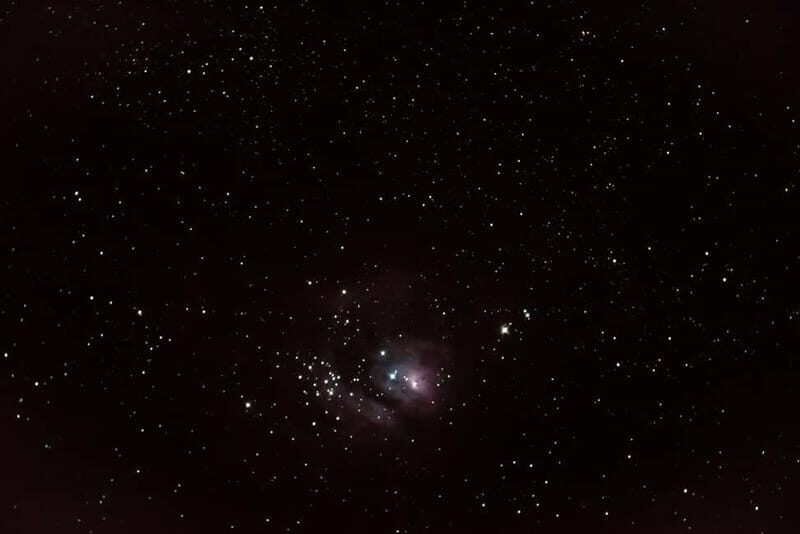
I’d book this if your goal is to see the night sky with real context. The combination of Teide National Park, a 20 cm (8-inch) telescope, and an astrophysicist guide makes it more than a casual star-watching walk.
The decision hinges on two things:
- Your willingness to dress warm and stand outside for 1.5 hours.
- Your flexibility with weather at altitude.
If you can handle that, this is one of those Tenerife experiences that leaves you with more than photos. You’ll leave knowing what you saw, how to find things, and why the sky looks the way it does.
FAQ
Where does the stargazing tour meet?
You meet at the entrance or outdoor patio of the Parador Cañadas del Teide Hotel in Las Cañadas del Teide, Santa Cruz de Tenerife.
How long is the experience?
The tour lasts about 1.5 hours.
How big is the group?
It’s a small group capped at 10 participants.
What languages are offered?
The live tour guide operates in English and Spanish.
What telescope equipment is included?
The experience includes a 20 cm (8-inch) telescope, plus a laser guided experience and a lantern.
Is transport included?
No. Transport is not included, so you’ll need your own car or arrange a taxi to reach the meeting point.
Do I need to bring anything?
Yes. You should bring comfortable shoes, warm clothing/thermal layers, water, and clothes appropriate for the weather.
Is the tour suitable for children?
It may not be appropriate for kids under 7–9, and it’s listed as not suitable for children under 8.
Is the tour ever canceled due to weather?
Yes, it can be canceled because of mountain weather conditions. You’ll receive a 100% refund if canceled by the operator.
What’s the typical start schedule?
Regular group sessions are available on Tuesdays and Fridays, with private sessions possible on other days.