REVIEW · TENERIFE
Tenerife: Teide and Stars
Book on GetYourGuide →Operated by Volcano Teide · Bookable on GetYourGuide
Stars at altitude are hard to beat. This Teide night outing pairs certified Starlight astronomy guides with long-range telescopes for a real guided look at the sky. It’s one of those Tenerife experiences where the setting does half the work for you.
Two things I especially like: you get a strong sunset moment in Teide National Park before the stars come out, and the stargazing part is organized around pro-style observing, not just pointing at constellations. One possible drawback to keep in mind: the experience runs in low temperatures, and any optional add-on tied to access (like the observatory) can be affected if roads or facilities are limited.
Teide and Stars is a focused, guided evening—6 1/2 to 8 hours—and the “success” of your night depends a lot on what you wear and how flexible you are if plans shift. If you come prepared with warm layers and closed shoes, you’re setting yourself up for an A+ sky show.
In This Review
- Key things to know before you go
- Why Teide at Night feels different in Tenerife
- Getting there: transport included, 6.5–8 hours in the evening
- Sunset in Teide National Park: what you’ll see as the light changes
- Starlight-certified stargazing with long-range telescopes
- Optional Add-On 1: Cable car to 3,555 m and the Teide-Dinner
- Optional Add-On 2: Teide Observatory for solar flares and sunspots
- What to pack: cold weather rules are strict for a reason
- Who should book this tour, and who should skip it
- Price and value: is $86 worth it?
- My booking checklist: small questions that prevent big disappointments
- Should you book Teide and Stars? My take
- FAQ
- FAQ
- How long is the Tenerife Teide and Stars experience?
- Is transport included?
- What’s included for stargazing?
- Do I get food on this tour?
- Can children participate?
- What should I wear for the night?
- What languages are the guides?
Key things to know before you go
- Starlight-certified guides teach you what you’re seeing with professional observing gear
- Sunset in Teide National Park happens before the telescopes come out
- Optional cable car takes you up to 3,555 m for higher sunset viewpoints and a Teide-Dinner
- Optional Teide Observatory visit covers solar flares, sunspots, and telescope-based solar observing
- Bring warm layers: the event is in low temperatures with strict clothing rules
- Food is not included by default—it only appears with the cable car option
Why Teide at Night feels different in Tenerife
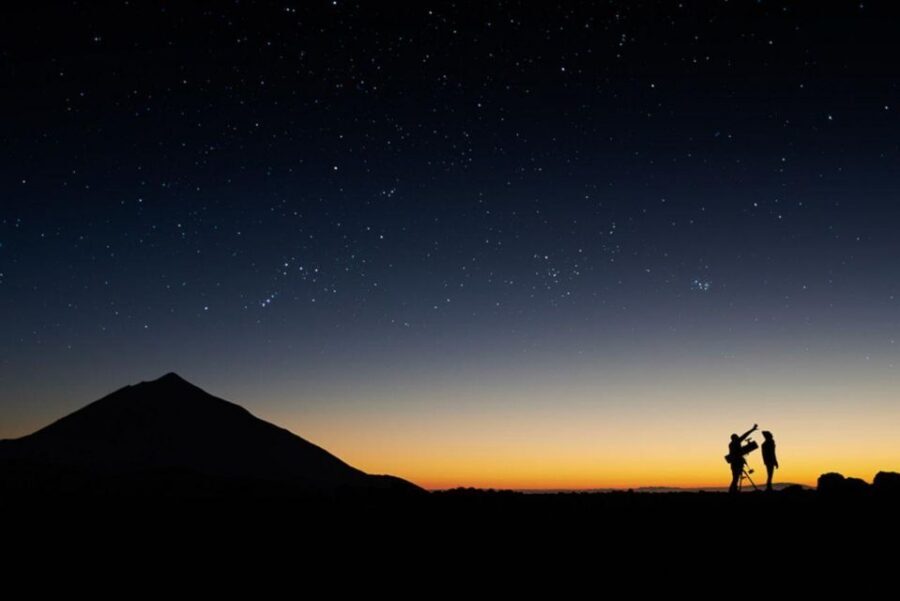
Mount Teide is famous in daylight. At night, it turns into something else: a sharp, dark stage where the sky behaves. The tour is built around that idea. You start early evening in Teide National Park, catch the area shifting as the light fades, then switch gears to real astronomy viewing with guidance you can follow.
What makes this work well is the structure. You’re not just rushed from one photo spot to another. You get a sunset window inside the park, then the focus shifts to the universe—explained in a fun, educational way, using equipment designed for long-distance viewing.
And yes, the star quality is the big headline. Tenerife’s high-altitude sky is one of the reasons this region is so popular for night astronomy. If you’ve ever looked up from a city and felt like you were missing half the show, this is the kind of night that resets your expectations.
You can also read our reviews of more tours and experiences in Tenerife.
Getting there: transport included, 6.5–8 hours in the evening
This is a full-evening outing, typically 6 1/2 to 8 hours, and it includes return transport from both north and south Tenerife. That matters because Teide can eat up your time if you’re driving yourself or trying to coordinate a meeting point after dark.
Pickup is listed as optional, with stops in the south including places like Hotel Sol Arona Tenerife, Hotel Tigotán, and several well-known hotels near Costa Adeje and Bahía del Duque. You can also be picked up at some bus stops such as Best Tenerife and El Duque (bus stop, near a major Gran Hotel area). In the north, the exact pickup set is less detailed here, but the key point remains: round-trip transport is part of the package.
Timing is mostly evening-focused: you’ll be in the park around sunset and then out under the stars. The tour’s length means you should plan your day around it. Don’t book a late dinner reservation right after—your night will run long enough that you’ll likely eat after, not before.
Sunset in Teide National Park: what you’ll see as the light changes
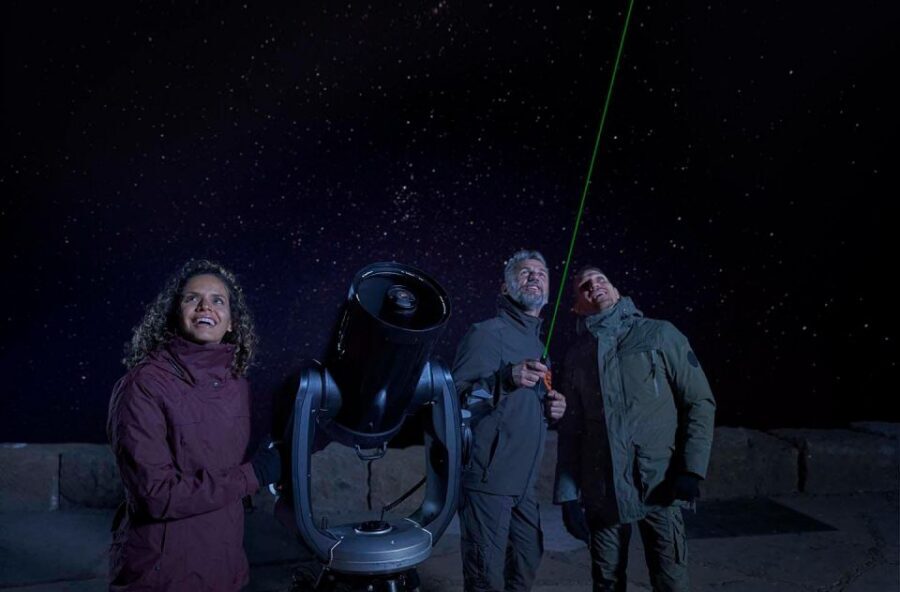
The sunset part isn’t only for dramatic photos. It’s also your transition period into the night environment.
As the sun goes down, the experience follows the way the park “layers” visually and physically. The area shifts from more rural surroundings up toward higher mountain plant life and pine forests as you move through the park. That matters because your brain reads the scenery changes even before you fully notice the temperature shift.
Then you’ll get a spectacular sunset from a viewpoint described as fabulous within the national park. If you pick the higher-altitude cable car option, you’ll also get sunset views from higher on the volcano route (more on that below). Even without the cable car, the key value is that you’re inside Teide National Park for the turning point from day to night, not stuck waiting outside it.
Practical tip: the sunset window is also when you’ll want to take a moment to get comfortable with your gear—hat, water, and layers—because once the telescopes start, you’ll want to stay focused and not fumble with clothing.
Starlight-certified stargazing with long-range telescopes
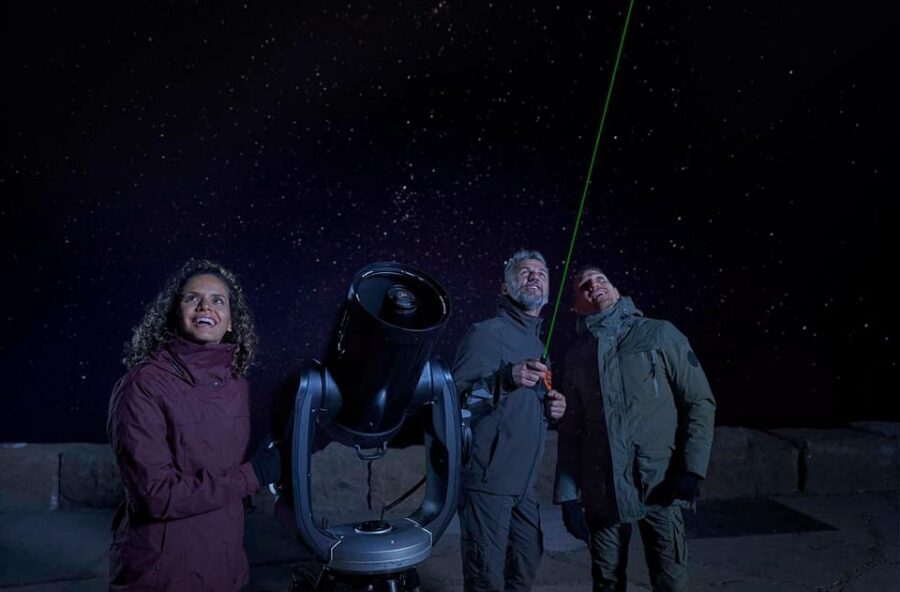
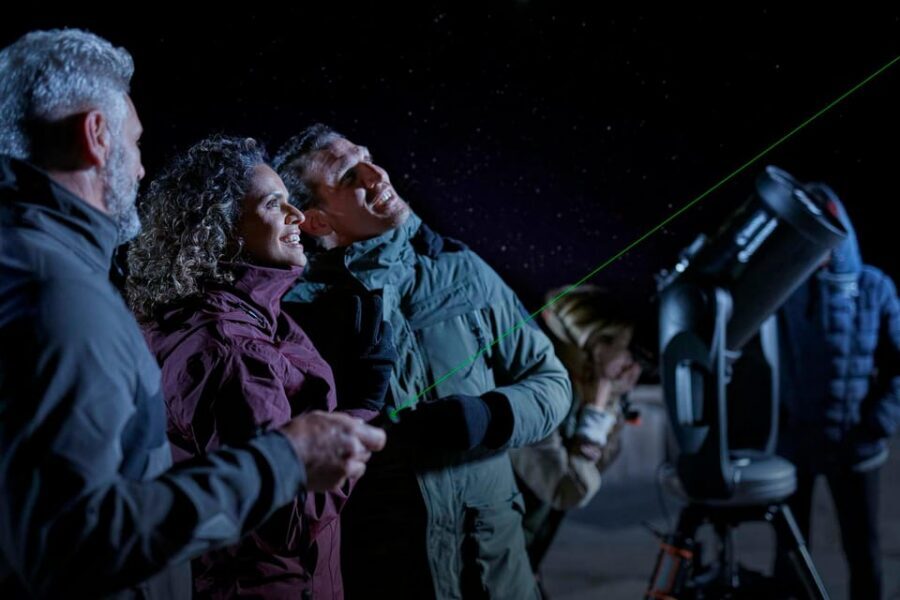
This is the heart of the tour. You’ll observe the sky with professional equipment and astronomy guides certified by the Starlight Foundation. The guide job isn’t just operational (point telescope, turn on). They’re set up to teach you how to look, what to look for, and how the instruments help.
Expect a guided observing flow that’s built for real learning:
- you’ll be shown what the telescope reveals
- you’ll learn the basics in a fun way, tied to what you can actually see
- you’ll use long-range telescopes designed to make distant objects clearer
This is also where the human factor matters. In one standout example, guides named Abel and Josef were praised for being especially engaging and making the outing interesting without feeling like a lecture. Even if your guide isn’t Abel or Josef, the format is the same: certified astronomy instruction with an emphasis on enjoyment.
One more honest note: stargazing nights depend on conditions. If clouds roll in, the view can change. The tour is still worth it for the guided astronomy approach, but don’t treat it like a guarantee of a perfectly clear sky. High mountains help, but Tenerife’s weather can be moody.
Optional Add-On 1: Cable car to 3,555 m and the Teide-Dinner
If you want to experience Teide at a higher elevation before you start observing, choose the option that includes a ticket to ascend and descend by cable car. The top altitude is listed as 3,555 metres.
Why this add-on is popular: you get sunset views from higher up, plus a big, volcanic perspective. At that altitude, you’ll see the Las Cañadas caldera and the Teide volcano in a way that feels almost like the mountain is the whole landscape. It also includes a view across neighboring islands—La Gomera, La Palma, and El Hierro are specifically mentioned.
Once you descend, you’ll have time for a picnic-style Teide-Dinner, specially prepared for the occasion. Since food isn’t included by default, this is the moment where your ticket becomes more “meal-and-experience,” not just a sightseeing plan.
A health note you should take seriously: this cable car option isn’t open to people with heart conditions or pregnancy, and it can also be restricted for anyone with certain physical disabilities or motor impairments due to health and evacuation-related risks at altitude.
So if altitude scares you or your doctor has given you specific limitations, pick a different option. Your comfort matters more than checking a box.
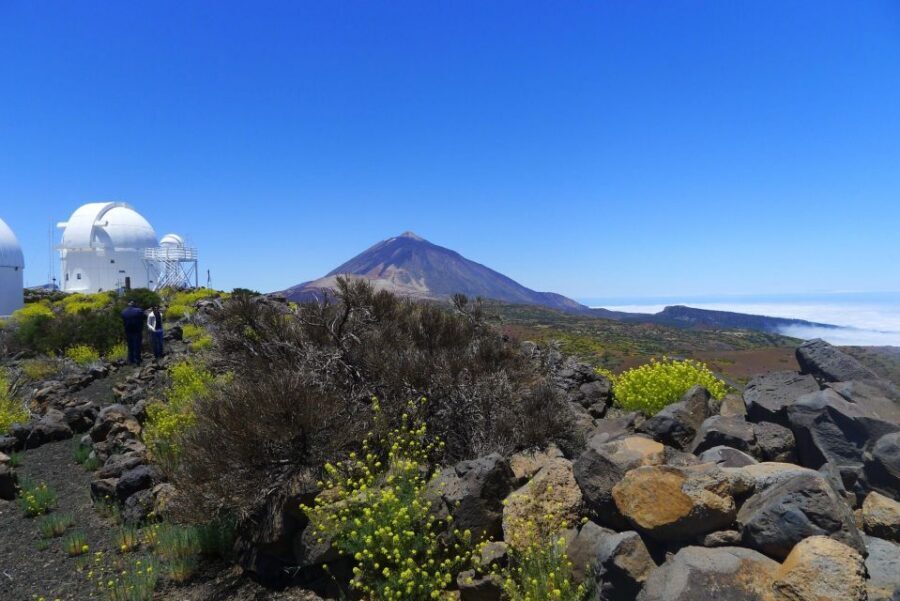
Optional Add-On 2: Teide Observatory for solar flares and sunspots
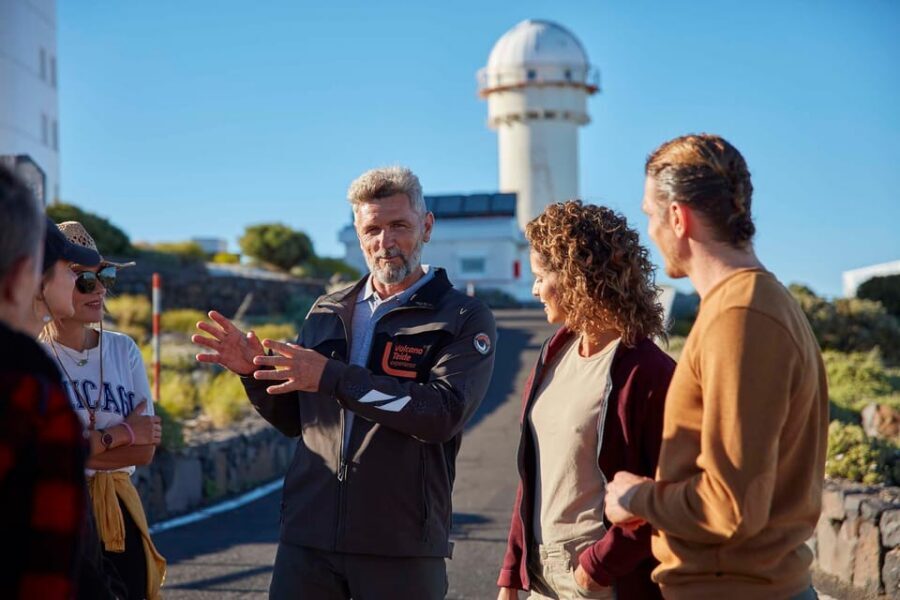
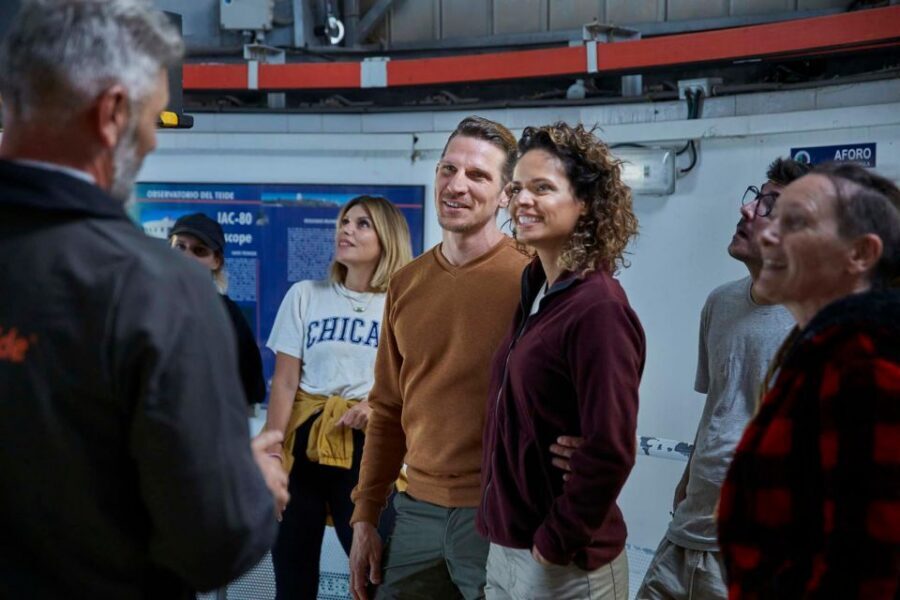
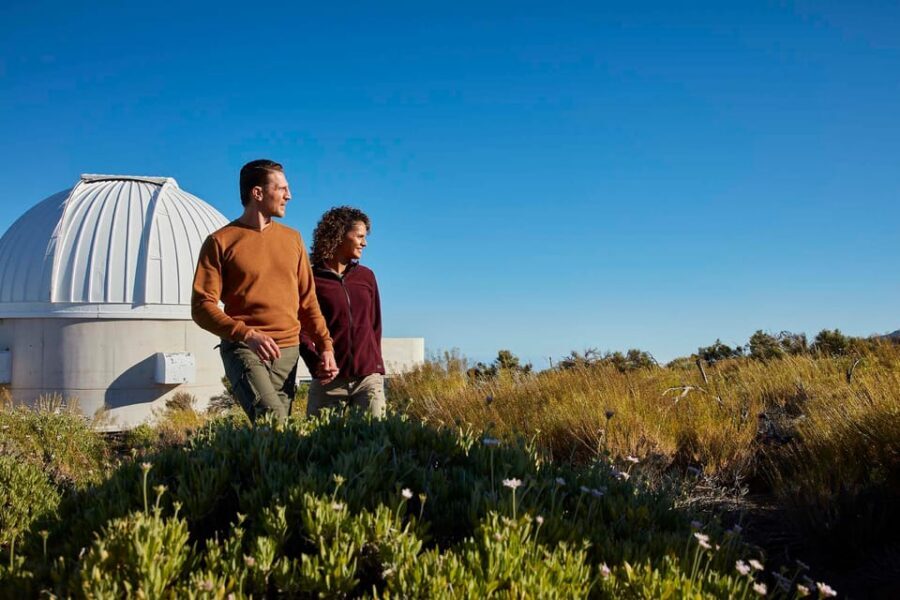
If you prefer science that happens in daylight, the Teide Solar Observatory add-on is the match. It runs in the late afternoon before your stargazing at the cable car base station.
Here’s what makes it more than a casual visit:
- it’s described as the biggest solar observatory in the world
- your guided tour includes a fun workshop experience on astrophysics
- you learn about projects carried out at the Canary Islands Institute of Astrophysics
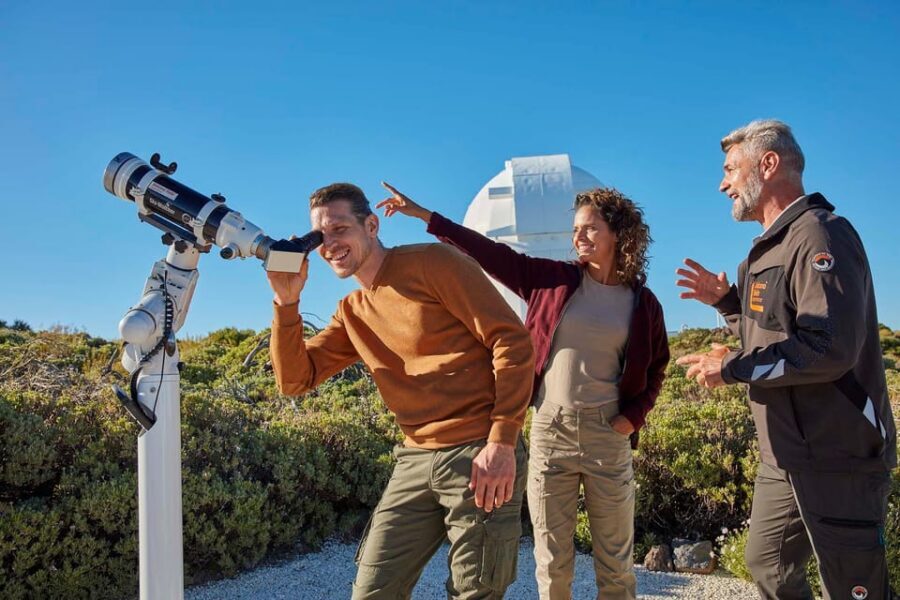
- you observe solar flares and sunspots through a solar telescope
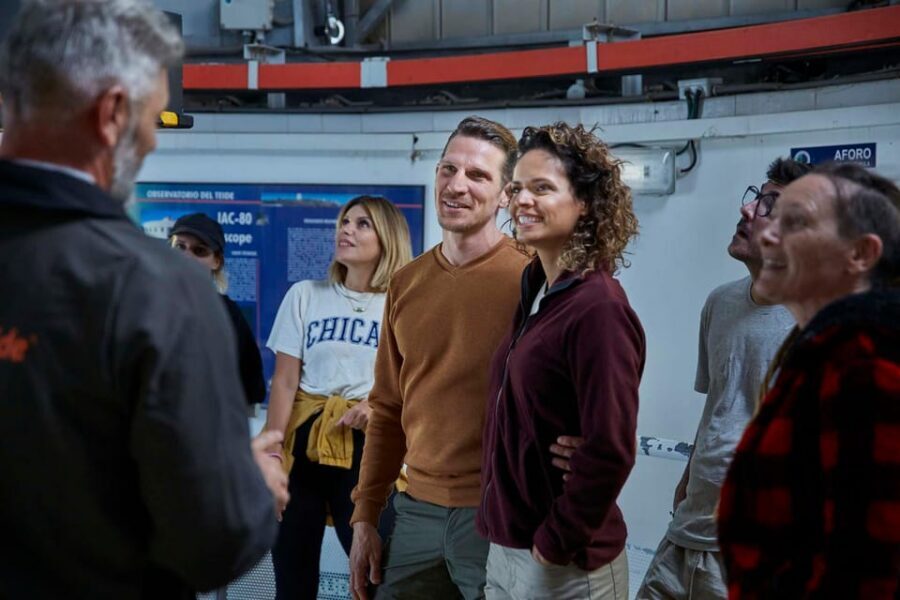
- you can explore inside a nocturnal telescope
This option is also not available in French, which matters if language is a priority. The tour itself is guided, and it’s structured around hands-on learning and seeing how solar observing works.
Two extra considerations based on the provided tour details:
- the observatory walk includes movement between places with paths and stairs, so it isn’t recommended for people with reduced mobility or certain health issues (like anemia, heart or breathing problems)
- if you have any physical limitations, you should choose carefully and double-check suitability before booking
One thing to keep in mind if you’re making a plan around the add-on: access can be affected by road closures or other operational issues. If the observatory is your main reason for booking, build a little flexibility into your schedule and keep expectations realistic.
What to pack: cold weather rules are strict for a reason
This tour is in a low-temperature setting, and they’re serious about the dress code. The good news: it’s easy to prepare. The bad news: you can’t wing it.
Bring:
- warm clothing
- a hat
- water
- comfortable clothes
- closed-toe shoes
Not allowed:
- sandals or flip flops
- shorts
- open-toed shoes
If you want a simple rule: dress like you’re going somewhere cold and windy, not like you’re going out for dinner in Tenerife.
A practical note from a reviewer’s feedback: “Warm clothing” can mean different things to different people. If you run warm at the beach, you’ll still feel the cold up at night. Plan for temperatures that can feel around 10°C (or at least cool enough that you’ll want layers). I’d rather be overprepared than chilly while you’re trying to enjoy the telescopes.
Who should book this tour, and who should skip it
This experience is best for people who genuinely want more than a quick photo. You’ll enjoy it most if you like guided learning, you enjoy outdoors at night, and you’re curious about what the sky can show through equipment.
It’s not suitable for:
- children under 8 (proof of age is required)
- pets
And certain physical situations need extra caution:
- the observatory add-on isn’t recommended for people with health or mobility limits because of stairs and walking
- the cable car add-on isn’t open for people with heart conditions or pregnancy, and it may be risky for certain physical disabilities or motor impairments
If you’re healthy, comfortable in cool weather, and willing to wear the required footwear and clothing, you’re in a great spot to have a smooth night.
If you hate cold, hate strict footwear rules, or can’t handle walking and stairs, consider skipping or choosing the option that best fits your comfort level.
Price and value: is $86 worth it?
At about $86 per person with round-trip transport included, the value really depends on which version you choose.
Here’s how I’d think about it:
- If you book the base Teide night and the telescopes and guide instruction are your priority, you’re paying for transport + sunset + guided professional stargazing. That’s a solid deal for a high-quality astronomy format.
- If you add the cable car option, your value improves further because the ticket includes ascent/descend plus a dedicated Teide-Dinner. Now you’re paying not only for astronomy, but for altitude access and a planned meal.
- If you add the observatory option, you’re paying for science time: solar observing, a workshop style component, and guided access to telescopes.
One important fairness note: the experience includes optional components, so what you end up getting can depend on conditions and access. And since at least one person had a disappointing experience when the observatory part didn’t happen due to access problems, I’d recommend you treat add-ons as bonus value, not the only reason to enjoy the night. The core experience—the park sunset plus telescope-guided astronomy—still makes sense on its own.
The overall rating is 4.2 from 24 reviews, which suggests most people are happy with the guiding and the stargazing format, not just the idea of seeing Teide at night.
My booking checklist: small questions that prevent big disappointments
Before you lock it in, I’d ask (or at least check) a few things so your evening runs smoothly:
- Which option are you choosing: base, cable car, observatory, or a combo?
- Are you clear on what’s included versus what’s optional? (Food is only mentioned as available in the cable car option.)
- Can you comfortably handle cold weather with the required closed-toe shoes and no shorts?
- Do you have any health issues that could make the observatory add-on tricky, given stairs and walking?
- If the observatory is a must for you, are you prepared for the possibility that access could be limited?
Also, aim to pack layers in a way you can manage quickly. Once stargazing starts, you’ll want to stay warm without spending the whole night adjusting clothes.
Should you book Teide and Stars? My take
Book it if you want a guided astronomy night in one of Tenerife’s most meaningful settings. The combination of sunset inside Teide National Park and Starlight-certified telescope viewing is the kind of structured experience that turns “I’ll look at the stars” into “I’ll understand what I’m looking at.”
Skip or reconsider if cold weather and strict footwear rules are a deal-breaker for you, or if your health or mobility needs make stairs and walking difficult—especially for the observatory add-on.
If you’re on the fence, pick the option that matches your style:
- Cable car for higher sunset views and a planned meal
- Observatory for daytime solar science and workshop-style learning
- Base night for the core telescope-guided stargazing with sunset timing and transport
FAQ
FAQ
How long is the Tenerife Teide and Stars experience?
It runs about 6 1/2 to 8 hours, depending on the option you choose and the starting time.
Is transport included?
Yes. Return transport is included from both the north and south of Tenerife, with optional pickup from listed hotels and bus stops.
What’s included for stargazing?
You’ll have professional observation with long-range telescopes and astronomy guides certified by the Starlight Foundation, along with a guided sunset moment in Teide National Park.
Do I get food on this tour?
Food is not included by default. It’s only available with the option that includes a cable car ticket to see the sunset, where you’ll have time for a picnic-style Teide-Dinner.
Can children participate?
No. Children under 8 are not allowed, and proof of age is required.
What should I wear for the night?
Bring warm clothing and wear closed-toe shoes. Sandals/flip flops, shorts, and open-toed shoes aren’t allowed.
What languages are the guides?
The live tour guide is available in English and Spanish. The Teide Observatory option is noted as not available in French.