REVIEW · MOUNT TEIDE TOURS
Teide National Park: Stargazing Experience
Book on GetYourGuide →Operated by Discover Experience · Bookable on GetYourGuide
Look up. Teide National Park does the rest. This 80-minute night walk is built around a dark-sky setting in the park, then hands-on stargazing so you know what you’re seeing—not just looking up.
What I love most is the naked-eye orientation (Polaris, the celestial north pole, the ecliptic and the zodiac line) paired with high-grade telescopes for the big “wow” objects. The guides’ style—clear, funny, and very hands-on—is often mentioned with names like Miguel, Manuel, and Luke.
The one catch is that it’s cold. You’ll be outside after sunset, so bring warm layers and expect it to feel even colder at altitude.
In This Review
- Key things that make this stargazing tour special
- Why Teide National Park makes stargazing feel personal
- Meeting at Minas de San José: finding the start point
- The 80-minute plan: naked-eye sky first, then telescopes
- After sunset: start with stars you can actually spot
- Learn the ecliptic and zodiac line
- Greek mythology: constellations with a story-map feel
- Telescopes at work: planets, clusters, and famous targets
- High-grade telescopes make the difference
- Astrophoto telescope: getting images from what you saw
- Price and value: what you’re really paying for at $41
- Weather, the Moon, and why “clear night” isn’t the whole story
- What to bring and wear so you can actually enjoy it
- Safety and who this tour is not for
- Who will love this Teide stargazing session most
- Should you book this tour?
- FAQ
- How long is the stargazing experience?
- Where is the meeting point for the tour?
- Is hotel pickup or drop-off included?
- What’s included in the tour price?
- What should I bring?
- Will the moon affect what I can see?
- Who is this tour not suitable for?
Key things that make this stargazing tour special
- Polaris and celestial north: you learn where true north sits before the telescopes come out.
- Ecliptic and zodiac line: you get a real sky “route,” not random star facts.
- Greek mythology as a map: constellations come with stories that help shapes stick.
- Telescopes for standout objects: you’ll observe major targets, including planets when conditions allow.
- Astrophoto telescope results: you turn what you see into images afterward (sent after the tour in recent experiences).
Why Teide National Park makes stargazing feel personal
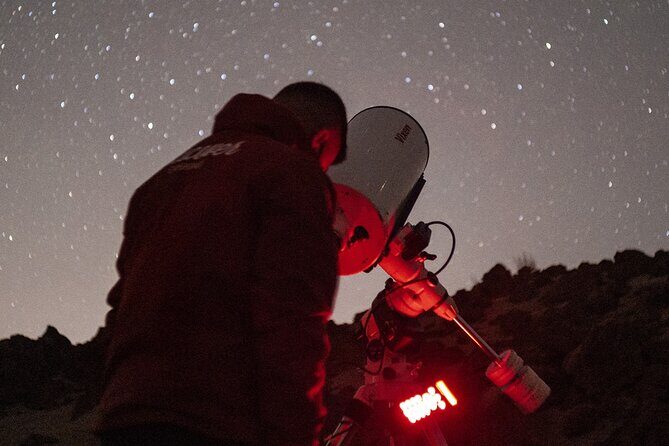
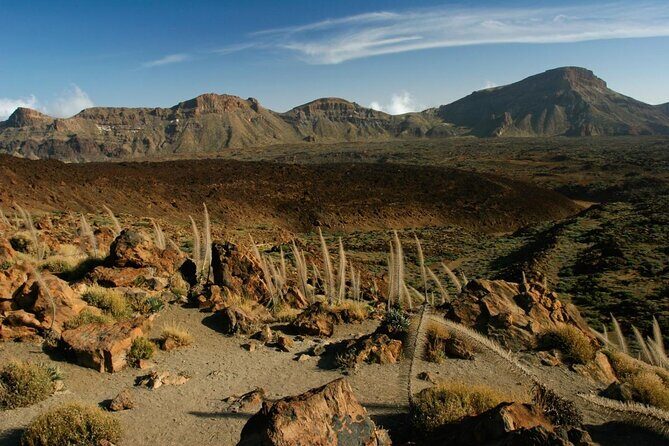
If you’ve ever tried to watch stars from a city, you know the problem: the sky looks boring. Here, the pitch-dark conditions in Teide National Park are the whole point. With light pollution kept low, the night sky actually shows layers, not just a few bright dots.
The tour doesn’t treat stargazing like a passive show. It teaches you how to point your eyes and your imagination in the right direction. That’s what makes it more satisfying than a basic “look through the telescope” stop.
And the setting matters. You’re in the Canary Islands, and you’re out in nature where the sky can look crisp and deep. Even when you’re not an astronomy person, you’ll feel like you’re inside a real night-sky lesson.
You can also read our reviews of more tours and experiences in Tenerife.


Meeting at Minas de San José: finding the start point
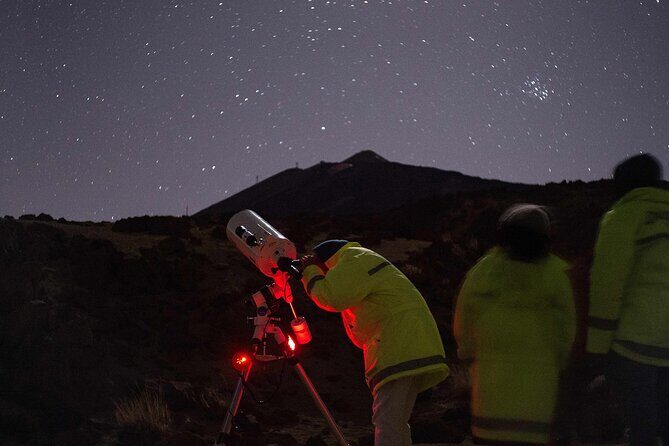
You meet in a parking area just in front of the natural environment of Minas de San José. If you’re coming from the south, it’s the second car park on the right. If you’re coming from the north, it’s the first car park on the left.
No hotel pickup is included, so plan to drive or get yourself there on your own. It’s a small detail, but it matters because the tour starts after sunset and you don’t want to be late with headlamp confusion.
If you’re the type who likes arriving early, do it. You’ll have a few minutes to get your warm gear sorted before the group starts looking up.
The 80-minute plan: naked-eye sky first, then telescopes
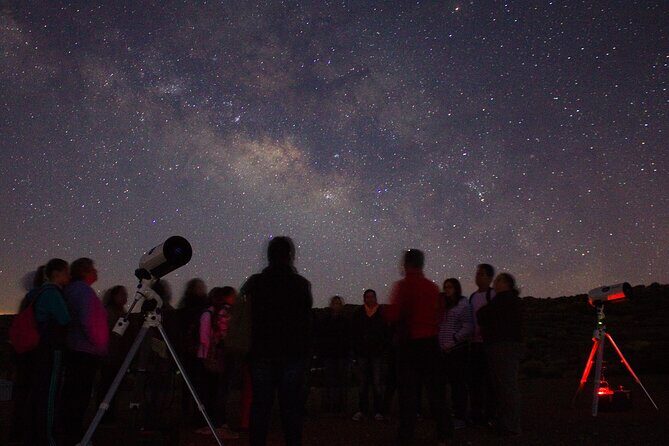
This tour runs for about 80 minutes, and the order is smart. You start with your naked eye, then add telescopes once you have your bearings. That sequencing turns the evening into an actual progression, not two separate activities.
After sunset: start with stars you can actually spot
Right after sunset, the guide begins with what you see with no equipment. You’ll look at the most important stars and start learning how to recognize constellations rather than just memorize names.
Then the guide points out Polaris and the celestial north pole. That’s the anchor point for your night-sky orientation. Once you understand where north sits, everything else becomes easier to track.
Learn the ecliptic and zodiac line
Next comes navigation through the sky: the ecliptic and the zodiac line. This is the kind of information that sounds niche, but it helps you connect the dots.
You’re basically learning a framework for where to look as the night goes on. If you’ve ever felt lost because stars seemed to “float everywhere,” this part gives your eyes a plan.


Greek mythology: constellations with a story-map feel
The tour also follows Greek mythology through the sky. Constellations are explained through the shapes and the stories attached to them, so you remember what you’re looking at.
It’s not just trivia. When you tie a pattern to a picture in your head, the star shapes stop feeling abstract. And the mythology angle helps beginners catch up fast.
Telescopes at work: planets, clusters, and famous targets
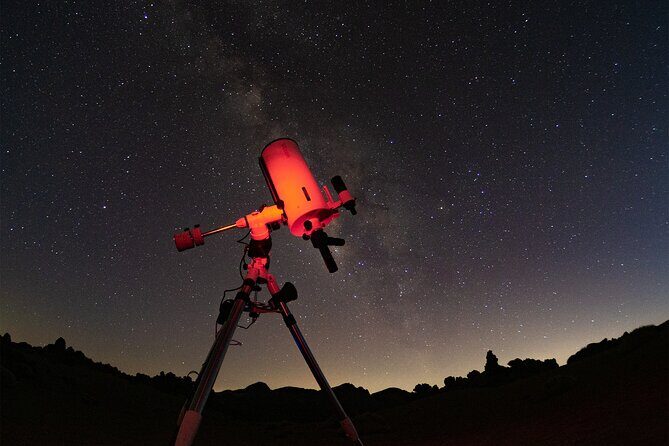
Once orientation is established, the telescopes come out. This is where the tour shifts from “learning the sky” to “seeing the sky up close.”
The tour emphasizes observing outstanding celestial objects, and it specifically mentions planets. In real experiences on this tour, people have seen targets like Jupiter and its moons, Saturn and its moons, and also objects such as Orion’s nebula and the Andromeda galaxy.
What you’ll see can vary with conditions, but you can expect a mix of:
- bright planetary targets (when visible)
- well-known deep-sky objects (like nebulae and galaxies)
- major constellations that were introduced earlier
That combination is a big win. You’re not only getting spectacle. You’re also connecting the telescope view back to the constellation shapes you learned at the start. It makes the night feel coherent.
High-grade telescopes make the difference
The tour mentions high-grade telescopes and a professional astronomical guide. That matters because telescope time is the expensive part of any astronomy experience.
If you’re paying attention, you’ll notice the guide’s job is not only pointing. It’s explaining what the object is, what you’re seeing through the optics, and how it fits into the wider sky picture you started learning.
Astrophoto telescope: getting images from what you saw
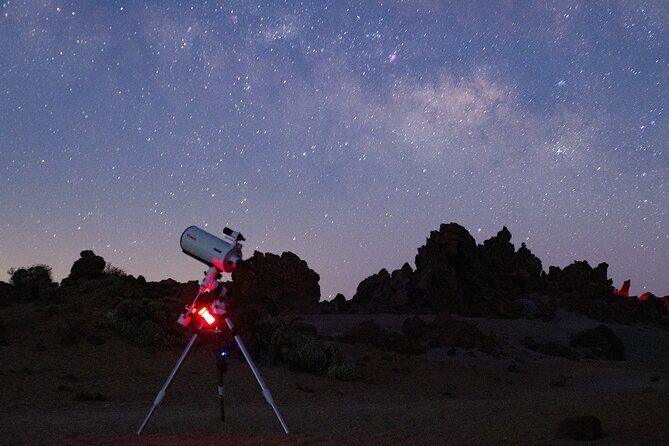
One of the standout features is the astrophoto telescope. The tour describes turning what you see into stunning images, and recent experiences note that photos of observed objects (like a star cluster and a galaxy) were sent after the tour.
So you don’t just go home with blurry memories. You may receive images you can keep and share, which is especially helpful if you’re traveling and don’t want to carry extra gear.
Also, the photo element helps your learning. When you later compare your telescope view to the sent images, the shapes start to make more sense.
Price and value: what you’re really paying for at $41
$41 per person for an 80-minute stargazing tour sounds straightforward, but the value comes from what’s included.
You’re getting:
- a stargazing explanation at naked-eye level
- astronomical observation with telescopes
- a professional astronomical guide
- insurance during the tour
And you’re doing it in a place where the sky is suited for serious viewing. Light-pollution-free skies cost something in planning and location, even if you don’t pay for that directly. Here, you’re buying access to both the dark sky and the expertise to interpret it.
The main extra cost is time and logistics. Hotel pickup and drop-off are not included, and dinner isn’t included either. If you’re already planning to be near Teide, that’s fine. If not, factor in travel to the meeting point.
One more value note: this isn’t a long tour, so the guide can keep momentum. The downside is you’ll need to commit to staying outside and cold for the full 80 minutes. The upside is you get a complete mini lesson instead of a half-formed stop.
Weather, the Moon, and why “clear night” isn’t the whole story
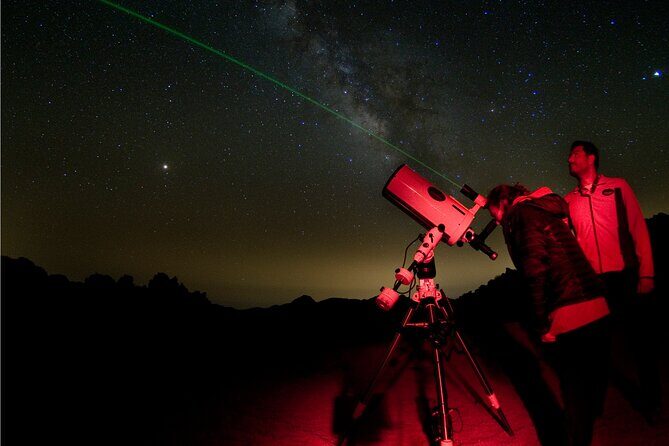
Teide evenings can be cold fast. The tour guidance is clear: wear warm clothing and warm shoes, and comfortable shoes help because you’ll be outdoors.
Recent experiences emphasize that temperatures can feel freezing after time outside at altitude, even when the daytime on Tenerife feels mild. If you run warm, you’ll still likely want layers, because wind can make a big difference.
The moon is another factor. The tour notes that the moon’s cyclical nature matters when booking. Practically, that means lunar brightness can reduce how crisp the darker deep-sky objects look.
You don’t need to become a moon expert. Just treat the moon phase as part of your planning, because it directly affects contrast in the sky.
What to bring and wear so you can actually enjoy it
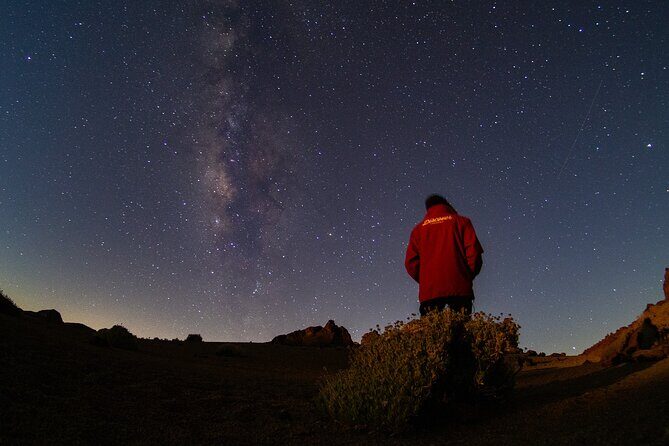
Here’s your packing checklist based on what the tour asks for:
- Comfortable shoes for standing outdoors
- Warm clothing (essential in autumn and winter)
- Warm shoes
That’s it, but don’t treat it like optional advice. You’re doing a night experience where your comfort affects your ability to focus and learn. If you’re shivering, you’ll miss the guide’s explanations and you’ll rush through the telescope views.
Also, keep your phone ready for quick notes, but remember the goal is dark-sky viewing. Use your screen brightness carefully so you don’t blast your own eyes or the group’s.
Safety and who this tour is not for
This tour has clear restrictions. It is not suitable for people with heart problems or respiratory issues. It’s also not suitable if you’ve been diving up to 24 hours prior.
Those conditions are not random wording. Cold outdoor exposure and the physical stress of standing can make some people feel unwell. If you have any health concerns, treat these rules as part of your safety planning, not fine print.
And pets aren’t allowed. So if you’re traveling with a companion animal, you’ll need to arrange separate care.
Who will love this Teide stargazing session most
If you’re a first-timer, this tour fits nicely because it starts with orientation. You learn Polaris, learn how the zodiac line works, and then you get telescope time to connect those patterns to real objects.
If you’re returning to astronomy and want a better framework, you’ll likely appreciate the structure. It’s not only about seeing famous targets. It’s about learning how to navigate the sky so future nights feel easier.
It’s also a great choice for travelers who want a short activity that still feels educational. At 80 minutes, you get a complete experience without eating your whole evening.
The best match is someone who can handle cold, enjoys learning while looking up, and wants both the science side and the sky-story side.
Should you book this tour?
Yes, if you want more than a quick telescope peek. This format teaches you how to find north, follow the zodiac/ecliptic idea, and then switch to telescopes once you’re oriented.
Book it especially if:
- you’re curious about astronomy but don’t know where to start
- you like guides who point, explain, and keep things clear
- you want a dark-sky experience in Teide National Park without renting equipment
Skip it or think twice if:
- cold outdoor standing is a problem for you
- you fall into the not-suitable health categories listed for the tour
- you can’t get to the meeting point on your own (since pickup isn’t included)
If you’re flexible with the moon phase and you dress for real cold, this is the kind of night where the sky stops being background and starts being a place you can navigate.
FAQ
How long is the stargazing experience?
It lasts about 80 minutes.
Where is the meeting point for the tour?
You meet in the parking area just in front of the natural environment of Minas de San José. From the south, it’s the second car park on the right. From the north, it’s the first car park on the left.
Is hotel pickup or drop-off included?
No, hotel pickup and drop-off are not included.
What’s included in the tour price?
The tour includes a stargazing explanation at naked-eye level, astronomical observation with telescopes, a professional astronomical guide, and insurance during the tour.
What should I bring?
Bring comfortable shoes, warm clothing, and warm shoes.
Will the moon affect what I can see?
Yes. The tour specifically notes that you should be aware of the moon’s cyclical nature when booking.
Who is this tour not suitable for?
It is not suitable for people with heart problems or respiratory issues, and it is also not suitable for people who have been diving up to 24 hours prior.