REVIEW · MOUNT TEIDE TOURS
Teide National Park: Stargazing Experience
Book on Viator →Operated by Discover Experience · Bookable on Viator
Teide’s night sky feels close enough to touch. This 1 hour 20 minutes stargazing stop in Teide National Park mixes naked-eye sky explanations with telescope viewing you can actually focus on, not just listen to. The main thing to plan for is the cold, so pack real warmth and not just a light layer.
What makes this experience especially worthwhile is that it’s built for all levels. You get clear guidance, pointed sky references, and time at the telescope for targets you can recognize. The group limit is also a plus at 20 travelers, so the astronomer can keep the pace friendly.
You’ll meet at Mines of San Jose (Santa Cruz de Tenerife) at 7:30 pm and head out for a night under one of Spain’s best dark-sky backdrops. If you’re hoping to see planets at exactly the right moment, you’ll still come away happy, but astronomy depends on timing and conditions.
In This Review
- Key things to know before you go
- Teide National Park at night: why this stargazing tour works
- Getting to Mines of San Jose and the 7:30 pm start
- The short itinerary that makes the night feel complete
- Stop 1 in Teide National Park: learn the sky with your feet on the ground
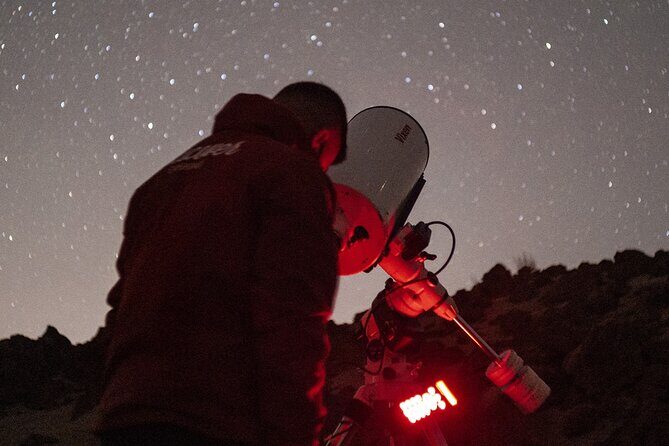
- Telescope time: what you can realistically expect to see
- The astronomer guide and the way the night is paced
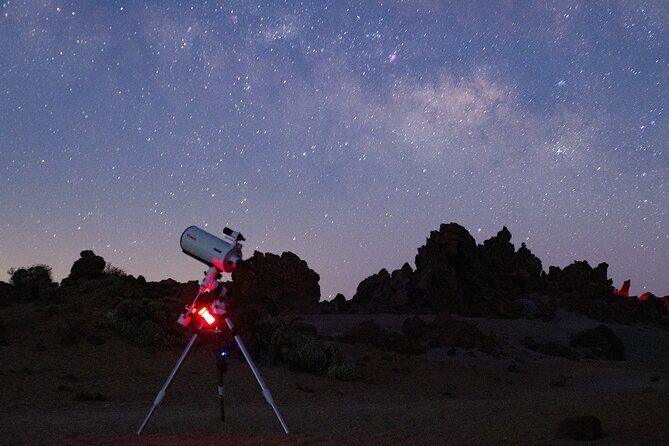
- Astrophotography with the astrophotographic telescope
- Who this is best for, and who might want a different option
- Price and value: is $42.33 worth it
- Weather and what happens when the sky doesn’t cooperate
- Dress tips that actually matter on Teide nights
- Should you book this Teide stargazing tour?
- FAQ
- What is the duration of the stargazing experience?
- How much does the Teide National Park stargazing tour cost?
- Where is the meeting point?
- What time does the tour start?
- Is transportation or dinner included?
- What’s included in the stargazing experience?
- What language is the tour offered in?
- How big is the group?
- Do kids need to be accompanied?
- Does the tour depend on weather?
Key things to know before you go
- Small group (max 20): less waiting, more attention, better flow to the night
- Naked-eye sky teaching first: you learn what you’re seeing before you look through glass
- Telescope time on showpiece objects: common highlights include Saturn, Jupiter, the Moon, and nebulae or galaxies
- Laser-style pointing and sky mapping: helps you connect the stars to the stories
- Astrophotography telescope included: you can turn views into images during the session
- Cold-weather reality check: dress for Teide nighttime temperatures, not beach weather
Teide National Park at night: why this stargazing tour works
Stargazing tours can go two ways. Either you get an info dump and a quick look, or you get a guided night that helps you feel oriented fast. I like the way this one is structured: you start learning where to look, then you move to the telescope while the sky is still fresh in your mind.
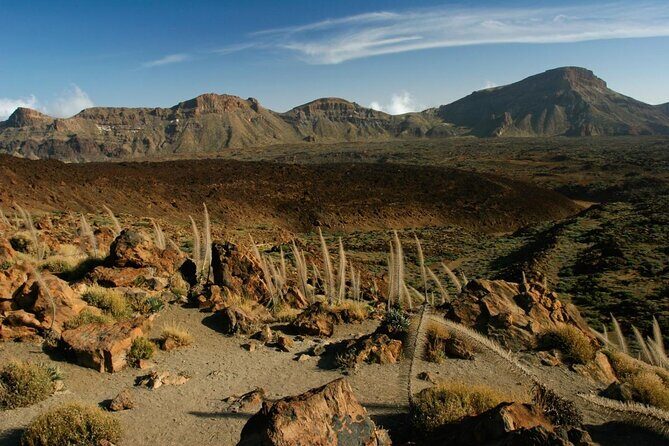
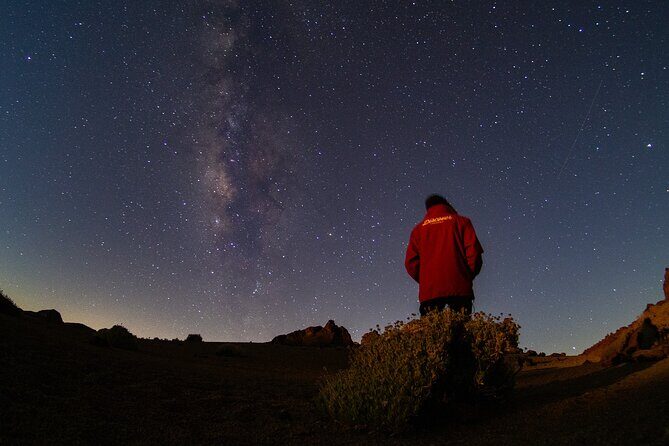
The Teide National Park setting is a big part of the magic. Tenerife’s volcano area tends to deliver dark skies and a dramatic sense of space. Even if you’re not an astronomy person, the combination of a clean horizon and the quiet feeling of the mountain at night makes the session feel special in a way that screen-based stargazing never does.
One more practical win: this isn’t a long overnight expedition. It’s about 1 hour 20 minutes total, and it’s designed to fit into your evening plans without swallowing your whole night.
You can also read our reviews of more tours and experiences in Tenerife.
Getting to Mines of San Jose and the 7:30 pm start
The meeting point is Mines of San Jose, 38300, Santa Cruz de Tenerife, Spain, and the start time is 7:30 pm. You also end back at the meeting point, so you’re not stuck figuring out night transportation after your session.
Transport is not included, so you’ll need to handle the ride to the meeting spot yourself. If you’re traveling without a car, plan for a taxi or rideshare early, because it’s 7:30 pm in a mountainous nighttime zone and timing matters. A lot of people book this about 22 days in advance on average, so it’s smart to lock it in before your dates get busy.
One logistics detail I appreciate: you get a mobile ticket, so you’re not juggling paper vouchers while it’s dark, cold, and you’re trying to arrive on time.
The short itinerary that makes the night feel complete
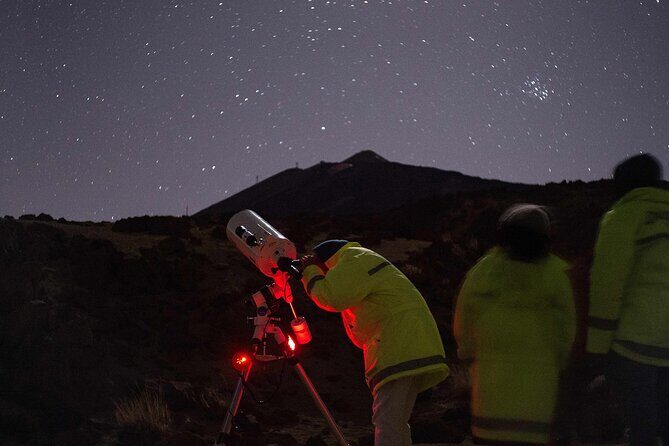
This experience is compact by design. Instead of spreading learning across hours, it aims for the right sequence so you can see more and understand more.
You’ll do:
- Stop in Teide National Park for the main astronomical session
- Naked-eye guidance first, with a guide explaining stars, planets, constellations, and interesting facts
- Telescope observation after you know what the guide is talking about
The session is built to work for first-timers and repeat skywatchers. If you already know constellations, you still get value from the way the guide connects objects to what you can spot quickly with the naked eye.
Stop 1 in Teide National Park: learn the sky with your feet on the ground
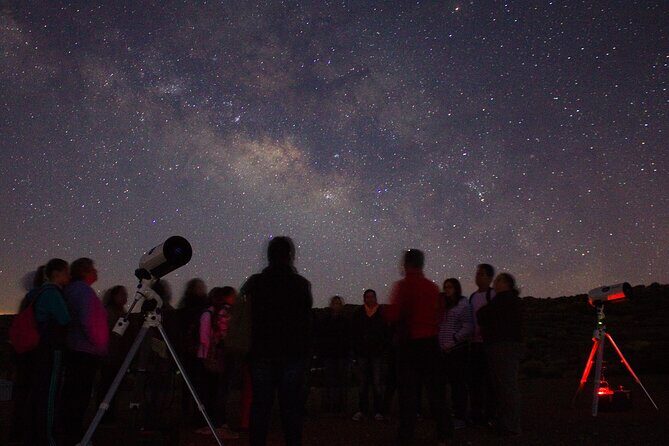
This is where you get the payoff. You’ll stand in the park and get a guide-led introduction to the night sky of Tenerife, tied directly to what you can see above you.
I really like that the guide starts with the basics you can use immediately:
- what to look for with the naked eye
- how to recognize constellations
- what stars and planets are doing up there
- fun facts about the sky you might not know to ask for
During the session, guests have described active sky pointing using a laser to help identify things like the Milky Way and stars, so you’re not just listening. You’re getting a map in real time. That approach is ideal when you’re standing under a black sky with no idea where to start. It also helps keep kids engaged, since there’s something to track and identify instead of only watching the sky in silence.
Dress for cold here. The tour includes a general instruction to dress appropriately, and many guests specifically mention that it gets cold during the presentation. Think warm layers, not a thin top. Bring gloves if you run cold in the evening. You’ll be happier when you can focus on Orion-like patterns and not on how numb your fingers are getting.
Telescope time: what you can realistically expect to see
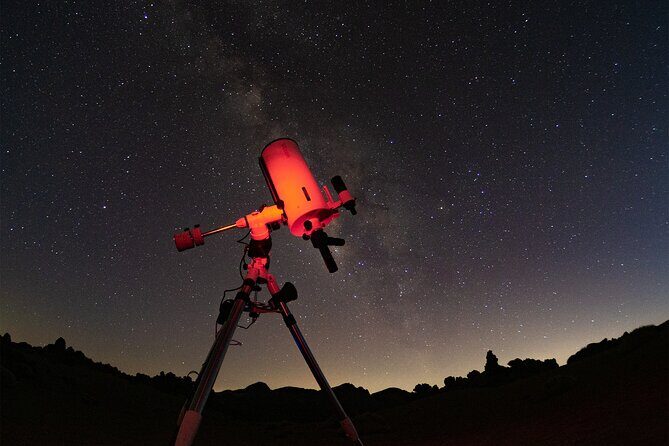
After the naked-eye portion, you shift to telescope viewing. This is the part most people remember, because it’s the moment when the sky turns from dots into objects with texture and definition.
From the experience details and the feedback, common telescope highlights include:
- Saturn
- Jupiter
- the Moon
- nebulae and galaxies (and in at least one case, the Andromeda galaxy)
Even if your timing misses a particular planet moment, you’re still likely to see multiple targets. The guides aim to show the most interesting objects available for the night. One practical note: astronomy is timing-dependent. If you’re visiting in a season where certain planets are lower or less visible, you might get different priorities. That doesn’t mean the night is a letdown. It means the guide will work with what the sky gives you.
Also, this kind of telescope session is different from looking through a museum scope. A good astronomer guide helps you understand what you’re seeing while you’re seeing it. Guests have highlighted that the guide can answer questions and explain what’s visible at each step, which keeps the night feeling interactive rather than scripted.
The astronomer guide and the way the night is paced
The guide is a professional astronomical guide associated with Starlight Guides, and the group size stays small. That matters because astronomy questions can go anywhere once someone starts pointing at a bright star and asking what it is.
In real life, I find stargazing groups either move too fast or too slow. Here, the pace seems aimed at keeping a wide range of people comfortable: kids, couples, and first-timers, plus people who want more detail.
Named guides that came up in feedback include Miguel and Óscar (spelled multiple ways in different messages), with one mention of Miguel and Adri working together. That kind of consistency across names suggests a team approach, not random staffing.
If you’re nervous that English explanations might be too much, you’re covered: the tour is offered in English. One review also mentions a possibility of Spanish, but the safe expectation is English instruction.
Astrophotography with the astrophotographic telescope
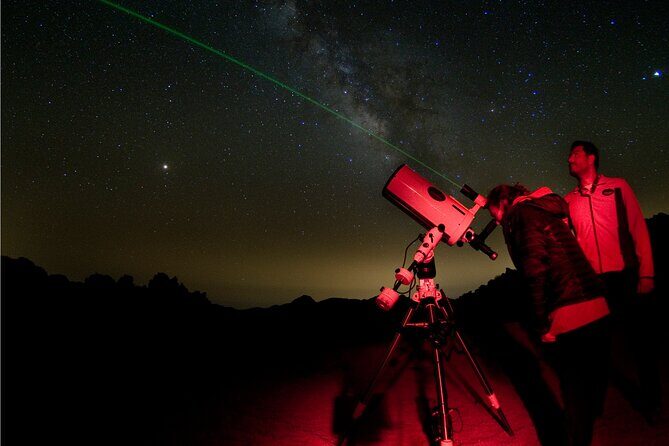
This tour includes an astrophotography element. You’ll use an astrophotographic telescope to turn what you see into images, and that’s a valuable extra for two reasons.
First, it gives you something to do with the experience beyond memorizing star positions. Second, it helps make the objects you just learned about feel real. A photo doesn’t replace understanding, but it’s a strong prompt to keep looking up after the tour ends.
I’d treat this as part of the fun rather than a guarantee that you’ll leave with printed photos in your hand. The key point is that the setup is designed for imaging during the session, and the tour is built around the night sky as a visual experience, not just a lecture.
Who this is best for, and who might want a different option
This stargazing tour is a strong fit if you want:
- an intro to Tenerife’s night sky with clear explanations
- telescope viewing of showpiece celestial objects
- a guide who can handle questions at different levels
- a short, focused evening activity
It’s also family-friendly in a way that’s practical. One highlight from feedback: parents reported that their teenage boys were genuinely inspired to learn more. Kids can handle it if they’re dressed warmly and you keep expectations realistic about cold and attention span.
It may be less ideal if you’re an advanced amateur astronomer who already knows the sky well. One piece of feedback suggested the explanations might feel basic to someone with more existing knowledge. If you’re deep into astrophotography or already have your observing targets planned, you might want a more specialized session. Still, even skilled observers may enjoy the sight of Saturn or the Moon through a guided telescope setup if the night conditions are good.
Price and value: is $42.33 worth it
At $42.33 per person, this is priced like a focused guided activity, not a full-day excursion. You’re paying for the combination of:
- a professional astronomer guide
- telescope access and guided viewing
- the naked-eye sky explanation
- the astrophotography telescope component
- insurance during the tour
- an admission ticket included for the session
You’re also getting a small group cap (20), which usually translates to less waiting and better attention. That’s value. If you tried to replicate this on your own, you’d still need access to a good observing spot, the right equipment, and a guide who can point and explain efficiently. Even with your own telescope, you might spend more time searching and less time understanding what you’re seeing.
The main value hit to watch is that transport and dinner are not included. If you’re already eating nearby and sorting transport anyway, this cost structure usually feels fair.
Weather and what happens when the sky doesn’t cooperate
This experience requires good weather. That makes sense on a mountain. If conditions are poor, the tour can be canceled and you’ll be offered a different date or a full refund.
So here’s the practical approach: don’t pack your whole day around a single perfect night. If your schedule allows flexibility, book with the mindset that the weather may decide the exact night you see the clearest sky.
Dress tips that actually matter on Teide nights
The tour says to dress appropriately. Feedback also makes it clear that cold is a real issue during the presentation.
My advice is simple:
- wear layers you can peel on and off
- bring a warm jacket (and not just a sweatshirt)
- use gloves or anything warm for your hands if you get chilly easily
- wear shoes that are comfortable for standing outside
Cold can turn a beautiful sky lesson into a survival mission. If you dress for Teide nighttime, you’ll enjoy the explanations more and stay through telescope time without rushing.
Should you book this Teide stargazing tour?
I think you should book it if you want a guided first-class night sky experience that doesn’t require prior knowledge. The blend of naked-eye storytelling, telescope viewing, and an astrophotography component makes the short 1 hour 20 minutes feel purposeful. The group size stays small, and feedback ratings are very high, with repeated praise for how informative and fun the night feels.
Book with a realistic mindset if you’re planning around specific planet sightings. Astronomy depends on what the sky is willing to show that night. Still, most nights will deliver memorable objects, and the guide’s job is to steer you toward what’s visible.
If you want a long, research-heavy astronomy session for experts, you might find something more specialized fits better. For everyone else, this is a smart, approachable way to experience Teide after dark.
FAQ
What is the duration of the stargazing experience?
It lasts about 1 hour 20 minutes.
How much does the Teide National Park stargazing tour cost?
The price is $42.33 per person.
Where is the meeting point?
The meeting point is Mines of San Jose, 38300, Santa Cruz de Tenerife, Spain.
What time does the tour start?
The start time is 7:30 pm.
Is transportation or dinner included?
No. Dinner and transport are not included.
What’s included in the stargazing experience?
Included items are the stargazing explanation (naked eye), astronomical observation with telescopes, insurance during the tour, and time using an astrophotographic telescope to create images.
What language is the tour offered in?
The tour is offered in English.
How big is the group?
There is a maximum of 20 travelers.
Do kids need to be accompanied?
Yes. Children must be accompanied by an adult.
Does the tour depend on weather?
Yes, it requires good weather. If it’s canceled due to poor weather, you’ll be offered a different date or a full refund.