REVIEW · TENERIFE
Surfing lessons in Las Americas
Book on Viator →Operated by Rocky Point - surf experience · Bookable on Viator
First waves can feel scary, but the setup helps. This 2-hour surf lesson in Las Américas mixes quick theory with about 1.5 hours in the water, so you spend your time where it counts. The lesson adjusts to your surfing level and focuses on learning on a board, not just standing around.
I especially like the supportive coaching style, the kind that helps both beginners and more nervous riders get confident without rushing. I also like the location near the beach and easy amenities, with public transport close by and reasonable parking nearby.
The main thing to consider is that you’ll need good swimming skills and moderate fitness, plus you’re dependent on good weather for the lesson to run.
In This Review
- Key Highlights to Watch For
- Las Américas Surfing: Why This 2-Hour Lesson Works
- Where You Meet: Parque Santiago II in Playa de la Américas
- The Lesson Flow: Theory, Safety Rules, Then Real Water Time
- First: Important theory and set-up
- Then: The practical session on the board
- Coaching Style and Group Size: What Changes in a Max-10 Lesson
- What You’ll Learn Before You Ride
- Security rules that help you stay in control
- Spot information so you know what to expect
- Practical skills based on your level
- Price and Value: Is $48.06 Fair for Two Hours?
- Meeting Conditions: Weather, Fitness, and Swimming Requirements
- Who This Surf Lesson Is Best For
- Booking Details That Affect Your Day
- Should You Book This Las Américas Surf Lesson?
Key Highlights to Watch For
- About 1.5 hours on the surfboard in the water, with theory first and practice right after
- Small groups (max 10), which makes feedback easier to understand and apply
- English instruction, including security rules and spot-specific guidance before you paddle out
- A smooth lesson flow: safety briefing, then practical skills to improve while you ride
- Family-friendly coaching that focuses on confidence as much as technique
Las Américas Surfing: Why This 2-Hour Lesson Works
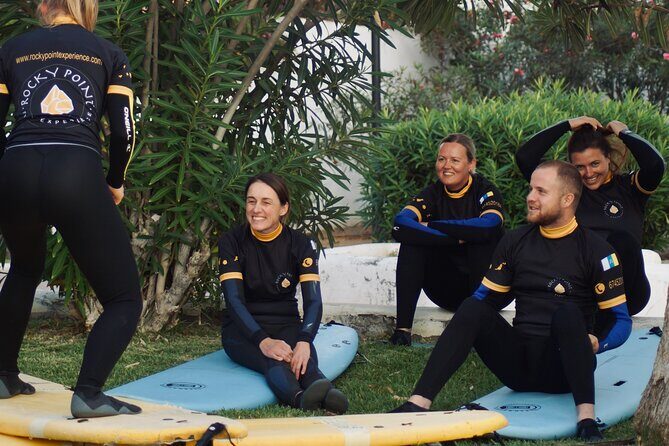
If you’ve ever tried to learn something in a big, chaotic group, you know how quickly the fun disappears. This surf lesson is built to avoid that. You start with the essentials, then you get back into the water fast—so the session doesn’t turn into a long lecture followed by a couple of tired attempts.
The pacing matters. In a total 2 hours (approx.), you should get around 1.5 hours practicing on the surfboard in the water. That’s the heart of learning: short explanations, then immediate try-it-now practice. And because the session is adjusted to your surfing skills, you’re not stuck doing the same steps as someone who’s already riding comfortably.
The vibe is also practical. You’re not just pushed out toward waves and told to figure it out. You’ll get security rules and information about the surf spot you’ll work on, then you translate that into what you do with your body on the board.
You can also read our reviews of more tours and experiences in Tenerife

Where You Meet: Parque Santiago II in Playa de la Américas
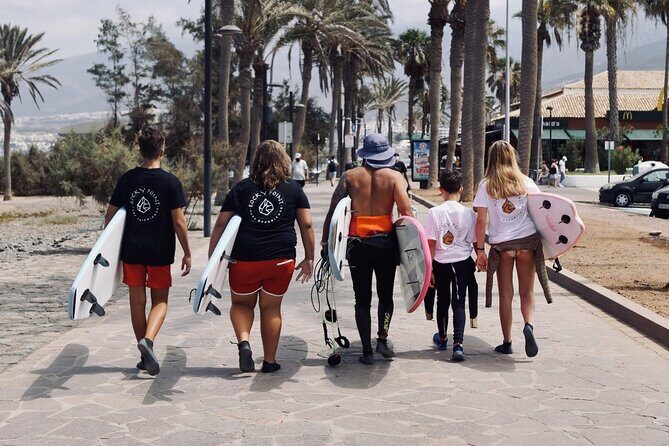
You’ll start at Parque Santiago II, Av. Rafael Puig Lluvina, 32, 38650 Playa de la Américas, Santa Cruz de Tenerife, Spain. That’s a big advantage if you’re staying in the Las Américas area, because it’s easy to reach and it doesn’t feel like you’re crossing the island for a short activity.
There’s also real-world convenience built in. The meeting point is near public transportation, and there’s parking nearby at a reasonable cost, which helps if you’re traveling with gear or you just don’t want to wrestle with transit times.
The lesson ends back at the same meeting point. So you’re not planning a complicated route afterward. I like that for a short activity: it keeps the day flexible, and you can go back to your beach plans without a second logistical puzzle.
The Lesson Flow: Theory, Safety Rules, Then Real Water Time
This is a two-part structure, and it’s the right one for surf learning.
First: Important theory and set-up
You’ll begin with the fundamentals, plus some key theory. The exact timing can depend on your current surfing level, but the pattern stays consistent: get the basics, then learn by doing.
Before you hit the waves, the instructor explains the security rules and gives you important info about the specific surf spot you’ll practice at. That matters more than it sounds. Surfing isn’t only about balance—it’s also about reading conditions, respecting space in the water, and understanding how the area works.
Then: The practical session on the board
After the briefing, you head into the water for the hands-on part. This is where most of the time goes, and it’s the part you’ll likely remember: practicing the motions, trying to improve with each attempt, and getting enough water time to actually feel progress.
If you’re a beginner, you’ll typically benefit from clear cues applied right away. If you’re not brand-new, you still get value because the spot-specific guidance and safety rules help you fine-tune what you do without guesswork.
And yes, it’s meant to be fun. The best part of a short lesson is that you come out with a story, not just a checklist.





Coaching Style and Group Size: What Changes in a Max-10 Lesson
With a maximum of 10 travelers, this doesn’t feel like a production line. Smaller groups generally mean you get more useful attention when you’re trying to figure out what to do next.
The instruction is offered in English, which is a big deal for surf lessons. Surfing terms and safety rules are hard enough without language friction. Clear explanations help you act faster in the moment—especially when conditions shift and you need to make quick choices.
You’ll also see how supportive coaching can change the whole experience. The lesson reviews highlight instructors who are patient and especially helpful with both adults and a child rider in the same family. That’s a great sign if you want a calm, confidence-building environment rather than a strict, one-size-fits-all approach.
What You’ll Learn Before You Ride
The session isn’t marketed as a technical boot camp, but you’re still getting real instruction. Here’s what’s explicitly part of the lesson, and why it matters.
Security rules that help you stay in control
Safety rules are part of the lesson before you go into the water. This is crucial because it sets expectations about behavior in the surf area—things like how to handle your timing, how to avoid risky moves, and how to understand the spot you’re in.
Even if you can swim well, surfing adds extra variables: waves, boards, and momentum. Security rules help you stay safe and reduce that panicky feeling that ruins learning.
Spot information so you know what to expect
You’ll get info about the specific surf spot you’ll have your lesson. That helps you adjust your approach faster. Instead of treating every wave like the same puzzle, you learn how that location behaves.
That’s one of those details that doesn’t look important on paper, but in the water it can be the difference between frustration and real progress.
Practical skills based on your level
The lesson adapts to your surfing skills. That’s important because surfing progression isn’t one straight line. Some people can paddle and pop up but struggle with wave selection. Others can catch waves but need help with stance, balance, or timing.
The format here—short theory, then time in the water—lets you practice the most relevant skills first.
Price and Value: Is $48.06 Fair for Two Hours?
At $48.06 per person, you’re paying for a structured two-hour experience with instruction, safety guidance, and a lot of time actually on the surfboard. For Las Américas, that price can be a good match for people who want a real lesson without spending a whole day.
Here’s how I’d judge the value:
- You’re not paying for a long activity that’s mostly waiting. The lesson includes about 1.5 hours in the water practicing.
- You’re not doing it alone. You’re paying for instructor-led coaching, including theory and spot rules before you ride.
- You’re in a small group (up to 10), which typically improves the usefulness of the instruction.
The key question for you: are you okay with the session depending on conditions and needing required swimming skills? If yes, the cost-to-time ratio looks strong for a beginner-to-intermediate learning push.
And since this is a popular activity—booked on average about 17 days in advance—booking earlier can help you lock in a time that fits your schedule.
Meeting Conditions: Weather, Fitness, and Swimming Requirements
This experience requires good weather. If it’s canceled due to poor weather, you’ll be offered a different date or a full refund. That’s how it should be for any water-based sport: you want safe conditions, not a rushed substitute plan.
You’ll also need:
- Required swimming skills
- Moderate physical fitness level
I like that these requirements are clearly stated. Surf lessons aren’t just “light fun.” Even short sessions include paddling, balancing, and getting in and out of the water repeatedly. If you’re generally active and comfortable swimming, you’ll likely handle it. If you’re unsure about your swimming ability, take that seriously before you book.
Finally, the session runs with a maximum of 10 travelers, so conditions and lesson adjustments can be managed better than in larger groups.
Who This Surf Lesson Is Best For

This lesson is a good match if you want:
- A short, structured introduction to surfing
- A session that balances theory with lots of practice
- Coaching in English
- A group size that stays manageable (max 10)
It’s also a strong pick for families, especially when you want an instructor who can work with different confidence levels in the same group. One review specifically points to supportive instruction for both a parent and a child, which is the kind of signal you want if you’re traveling with kids and you want the lesson to feel safe and encouraging.
If you’re an experienced surfer, this may still be helpful because the session includes security rules and spot guidance. But your main goal should be learning within that specific lesson structure, not expecting a heavy technique workshop.
Booking Details That Affect Your Day
A few practical notes can save you stress:
- You’ll get confirmation within 48 hours of booking, subject to availability.
- You’ll use a mobile ticket.
- The session ends back at the meeting point, so you can plan your rest of the day easily.
If you like flexibility, you’ll also have the option of free cancellation up to 24 hours before the start time for a full refund. Because it’s weather-dependent, the provider may also reschedule or refund if conditions aren’t suitable.
Should You Book This Las Américas Surf Lesson?
If you’re in Tenerife and you want a real surfing start without turning your day into a full surf camp, this is a smart booking. The biggest reason: you get a big chunk of the lesson actually in the water, with safety rules and spot guidance first, and coaching that keeps things supportive.
Book it if you:
- Can swim and you’re comfortable with moderate physical activity
- Want a compact, beginner-friendly structure with English instruction
- Prefer a smaller group setting (max 10) so the coaching feels useful
Skip it or reconsider the timing if:
- You’re not comfortable swimming or you’re likely to panic in open water
- You need a guaranteed surf session regardless of weather (because good weather is required)
Overall, for the price and the way the 2 hours are spent, this looks like a strong way to turn your Las Américas time into something active, memorable, and genuinely learnable.