REVIEW · TENERIFE
Surf Class Experience in Playa de la Américas
Book on Viator →Operated by Surf school sb · Bookable on Viator
First lesson, zero guesswork, total fun. This 2-hour surf class in Playa de las Américas is built for newcomers, with a theory-and-safety start before you head into the waves. I like that it’s taught by an official, federated school and that you don’t have to hunt down gear—materials are included.
One thing to keep in mind: the session depends on good weather, so your day can shift if the sea isn’t cooperating.
In This Review
- Key Points I’d Plan Around
- Surfing in Playa de las Américas: the 2-hour format that works
- What that means for you
- Meeting at Surf Club Salados: check-in without stress
- Quick heads-up for your day
- Theory hour: safety first, then the exact cues you need
- What you’ll likely learn during the theory
- A practical mindset
- The ocean session: about one full hour of real wave time
- How the coaching helps beginners
- Photos during or after the session
- Equipment and instruction quality: you’re not thrown in alone
- Two standout coaching signals to look for
- Price and value: is $42.14 worth it?
- Weather, sea conditions, and how your schedule can change
- My advice for choosing your day
- Who should book this surf class in Playa de las Américas
- Should you book this Playa de las Américas surf class?
- FAQ
- How long is the surf class?
- Where does the surf class take place?
- Is instruction available in English?
- What is the group size?
- What should I bring?
- Where do I meet the instructor?
- What happens if the weather is bad?
- Can I cancel for free?
Key Points I’d Plan Around
- Two-part structure: theory first, then about one full hour in the ocean
- Official, federated school: structured instruction instead of random tips
- Small groups (max 8): more attention and quicker correction
- English instruction available: easier communication for first-timers
- Gear included: you show up and focus on learning, not packing
Surfing in Playa de las Américas: the 2-hour format that works
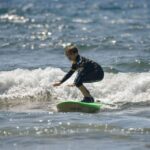
Playa de las Américas is one of those Tenerife spots where you can roll off a bus, grab a snack, and still do something sporty without planning a whole day. This surf class is short on purpose: about 2 hours total, split between instruction on land and practice in the water.
The big advantage of this timing is momentum. You’re not stuck in classroom mode forever, and you’re not sent into the ocean with only guesses. You’ll start with the basics—how to stand, how to handle the board, and the safety side that makes everything less scary—and then you get real time catching and trying waves. One hour in the ocean is the payoff.
You can also read our reviews of more tours and experiences in Tenerife
What that means for you
If you’ve never surfed, the theory portion isn’t there to slow you down. It’s there to give you a small set of cues you can actually remember while your heart is doing backflips at the shoreline. And if you have tried before, you’ll still benefit because you’ll likely get corrected on posture and wave approach.
Meeting at Surf Club Salados: check-in without stress
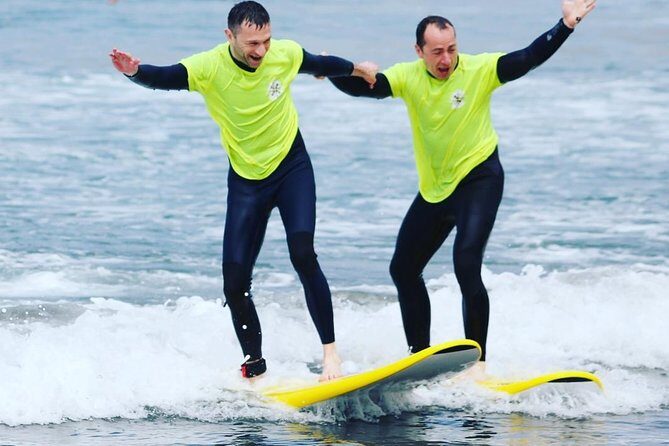
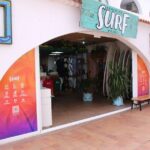
The meeting point is Surf Club Salados, Av. Rafael Puig Lluvina, 32, local 43, 38650 Las Américas, Santa Cruz de Tenerife, Spain. The class ends back at the same place.
Why I like this setup: it cuts decision fatigue. No mystery pickup spots, no complicated “meet at the lighthouse” stuff. Also, the area is listed as near public transportation, so you can get there without relying on a taxi every time.
Quick heads-up for your day
Show up a bit early with swimwear ready. Even if the school provides the necessary materials, you’ll waste less time if you’re already half-prepared. Bring a towel if you have one, and wear something you can rinse off after.
Theory hour: safety first, then the exact cues you need
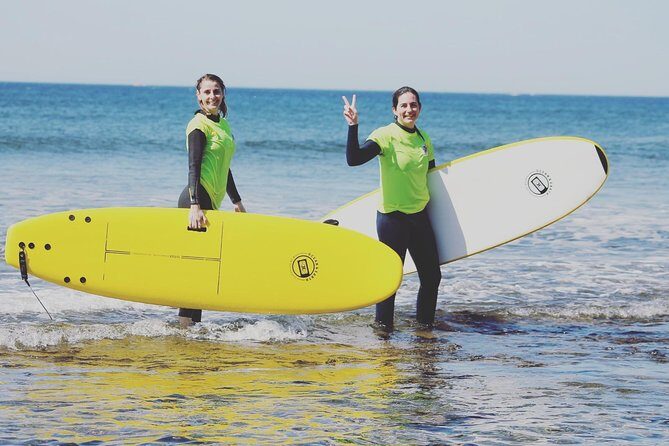
This class is designed as a true beginner base, and the first part of your session is mostly about getting you comfortable and safe. Expect a briefing that covers core surf basics and safety rules before you enter the water.
From what you can read in the class feedback, instructors focus on being friendly and patient and on explaining things in a way that removes confusion. That matters because the biggest beginner problem isn’t lack of athleticism—it’s uncertainty. If you know what to do and what not to do, you can spend your energy learning instead of freezing.


What you’ll likely learn during the theory
You’re not given a long list of random tips. You’re taught the fundamentals that keep you safer and help you get to your first successful tries:
- Basic board handling and how to position yourself
- Safety do’s and don’ts around other surfers and moving water
- How to think about balance and where your attention should go
A practical mindset
Your goal in the theory hour isn’t to memorize everything. It’s to pick up a few cues you can repeat later. If you leave the briefing still wondering what to do first when you’re in knee-deep water, ask your instructor right then. The class runs only about two hours, so those questions are best answered early.
The ocean session: about one full hour of real wave time
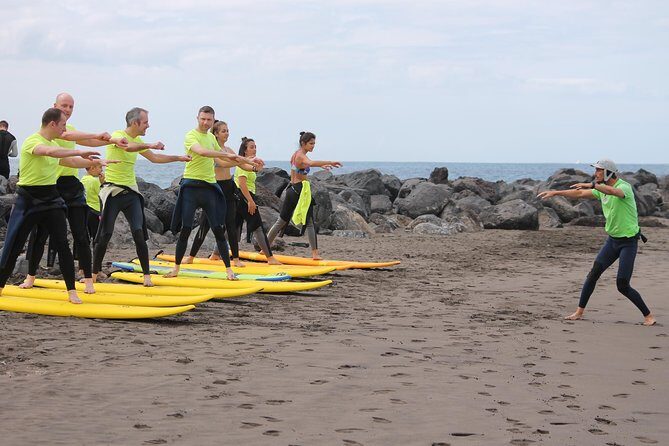
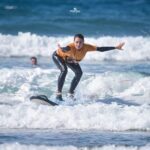
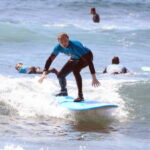
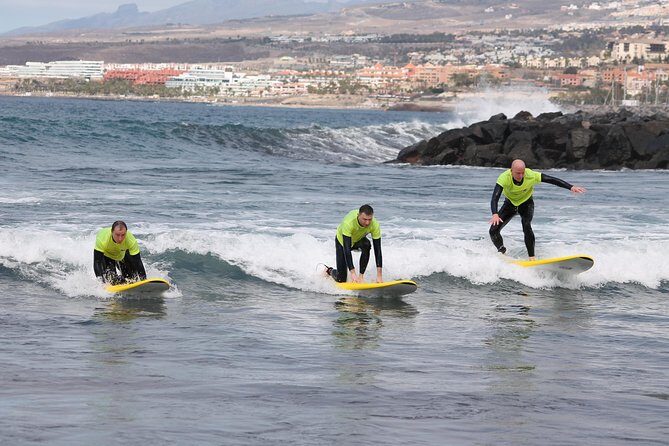
After the briefing, you switch gears from learning to doing. The practical portion includes around one full hour in the ocean, led by instructors who coach you while you try.
This is where the class earns its value: your time isn’t just spent standing on the beach. You’re actively working through the movement pattern again and again, with guidance to help you improve rather than just hope.
How the coaching helps beginners
Beginners usually struggle with the same things:
- Standing takes time while the board shifts
- Timing matters, and it feels random at first
- Wiping out is normal, but it’s easier when you know what went wrong
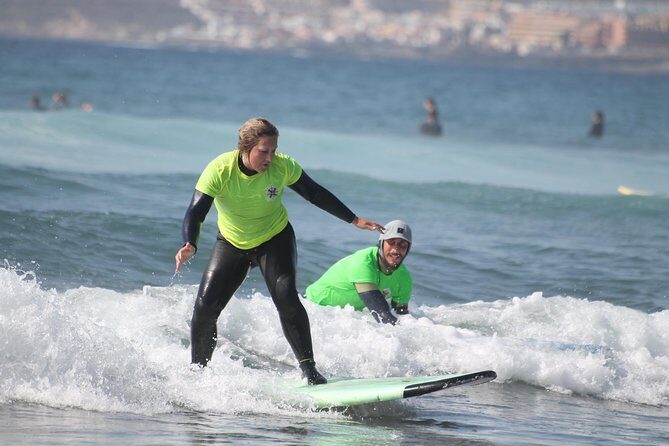
The class style you’re likely to feel here is supportive and correction-based. In particular, the feedback highlights that instructors explain before sending you out and keep the atmosphere encouraging. That reduces the fear factor, which is huge. If you’re tense, your body fights you; if you’re calmer, you can experiment.
Photos during or after the session
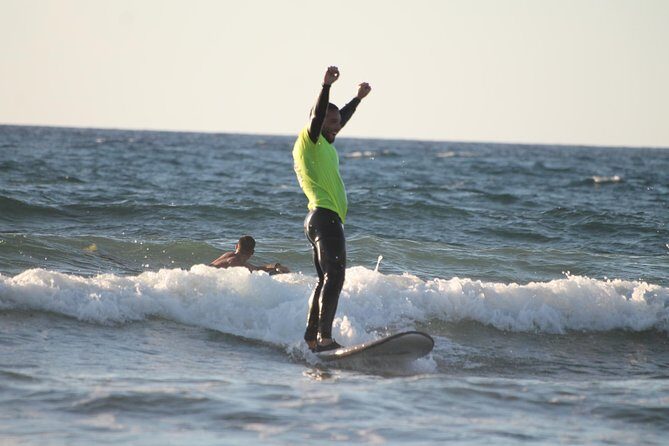
Some feedback mentions a guide/photographer and getting photos as part of the experience. That’s a nice bonus because surf classes often disappear into the waves fast. Even if you’re not a selfie person, having a record of your first attempts is worth it.
Equipment and instruction quality: you’re not thrown in alone
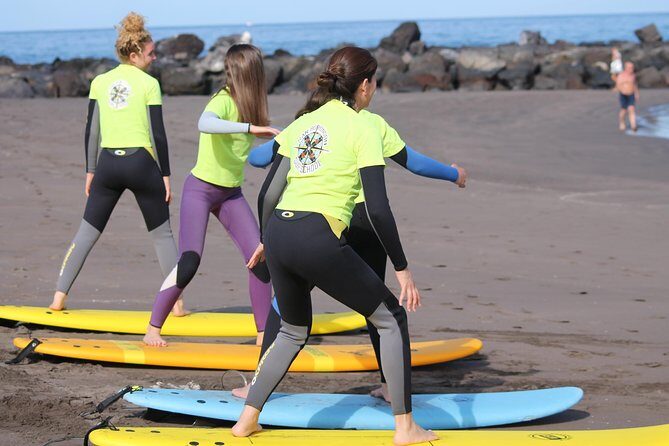
The class includes the necessary materials for you to enjoy surfing. That’s a big deal because Tenerife surf gear isn’t something you want to figure out at the last minute. It also means you can focus on the learning curve rather than logistics.
Another detail that helps: the school is described as official and federated, and the group size tops out at 8 travelers. Small groups usually translate to more instructor time and quicker feedback. And when you’re new, feedback is everything.
Two standout coaching signals to look for
When you book, you’re not just buying time in the water—you’re buying teaching quality. The best signs from the class information are:
- Clear explanation of safety and basics before you go in
- Supportive instructors who stay patient while you get the hang of it
If you’ve ever felt rushed on a “tour,” this class format should feel different because it’s structured around learning.
Price and value: is $42.14 worth it?
At about $42.14 per person for roughly 2 hours, this is in the “try it without going broke” category. For that kind of money, you’re paying for:
- An organized surf school session (not DIY guesswork)
- A two-part format (instruction plus guided practice)
- Included gear/materials
- English availability for easier communication
- A capped group size, which usually means more attention
Is it the cheapest thing on the beach? Maybe. But you’re not paying only for waves—you’re paying for the parts that make first-timer surfing actually work: safety basics, quick corrections, and time in the water with coaching.
If you’re the type who hates paying for “nothing,” this class makes sense because the core of the experience is action. You’re getting into the ocean for about an hour, not just touring the shoreline.
Weather, sea conditions, and how your schedule can change
This experience requires good weather. If conditions aren’t right and it gets canceled due to poor weather, you’ll be offered a different date or a full refund.
This isn’t a flaw. Surf is a water sport, and Tenerife’s conditions can change quickly. What matters is that the operator plans around it rather than pushing everyone out when it’s unsafe or unpleasant.
My advice for choosing your day
Pick a day when you’re flexible. If your trip has a “must-do” packed schedule, keep a little breathing room. A quick cancellation or reschedule is easier when you aren’t depending on one fixed time slot.
Who should book this surf class in Playa de las Américas
This class is a great fit if you:
- Are a beginner or just want a strong starter foundation
- Want instruction in English
- Prefer a small group (up to 8) so you’re not lost in the crowd
- Want a short, focused activity that still includes meaningful ocean time
It may not be the best choice if you:
- Want a long, advanced training session (this one is about fundamentals)
- Have zero flexibility for weather changes
- Get easily frustrated by learning curves. If you do, choose the mindset “try, adjust, repeat.” Surf rewards that approach.
Should you book this Playa de las Américas surf class?
I’d book it if you want a straightforward first surfing experience with clear teaching, a supportive vibe, and enough ocean time to feel like you actually did something—not just watched someone else surf.
Book it especially if you like the idea of:
- A beginner-first structure (theory then practice)
- Small-group coaching
- Gear included, plus the chance to leave with photos from your session
Skip it if your schedule is rigid or you’re only interested in highly advanced, long training blocks. For everyone else, this looks like a sensible way to try surfing in Tenerife without overthinking it.
FAQ
How long is the surf class?
It runs for about 2 hours total.
Where does the surf class take place?
It takes place in Playa de la Américas, Tenerife, Spain.
Is instruction available in English?
Yes, the class is offered in English.
What is the group size?
The experience has a maximum of 8 travelers.
What should I bring?
The class includes the necessary material for surfing, but you should still come ready for the ocean portion. Swimwear is a good idea.
Where do I meet the instructor?
Meet at Surf Club Salados, Av. Rafael Puig Lluvina, 32, local 43, 38650 Las Américas, Santa Cruz de Tenerife, Spain.
What happens if the weather is bad?
The experience requires good weather. If it’s canceled due to poor weather, you’ll be offered a different date or a full refund.
Can I cancel for free?
Yes. You can cancel up to 24 hours in advance for a full refund.