REVIEW · TENERIFE
SSI Open Water Diver Course in Tenerife
Book on Viator →Operated by GooDiving · Bookable on Viator
Clear water makes learning scuba feel easy. In Tenerife, I like the small group size (max 4) and the patient, safety-first coaching from instructors such as Roberta and Andrea, plus the clear path from theory to hands-on pool skill practice before you head out. One consideration: you’ll need to pass a health questionnaire and your doctor may need to weigh in on conditions like asthma or heart problems.
The value here is that you’re not just watching. You’re actively building the habits you need—gear setup, safety checks, buoyancy control—then applying them in the sea. If you’re worried about logistics, there’s hotel pickup in the Golf del Sur area, and the course includes transport, materials, and even beverages and snacks.
In This Review
- Key things I’d focus on before you book
- Why Tenerife’s clear water helps your SSI Open Water Diver course
- Price and what $629.71 buys you (and what it doesn’t)
- The flow of your 3 days: theory first, then pool, then open water
- What happens in the pool: where safety habits actually form
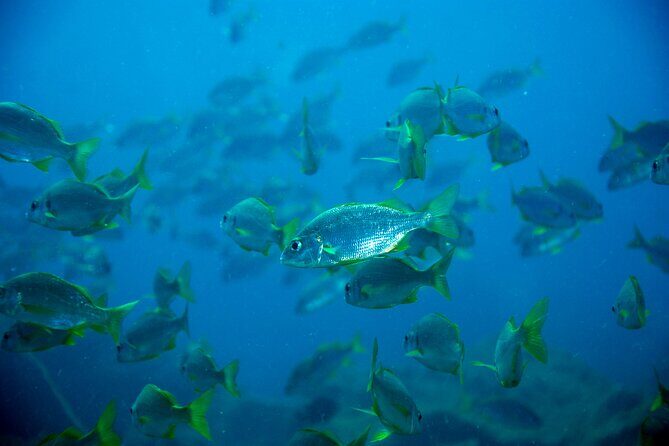
- Ocean sessions in Tenerife: animals, sightlines, and realistic practice
- Gear and materials: less packing, more focus
- The instructor team: patient coaching with names you’ll hear
- Where you meet and how pickup works in Golf del Sur
- Safety and medical rules: read this before you get excited
- Who this course is best for (and who should double-check first)
- Should you book this SSI Open Water Diver course in Tenerife?
- FAQ
- What certification do I earn?
- How long is the course?
- What’s included in the price?
- What does the training include?
- Are there any medical or timing requirements?
- What is the cancellation policy?
Key things I’d focus on before you book
- Five confined-water sessions to learn the mechanics in a controlled setting before you go farther out
- Four open-water instruction sessions split across two days (two one day, two the next)
- All equipment and materials included, so you can travel lighter
- Max 4 participants, which usually means more individual attention
- Safety-led teaching, repeatedly emphasized by instructors like Orsi, Roberta, and Andrea
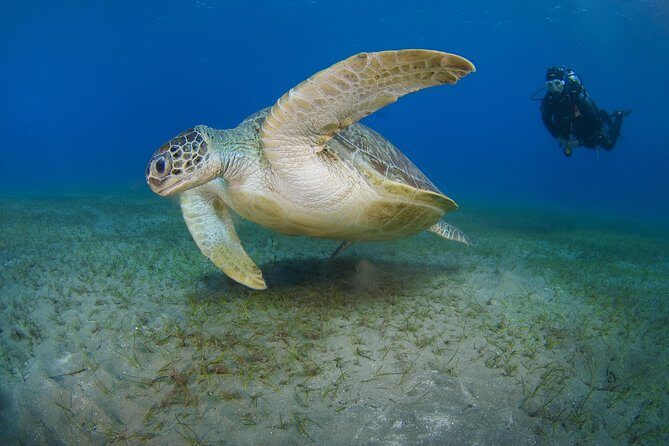
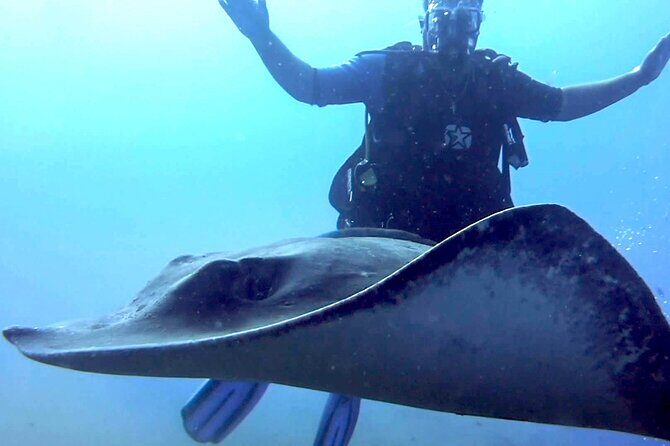
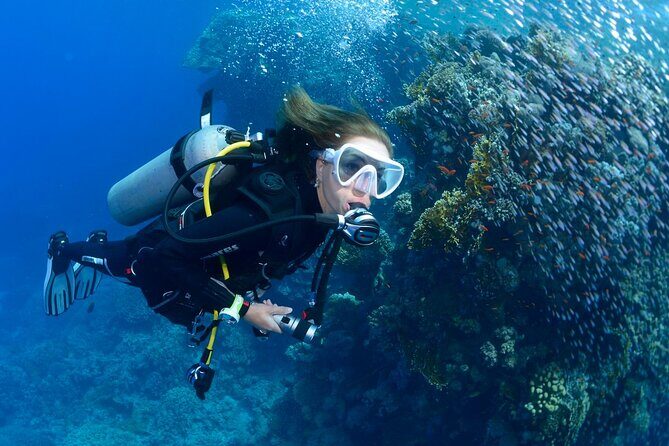
- Tenerife marine life sightings like sea turtles, rays, octopus, and lots of reef fish
Why Tenerife’s clear water helps your SSI Open Water Diver course
Tenerife is a smart choice for an entry-level certification because you’re training with an environment that’s often easy to read. When the water is clear enough to see what you’re doing, it’s easier to understand buoyancy, trim, and how your body position affects movement. That matters a lot when you’re learning new muscle memory—especially in your first days underwater.
Also, the island setting keeps the experience grounded in real ocean conditions. You’re not just practicing “in theory.” You’re learning in a place where you can realistically expect to see animals during your open-water sessions, and that adds motivation when the skills feel a little technical at first.
If you’re doing this to become a comfortable ocean diver later, Tenerife helps you get over the early fear stage. Clear visibility and friendly instruction make it feel more like learning a new sport than surviving a science experiment.
You can also read our reviews of more tours and experiences in Tenerife.
Price and what $629.71 buys you (and what it doesn’t)
At $629.71 per person for a roughly 3-day SSI Open Water Diver course, the price is only a deal if the inclusions matter to you. In this case, they do.
Here’s what you should feel good about:
- Hotel pickup and drop-off in the Golf del Sur area
- Air-conditioned minivan transport
- **Be
verages and snacks**
- All equipment and materials included
- The full course structure: theory, five confined-water sessions, and four open-water sessions
What’s not included is more straightforward:
- Souvenir photos are available to purchase later.
So the real question is not just “is it expensive?” It’s: Will this save you hassle? For many people, yes—especially if you’d otherwise have to find gear, pay for private transport, or chase last-minute paperwork. The course also caps group size at 4, which can be worth real money in added coaching time.
One small heads-up: you’ll want to budget for any optional photos, since that’s the one clear extra mentioned.
The flow of your 3 days: theory first, then pool, then open water
This course has a clean structure that makes sense for beginners. First you learn the theory, then you train in a pool setting, and only after you’ve done that do you apply the skills in open water.
Day 1: theory + confined-water sessions in the pool
You start with the learning part—scuba essentials and safety concepts. Then you move straight to the pool to practice and fine-tune the exact skills you’ll rely on later. The goal is simple: you should be able to repeat the key movements without panicking when conditions feel different.
Days 2 and 3: four open-water instruction sessions
After pool work, you do four open-water sessions total, with two sessions on one day and two on another day. That split is helpful because it gives you time to settle your skills, ask questions, and build confidence between outings.
Even though the total duration is around 3 days, the pacing is built to prevent overload. It’s not “learn everything today, then hope for the best tomorrow.” You earn the right to progress by showing you can do the core tasks safely.
What happens in the pool: where safety habits actually form
The pool is the unsung hero of this course. You’re not just learning how to move. You’re learning how to behave underwater, step by step.
From the way instructors are described—patient, thorough, and focused on safety—you should expect a lot of repetition with feedback. Several students specifically praised instructors for explaining details carefully and taking their time, which is exactly what you want when you’re still mapping the gear and your breathing rhythm.
In the pool, you’ll typically practice the mechanics that prevent problems later:
- controlling your buoyancy (so you don’t fight the water)
- using equipment correctly
- building calm routines for common underwater tasks
The advantage of practicing in a pool first is that the setting removes uncertainty. You can focus on coordination instead of being distracted by waves, current, or distance. If you ever worried you’d freeze when something goes wrong, pool sessions are how the course design turns that fear into muscle memory.
Ocean sessions in Tenerife: animals, sightlines, and realistic practice
Once you move to open water, the training becomes both practical and memorable. This is where you start translating what you learned on the surface into stable underwater performance.
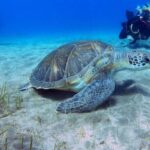
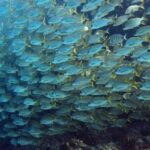
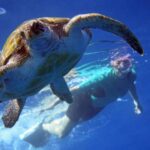
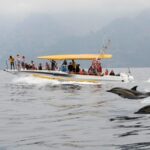
Many students mention seeing real marine life during their open-water sessions—things like sea turtles, rays, and octopus, along with lots of reef fish. That’s not just a nice bonus. Seeing animals can help keep you relaxed and curious, which supports learning. A relaxed diver learns faster.
What you should do mentally before the first open-water session:
- treat it like one long exercise, not a sightseeing cruise
- focus on your routine and your breathing
- remember that your instructor’s job is to guide your safety first, and it’s okay to feel focused rather than thrilled
Also, the course format—four open-water sessions, split across two days—lets you improve between outings. You’re not stuck repeating mistakes all day without a reset.

Gear and materials: less packing, more focus
One reason people like this course is that equipment and materials are included. That means you’re not hunting for rental gear, and you’re not trying to guess which setup will fit your body best. Instead, you train with what the instructors use for their students.
That also reduces stress. On a scuba course, stress is a skill-killer.
You’ll be learning with professional instruction and, based on student feedback, you can expect the instructors to prioritize safe technique over rushing. If you’re converting skills from a non-scuba world, having the right gear from day one makes it easier to do the core tasks correctly.
The instructor team: patient coaching with names you’ll hear
A big part of the positive experience here comes from the instructors themselves. Multiple students name people directly, and the themes are consistent: patience, clear explanations, and a strong safety focus.
You may meet instructors including:
- Roberta
- Andrea
- Orsi
- AJ (mentioned in connection with additional dives)
In the feedback, Roberta and Andrea show up again and again as instructors who:
- explain steps in detail
- answer questions without brushing you off
- stay upbeat and calm
- make beginners feel confident enough to keep going
One extra note: some students describe the center as being flexible, including support for converting a prior PADI open-water credential into SSI format with refresher-style help. If you already have some training and you’re upgrading or standardizing, it’s worth asking during booking.
Where you meet and how pickup works in Golf del Sur
The course starts and ends back at the meeting point. Pickup is offered in the Golf del Sur area, which is a practical win if you’re staying along the coast.
Your listed meeting point is in Arona, in the Golf del Sur area:
- Terrazas de la Paz, 113 Av de Jose Miguel Galvan Bello, Arona, 38639, Santa Cruz de Tenerife, Spain
Transport is handled by an air-conditioned minivan, so you’re not sweating your way across town with bulky gear.
The listing also says the meeting point is near public transportation. That’s helpful if you’re staying somewhere without direct hotel pickup, though pickup is specifically included for Golf del Sur.
Safety and medical rules: read this before you get excited
This is not a “wing it” activity. Before you dive, everyone completes a health questionnaire. Some pre-existing conditions (as examples given: asthma, heart conditions) may prevent you from diving, so it’s worth checking with your doctor.
Two timing notes matter too:
- Diving within 24 hours of flying is not recommended.
- A current valid passport is required on the day of travel.
This is the kind of rule that feels annoying until you realize it protects you. If you’re planning flights, schedule Tenerife so you have at least a day buffer after arrival.
Who this course is best for (and who should double-check first)
This SSI Open Water Diver course is built for most people—your best fit is whoever wants a structured path with real ocean practice.
It tends to work especially well if:
- you’re a first-time scuba student who needs clear, patient instruction
- you want small-group attention (max 4)
- you like a course that moves from theory to pool to open water in logical steps
- you want to see marine life like turtles and rays during the learning process
A double-check situation:
- if you have medical considerations that might affect diving eligibility
- if you plan to fly in and then jump into underwater sessions too quickly
- if you’re sensitive to learning by repeated practice (the course requires doing skills, not just watching)
Should you book this SSI Open Water Diver course in Tenerife?
I think it’s a strong pick if you want a beginner certification that stays organized and safety-first, with enough structure to reduce uncertainty. The value math is convincing: pickup in Golf del Sur, transport, materials and gear included, snacks and drinks included, and a small max group size.
Book it if:
- you want pool-to-open-water progression over a tight 3-day window
- you’d benefit from instructors who take time with explanations (Roberta, Andrea, Orsi are repeatedly mentioned)
- you care about seeing real ocean life during your training sessions
Consider a different option if:
- you’re not able to meet the medical questionnaire requirements
- you can’t plan around the 24-hour flying guideline
- you expect a photo-heavy or sightseeing-only day (photos are optional add-ons)
If you’re ready to learn the core skills the right way—calmly, with guidance, and in warm-enough conditions—this course is set up to get you certified with confidence.
FAQ
What certification do I earn?
You complete an SSI Open Water Diver course in Tenerife, including theory, pool sessions, and open-water instruction.
How long is the course?
It runs for about 3 days.
What’s included in the price?
The price includes hotel pickup and drop-off in the Golf del Sur area, air-conditioned transport, beverages and snacks, and all equipment and materials.
What does the training include?
You do five confined-water sessions plus four open-water instruction sessions (two on one day and two on another).
Are there any medical or timing requirements?
Yes. You must complete a health questionnaire before diving, and diving within 24 hours of flying is not recommended.
What is the cancellation policy?
Free cancellation is available. You can cancel up to 24 hours in advance for a full refund.