REVIEW · 5-DAY EXPERIENCES
PADI Open Water Diver Course (OWD) – 2.5 days
Book on Viator →Operated by Scubanana Dive Center · Bookable on Viator
Breathing underwater can feel weird at first, and this PADI Open Water Diver course in Tenerife turns that fear into a guided skill set. You’re based with the Scubanana team in Radazul, and you’ll learn with a certified PADI instructor using a structured program built for first-timers.
Two things I love/like here are getting a globally recognized PADI Open Water Diver qualification and the calm, careful instruction style that helps you progress without panic. People name instructors like Marc, Cedric, Sergio, Paulina, and Saskia because the teaching stays patient, clear, and safety-focused.
One consideration: the course can feel intense. Expect theory and practice to move briskly, and you’ll work through real underwater tasks that include mask removal and switching air while underwater.
In This Review
- Key highlights worth your attention
- Tenerife’s PADI Open Water Diver: why this is a solid first certification
- Scubanana in Radazul: the small-team vibe and gear-ready comfort
- How the course actually runs over about 2.5 days
- The skills you’ll practice (and why that matters for real comfort)
- Safety and confidence: the instructors’ teaching style
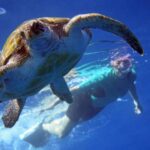
- Underwater wildlife: what you might see on your first days
- Gear and learning materials: included means less stress
- Price and value: is $724.41 a good deal?
- Who should book this course in Tenerife (and who should reconsider)
- Planning for flights and timing your travel
- Should you book the PADI Open Water Diver at Scubanana?
- FAQ
- What is the duration of the PADI Open Water Diver course in Tenerife?
- Is the course offered in English?
- How many travelers are in a group?
- What do I need to be eligible to enroll?
- Where does the course meet?
- Is there any guidance about flying after the course?
Key highlights worth your attention
- PADI Open Water Diver certification designed for beginners with no prior scuba experience required (age 10+)
- Small class size (max 8 travelers) so instructors can watch your comfort and technique closely
- Included gear and learning materials, so you can focus on the training instead of shopping first
- Surface briefings and repeated practice that help you master tasks step-by-step
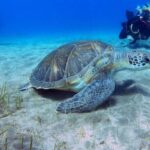
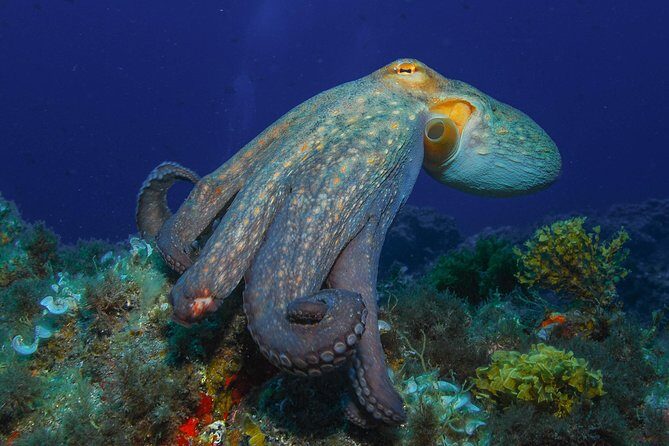
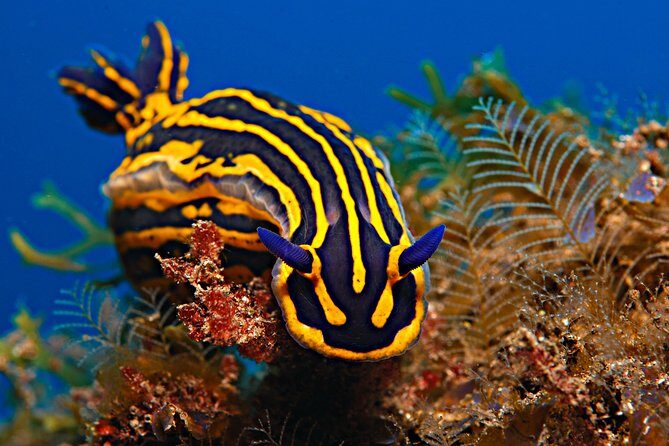
- High chance of seeing sea life early, from cuttlefish and trumpet fish to octopus sightings
- English instruction with staff who explain equipment and the physics in a way you can actually follow
Tenerife’s PADI Open Water Diver: why this is a solid first certification
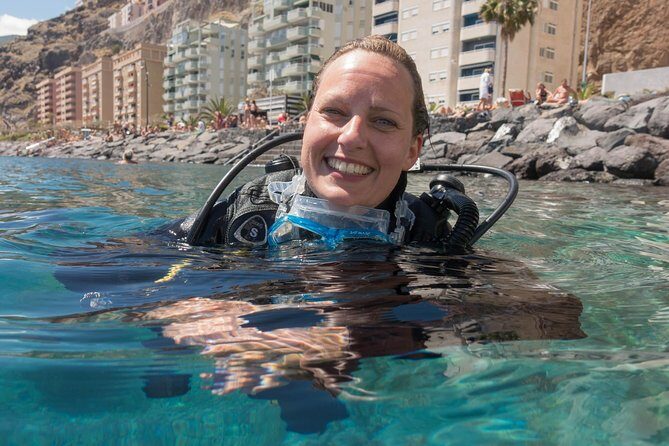
If you’ve wanted to get certified, the best first step is a course that feels structured, not chaotic. This Open Water Diver setup checks that box: it’s the PADI program, run by certified instruction, and it’s explicitly built for people starting from zero. That matters because your goal on day one is comfort and basics, not heroics.
Tenerife helps too. Even when you’re still learning control and breathing, you’re getting to see real underwater life instead of only thinking about it. Reviews mention trumpet fish, cuttlefish, starfish, octopus, barracuda, and dorada, which is exactly what you hope for when you sign up: you want the “this is why I’m here” moment while you’re still building skills.
And since the course is offered in English, you’re not stuck translating safety concepts in your head. Clear language isn’t a luxury in water training. It’s part of staying calm.
You can also read our reviews of more tours and experiences in Tenerife.
Scubanana in Radazul: the small-team vibe and gear-ready comfort
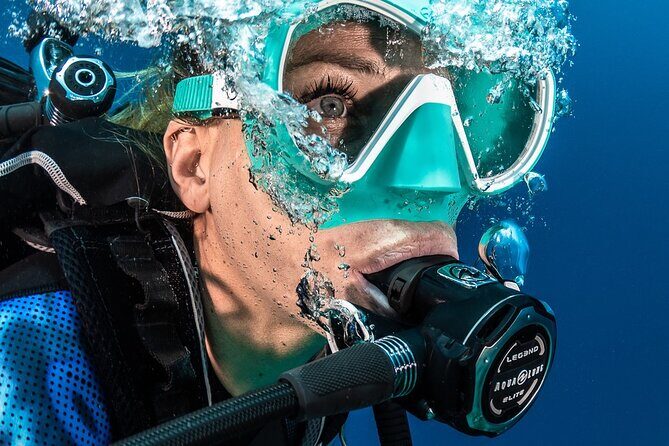
Your meeting point is at Scubanana in Puerto Deportivo, Av. Colón, nº1, Radazul (Santa Cruz de Tenerife). It’s also noted as near public transportation, which is useful if you’re staying somewhere else on the island and don’t want to guess on logistics.
This is a small group experience (maximum 8 travelers), and that shows up in how the course feels. In a bigger class, you can end up waiting, watching, and feeling behind. In a small one, you’re more likely to get the “quick fix” attention you need when something feels off—especially when you’re learning breathing routines and hand skills.
The shop side also sounds organized and clean. One review calls out tidy facilities and nice equipment, plus an atmosphere where instructors are working calmly. There’s even a fun extra: dogs hang around in the shop. It’s the kind of detail that turns a stressful new activity into something more human.
How the course actually runs over about 2.5 days
The total duration is listed as about 2 days 3 hours (approx.), and the overall summary frames it as a 2.5-day experience. You’ll spend time on land with the instructor team, then do repeated practice in the water.
What stands out is the alternation between learning and doing. One review notes theory and practice switching at a breakneck pace. That doesn’t automatically mean it’s “bad,” but it does mean you should plan to go in with energy and patience—because you’ll be asked to think and perform, not just watch.
Also, this isn’t “one chance and done” training. Multiple reviews describe exercises being repeated until they click, and instructors adjusting to your comfort level. If you’re the type who freezes during a new routine, that matters. You’ll want an instructor who can slow things down when your brain says no.
The skills you’ll practice (and why that matters for real comfort)
This is a beginner course, but it doesn’t pretend that learning scuba is simple. You will practice underwater tasks that feel unnatural at first—especially breathing and mask handling. One detailed review mentions being tense about taking off the mask underwater, switching air, and then inhaling underwater air. The key takeaway isn’t that it’s easy; it’s that the instructors are calm and guided through the exact steps until you’re comfortable.
Here’s why that training approach is valuable:
- You build muscle memory safely. If you learn the steps while supervised, your brain learns the sequence under stress, not later by guessing.
- You reduce fear with repetition. The more times you do the skill in a controlled way, the less it feels like a mystery.
- You learn how to handle mistakes. Good instruction doesn’t just teach success—it teaches what to do when something doesn’t feel right.
Instructors like Cedric and Sergio are specifically praised for staying calm and collected and guiding exercises repeatedly until they’re satisfactory. Marc is also highlighted for explaining things really well and making a student feel safe the whole time. If you’re worried about being watched while you’re learning, this is the kind of class that aims to keep you comfortable, not embarrassed.
Safety and confidence: the instructors’ teaching style
Safety is built into how the course is explained and coached. Reviews repeatedly point to instructors who:
- explain equipment and the physics clearly on the surface
- stay patient when you need to redo exercises
- keep the group feeling supported rather than rushed
One review even emphasizes instructors explaining in two different languages, which is a big deal if your English is strong but not perfect. In water training, small misunderstandings can snowball into panic. Clear explanation prevents that.
What I find smart is the focus on confidence as a skill. You’re not just learning a technique; you’re learning to stay calm while you learn it. That’s why so many comments mention feeling safe the whole time.
You’ll also see evidence of staff going beyond the minimum. For example, one student says the shop helped them do a first dive together after certification and even filmed it. That’s not required for certification, but it shows a team that cares about your experience, not just the checklist.


Underwater wildlife: what you might see on your first days
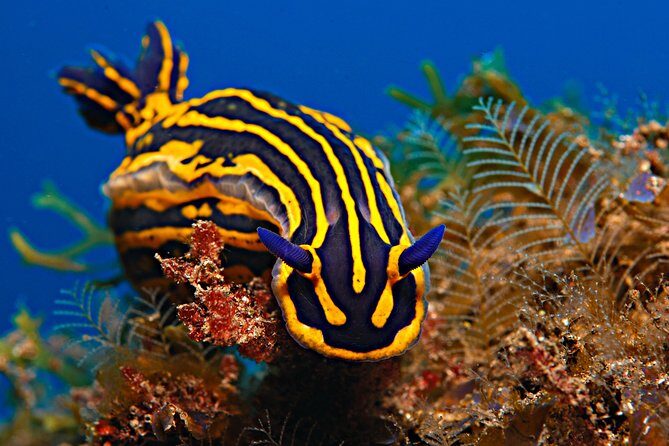
Even during training, Tenerife delivers. In multiple reviews, students mention seeing sea life almost immediately—before they’re even “experts.” That’s a morale booster, because it turns practice sessions into something you actually look forward to.
Common sightings mentioned include:
- trumpet fish
- cuttlefish
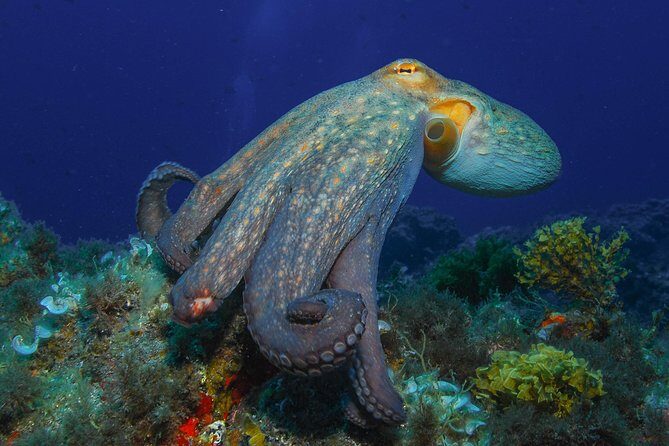
- octopus
- starfish
- barracuda
- dorada
- plus other colorful fish that people couldn’t name fast enough
One review calls out an octopus with a basketball-size head, which is exactly the kind of detail that makes you stop thinking about the gear and start paying attention to what’s around you. And that’s part of the value here: you’re learning a new physical skill, but you’re also seeing why the skill matters.
Gear and learning materials: included means less stress
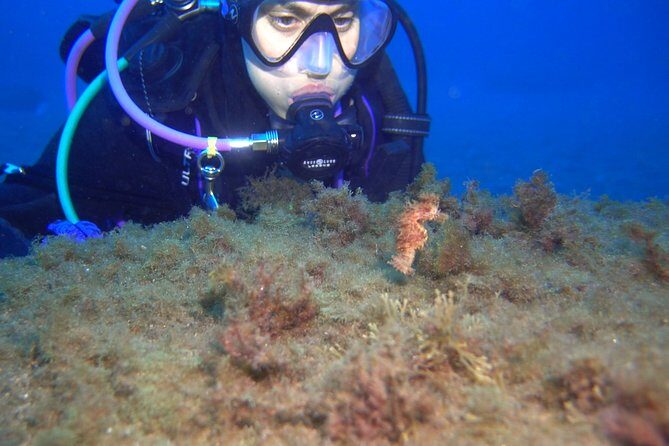
The course includes diving gear and learning materials. That sounds basic, but it’s actually a big deal for beginners. If you have to source and test your own equipment first, you lose time and peace of mind—and beginners can get stuck with poorly fitted gear.
With included gear, you can show up and get fitted correctly from the start. It also reduces the chance you’ll arrive with the wrong size or the wrong expectation.
Add on the note that the shop facilities are described as clean and well kept, and you get a training environment where you’re not worrying about whether the kit is ready. When your brain is new to underwater breathing, you want the rest of the system to feel reliable.
Price and value: is $724.41 a good deal?
The price is listed as $724.41 per person. For a certified Open Water Diver course, that’s the kind of cost that often feels like a commitment—especially if you’re unsure you’ll love it.
Here’s where the value comes from based on the details you’re getting:
- You’re earning a PADI Open Water Diver qualification that’s widely recognized.
- Gear and learning materials are included, which saves you money and setup hassle.
- The course is capped at max 8 travelers, so instructor attention is more likely to be distributed effectively.
- Instruction is in English, which reduces the risk of confusion during safety-critical teaching.
The biggest “value risk” isn’t the price. It’s fit. If you’re physically unprepared or mentally overwhelmed by mask handling and underwater breathing tasks, the course could feel harder than you expected. That’s why the requirement to be in good physical health and to have adequate swimming skills matters. If you’re unsure, you should check with a doctor first.
Who should book this course in Tenerife (and who should reconsider)
This experience is a good match if you:
- have no prior scuba experience
- want a clear beginner path with structured instruction
- prefer a small group rather than a crowded class
- want a certification you can use later for future courses and trips
It’s also helpful if you’re the kind of person who needs repetition. Multiple reviews describe exercises done once, then again, then again—until the student gets it right. Calm, patient instructors like Cedric, Sergio, Marc, Paulina, and Saskia show up in those stories.
You should be cautious if:
- you’re unsure about your ability to meet the physical requirements
- you get anxious about underwater mask handling
- you have upcoming travel where timing matters
And because the course includes underwater tasks, it’s not only about “being excited.” It’s about being able to follow instruction while you’re learning a new breathing rhythm.
Planning for flights and timing your travel
There’s a specific note: you should not do this kind of underwater activity within 12 hours before a flight. That means if your Tenerife plans include a same-day departure, you’ll need to schedule the course so you’re not cutting it too close.
Also, confirmation is received at the time of booking, so you can line things up without long waiting.
Should you book the PADI Open Water Diver at Scubanana?
I’d book this if your goal is a real beginner certification with patient coaching, included gear, and a small group. The instructor reputation is the clearest signal you’re getting value: calm teachers who explain well and repeat exercises until you’re confident is exactly what you need when the underwater skills feel strange at first.
I’d hesitate if you know you’re physically not ready, you can’t comfortably meet the swimming and health expectations, or you’re planning a flight too close to the end of training. In those cases, it’s better to adjust your schedule or talk to a doctor first.
If you want a first certification in Tenerife where you’re likely to see sea life quickly and you feel supported the whole way, this course looks like a strong bet. The combination of PADI structure, small-group size, and instructors described as calm and safety-first is the kind of setup that helps you go from uncertainty to surety—without turning your first underwater experience into a battle.
FAQ
What is the duration of the PADI Open Water Diver course in Tenerife?
It runs for about 2 days 3 hours (approx.), and the overall experience is described as 2.5 days.
Is the course offered in English?
Yes, the course is offered in English.
How many travelers are in a group?
The maximum group size is 8 travelers.
What do I need to be eligible to enroll?
You must be 10 years old or older. You also need adequate swimming skills and to be in good physical health.
Where does the course meet?
The start location is at Scubanana in Puerto Deportivo, Av. Colón, nº1, 38109 Radazul, Santa Cruz de Tenerife, Spain, and the activity ends back at the meeting point.
Is there any guidance about flying after the course?
You should not do underwater activity 12 hours before a flight, and you’ll also need to be physically in conditions to dive. If you’re unsure, you should check with a doctor first.