REVIEW · 1-DAY TOURS
La Gomera Day Trip from Tenerife
Book on Viator →Operated by Viajes Teide S.L. · Bookable on Viator
La Gomera in one long day. This day trip from Tenerife is built around the dramatic change you get when you swap basalt coasts for UNESCO green. I like that the trip gives you real structure—pickup, air-conditioned coach, ferry, guided stops—without turning the day into a frantic sprint.
Two things I really like: the Garajonay National Park stop (with its mossy, rainforest feel and mountain views) and the included lunch inside the national park area at La Laguna Grande. One thing to consider: you’re riding and listening for a long time, and the guide may deliver commentary across multiple languages, which can be exhausting if you want nonstop English clarity.
Key points I’d plan around
- Air-conditioned coach + fast ferry so you spend less time wrestling logistics.
- Garajonay National Park with planned free-time and a rainforest-style walk.
- Silbo whistling language demo, a very La Gomera kind of culture stop.
- Roque Agando (Morro de Agando): short but famous photo terrain.
- San Sebastián time to wander plazas tied to Christopher Columbus stories.
- Lunch included, with a vegetarian option available if you book ahead.
In This Review
- The ferry-and-bus setup that makes La Gomera doable
- Garajonay National Park and the La Laguna Grande lunch stop
- Roque Agando: a short stop with big “wow” payoff
- San Sebastián in a hurry: plazas, Columbus stories, and sea air
- Silbo whistling language: why it matters on a rugged island
- The guide experience: when multilingual narration helps and when it hurts
- Timing, walking, and comfort: how to enjoy the full 12 hours
- Price and value: is $125.82 a smart deal?
- Should you book the La Gomera day trip from Tenerife?
- FAQ
- How long is the La Gomera day trip from Tenerife?
- Where does the tour start, and what time do I need to be ready?
- What pickup areas are offered on Tenerife?
- Do I need a passport for this day trip?
- What’s included in the price?
- Is a vegetarian lunch option available?
- What is not included?
- What physical fitness level is required?
- How large is the group?
The ferry-and-bus setup that makes La Gomera doable
A trip like this works because it compresses a lot of island variety into one day without you needing to rent a car. You start early, with pickup in the south Tenerife area (places like Los Cristianos, Las Américas, Costa del Silencio, Puerto Santiago, Los Gigantes, and others nearby). The meeting point is listed as Los Cristianos, and the start time is 7:30 am.
Then comes the main rhythm of the day: coach across Tenerife, high-speed ferry to La Gomera, and another round of coach sightseeing once you land. The bus is air-conditioned, which matters because the day is long—about 12 hours on average—and you’ll be waiting your turn at stops and viewpoints. The tour caps at 55 people, so it’s not a giant cattle-car situation.
One more practical note: the operator reconfirms your exact pickup time and place by email, and the pickup point might be close to your hotel rather than exactly at your front door. I’d check your spam folder the day before, just so you don’t get stuck doing last-minute guesswork.
Garajonay National Park and the La Laguna Grande lunch stop
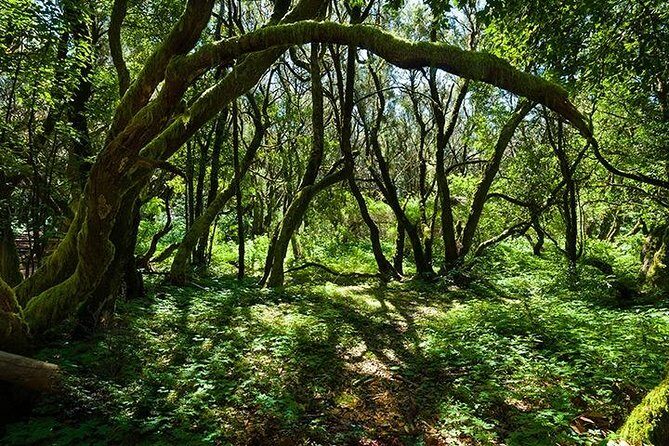
The heart of this day is Garajonay National Park, a UNESCO site that’s famous for its laurel-forest environment. You’ll pass banana plantations and steep terrain on the way in, then arrive ready for that different “green” feeling you don’t get everywhere in the Canaries. Expect views that feel misty and mountainous even when the weather is clear, because the area is known for that humid, mossy character.
Right before or during the national-park time, you stop at La Laguna Grande for lunch at a local restaurant. The schedule gives about an hour here, and it’s built around being inside the area so you don’t waste time commuting back out to a town. Admission details for the lunch stop are listed as free, which is nice because it keeps more of your spending focused on the parts that matter.
Lunch is included, and you can request a vegetarian option when booking. In real-world terms, this is the kind of meal arrangement that keeps the day moving: you’ll be fed and ready to walk, not stuck waiting around for a menu decision with everyone else. Based on what people have shared afterward, the quality tends to land in the “solid and filling” category rather than “Michelin star revelation,” which is exactly what you want on a day trip.
The park itself includes some walking through forest areas. Your physical fitness level should be moderate. If you’re dealing with mobility limits, you may want to think twice, because the experience isn’t just sitting at a view.
You can also read our reviews of more tours and experiences in Tenerife
Roque Agando: a short stop with big “wow” payoff
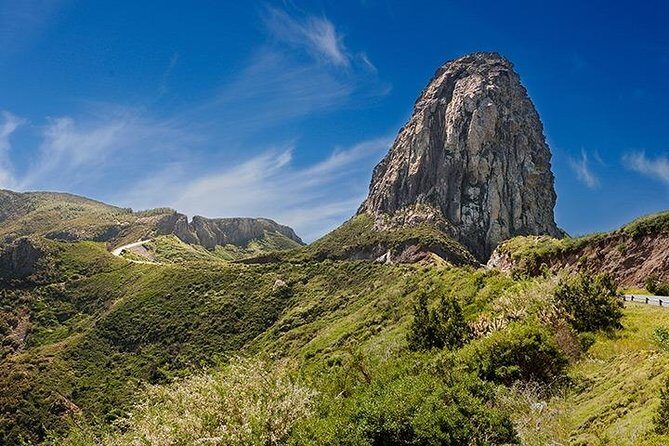
One of the most efficient parts of the day is the quick viewpoint segment: Morro de Agando and Roque Agando. The stop is brief—around 10 minutes—so don’t plan on a long wander. Plan on photos, quick orientation, and then moving on.
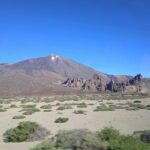
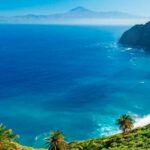
Roque Agando is the kind of landmark you remember even if you’re not a hardcore rock-formation person. It looks like a protruding mound rising from the island’s dramatic terrain, and the setting makes it feel even more sculptural. This is also where you’ll notice the island’s rugged geography shaping the road network and the way viewpoints are placed.
Because the timing is tight, I’d treat this as your chance to:
- take your pictures early (before the group tightens up),
- look for the best angle for your phone/camera,
- and then enjoy the view without waiting for extra time that won’t come.
If you want slow travel, this stop can feel like a teaser. If you like getting a lot of variety in a day, it’s a smart use of time.
San Sebastián in a hurry: plazas, Columbus stories, and sea air
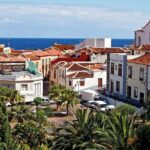
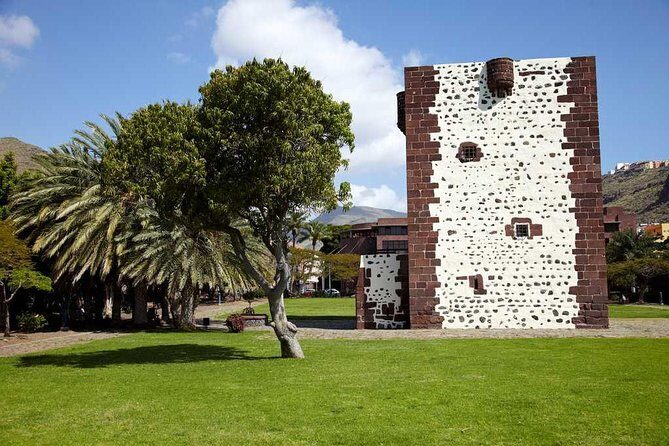
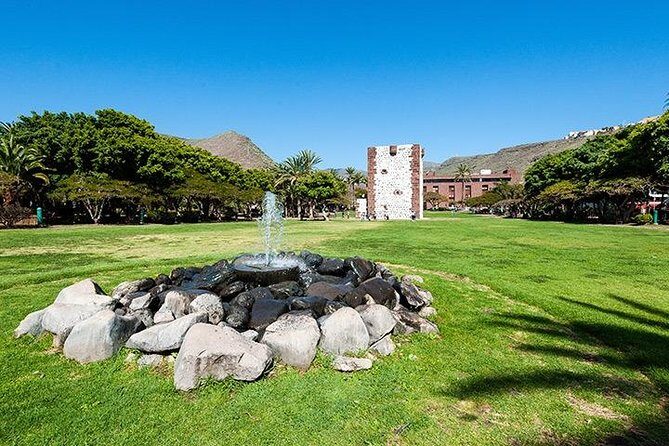
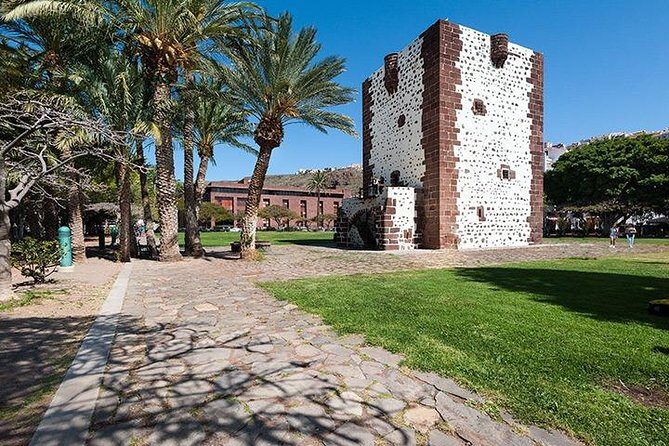
La Gomera’s capital, San Sebastián, is where the day gets a little more human-scale. You arrive after the ferry and get a guided introduction to the town—sun-dappled plazas, local atmosphere, and the city’s association with Christopher Columbus. Even if you don’t go deep into history, the point here is that San Sebastián gives you a taste of life on the island beyond viewpoints.
The tour includes time to explore on foot before returning. In practice, you should expect a short wander window rather than an all-day town stay. People often use the time for the harbour area and nearby streets, and it’s a good moment to reset after the coach.
What I like about including San Sebastián is the contrast. You start the day in motion and scenery, then get a break to actually look at buildings, street corners, and everyday island rhythm. If you’re the type who likes to mix “nature stops” with at least one town moment, this section does the job.
Tip: if you want a calmer walk, go early within the allotted time. The group often clusters right after the guide points you in the right direction.
Silbo whistling language: why it matters on a rugged island
One of the most distinctive elements of this tour is a performance of Silbo, the whistling language locals use to communicate across rough terrain. This isn’t a random “show” added to fill time. On an island carved by ravines and mountains, sound travels differently, and people developed a practical way to stay connected.
In the flow of the day, the Silbo moment gives you a cultural thread between all the scenery stops. It also breaks up the bus time with something you can watch, listen to, and understand as a response to geography—not just a spectacle.
If you’re sensitive to audio, a small consideration: during the day, you’ll be dealing with a guide’s voice in a bus setting. So if Silbo is important to you, watch for the moment when it’s delivered more directly in-person. On tours where commentary is spread across languages, the clearest parts are often the ones that happen face-to-face with fewer sound-system variables.
The guide experience: when multilingual narration helps and when it hurts
The tour is designed with language in mind, and that’s a double-edged sword. The listing says offered in English, but it also notes the guide may be multi-lingual, and in real-world operation that can mean commentary delivered across several languages.
Some guides have been singled out by name, including Teresa, Antonio, Marcel, and Jose (the bus driver in one standout case). When the guide is well-tuned and the sound system behaves, the multilingual format can be great because you get context beyond simple sightseeing facts.
When it doesn’t work for you, it can get tiring fast: long stretches of speech, audio hard to follow, or the guide’s cadence making English harder to catch. A few practical moves can help:
- Choose a seat where you’re closest to the guide when you’re on the coach.
- Don’t expect perfect listening for the entire ride; treat the bus narration as background, and rely on the visuals at the stops.
- If you’re traveling with someone who cares a lot about detail, pick a day where you both can handle a fast-paced, talk-heavy format.
Also, keep in mind that driving on La Gomera’s roads can be intense. People have praised bus drivers for handling narrow, winding routes with skill, and that’s a big part of why this tour feels “easy” despite the long day.


Timing, walking, and comfort: how to enjoy the full 12 hours
This is not a quick hit. It’s a full-day rhythm from morning pickup through ferry return and drop-off back at Tenerife. You should plan your day around it and avoid booking anything tight after you get back, because delays can happen with ferry schedules, group movement, and road conditions.
Comfort-wise, I’d dress for layers. Even if Tenerife is warm, La Gomera can feel cooler and breezier, especially around the park and viewpoints. Bring a light jacket or warmer layer, plus something comfortable for forest walking. The tour includes moderate physical demands, and you might be on foot more than you expect once you’re inside the park.
If you’re thinking about what to bring:
- comfortable walking shoes,
- a light layer for wind/cool air,
- sunglasses and sunscreen,
- and your passport (a valid one is required for travel that day).
Alcohol isn’t included, but water is usually part of the lunch setup. Still, bring a little extra awareness if you’re prone to getting thirsty during long coach segments.
Price and value: is $125.82 a smart deal?
At $125.82 per person, the key question isn’t whether you’re getting “cheap.” It’s whether the cost buys you the right bundles for one day: ferry + round-trip transport + professional guide + lunch.
You’re paying for four big things that are hard to DIY efficiently:
- Ferry crossing between Tenerife and La Gomera
- Bus transport across the island’s stop points
- A guide to connect the dots (history, geography, and the Silbo cultural piece)
- Lunch, which saves you time searching for a meal mid-journey
If you were to plan this on your own, you’d likely spend time juggling schedules, finding transportation for multiple viewpoints, and deciding where to eat—without the built-in flow. So even if some parts feel brief (like the Roque Agando photo stop), the overall value can still be strong because you’re buying time management more than “deep exploration.”
Where the price might feel less satisfying is if you want a very relaxed pace or you’re highly sensitive to multi-language narration. The day is built to cover several key features, and that means you don’t get to linger in every spot.
Also, alcohol isn’t part of the included cost (alcoholic drinks are listed as available to purchase), so if you tend to drink during long tours, your final cost can rise a bit.
Should you book the La Gomera day trip from Tenerife?
I think you should book this if you want an easy, guided way to see Garajonay National Park, learn about Silbo, and still get a dose of town life in San Sebastián—all without renting a car. It’s a particularly good choice for first-timers who want the headline experiences and a day that runs on a plan.
I’d hesitate if:
- you strongly dislike multi-language narration (because the bus portion can feel like nonstop speaking),
- you want slow, unstructured time in the park or town,
- or you have limited comfort with walking on uneven natural paths.
One last timing strategy: since these trips are often booked ahead (on average about 25 days), I’d lock it in sooner rather than later if you’re traveling during a busier window. And once you book, make sure you get that pickup email confirmation, then set your expectations for a long but well-paced day.
If you’re the type who enjoys nature with at least one cultural spark, this is a very workable way to experience La Gomera without turning the vacation into a logistical project.
FAQ
How long is the La Gomera day trip from Tenerife?
The tour runs about 12 hours (approx.).
Where does the tour start, and what time do I need to be ready?
It starts from the Los Cristianos area with a 7:30 am start time. Exact pickup time and pickup point are reconfirmed by email.
What pickup areas are offered on Tenerife?
Pickup is available in the south area of Tenerife, including places like El Médano, Golf del Sur, Costa del Silencio, Los Cristianos, Las Américas, Callao Salvaje, Playa Paraíso, Playa San Juan, Alcalá, Playa de la Arena, Puerto Santiago, and Los Gigantes.
Do I need a passport for this day trip?
Yes. A current valid passport is required on the day of travel.
What’s included in the price?
The tour includes a professional guide, hotel pickup and drop-off (selected hotels only), round-trip transportation with ferry, and lunch in a local restaurant inside the national park area.
Is a vegetarian lunch option available?
Yes. A vegetarian option is available if you advise at the time of booking.
What is not included?
Alcoholic drinks are not included (they are available to purchase). Airport/departure tax is also not included.
What physical fitness level is required?
The tour lists a moderate physical fitness level. You should be comfortable with walking in the park and at stop points.
How large is the group?
The tour has a maximum of 55 travelers.