
REVIEW · DRAGON TREE & BOTANICAL
Icod de los Vinos: Dragon Tree & Botanical Garden Ticket
Book on GetYourGuide →Operated by PARQUE DEL DRAGO · Bookable on GetYourGuide
One tree can change your pace. Here in Icod de los Vinos, you’ll stand before the drago milenario and then wander a park built around it. What makes this outing different is how quickly it turns into a slow, sensory walk—trees, resin stories, and plant zones you can take at your own speed.
I like two things a lot. First, the Dragon Tree itself: thick branches, leaves that resemble sharp swords, and famous blood-colored resin tied to Canarian aborigine beliefs and Roman-era worship. Second, the setting you explore afterward: a 3-hectare botanical garden with endemic plants and distinct areas like laurel forest and an orchard.
The one drawback to keep in mind is that this is mostly self-guided walking in parkland. It’s not a hands-on, big-attraction show, and it’s not suitable for wheelchair users.
In This Review
- Key things worth your time at Parque del Drago
- Meeting the drago milenario: what you’re really going for
- The park walk after the tree: how to pace your visit
- Botanical garden zones: laurel forest and orchard in one ticket
- The resin legend, connected to what you see
- Viewpoint break and a vending snack you don’t have to plan around
- Price and value: a low-cost ticket with enough time built in
- What to bring (and what can ruin the day)
- Who this ticket suits best in Icod de los Vinos
- Should you book the Dragon Tree & Botanical Garden Ticket?
- FAQ
- Where do I meet for the Icod de los Vinos Dragon Tree & Botanical Garden Ticket?
- How long is the ticket valid?
- What’s included with admission?
- Is there skip-the-line access?
- Is the experience suitable for wheelchair users?
- What should I bring?
- Are smoking or drones allowed?
- Can I get a refund if my plans change?
- What languages is the activity available in?
Key things worth your time at Parque del Drago

- The National Monument Dragon Tree: See the drago milenario up close and learn why its resin became a valued substance long ago.
- That sword-like leaf look: The thick branching form makes the tree feel almost sculptural, even before you read the details.
- A true 3-hectare stroll: You’re moving through park zones, not just standing at one spot.
- Laurel forest and orchard areas: Two different “moods” of vegetation in one visit, with plenty to look at while you walk.
- Endemic plants + local custom displays: The garden isn’t just decoration; it connects plants to place and culture.
- A simple break option: A viewpoint area plus a vending snack stop so you can slow down without leaving the park.
Meeting the drago milenario: what you’re really going for

This ticket centers on one star attraction: the Millennial Dragon Tree, called the drago milenario. It’s recognized as a national monument, and the reason it draws people from all over Spain (and beyond) is simple: it’s the oldest tree of its kind you’ll find, set here in dramatic, open parkland.
When you arrive, your entry starts at the main entrance using your voucher. You also get skip-the-line access through a separate entrance, which matters here because everyone ends up funneling toward the same focal point. The better the entry, the less time you spend waiting and the more time you can just look—at the shape, the branching, and the overall presence of an ancient tree.
What to notice first is the tree’s visual style. The branches are thick and the leaves have that sword-like look mentioned in the park’s description. That detail isn’t just a poetic line—it changes how you experience the tree in person, because it makes the plant feel sharper and more dramatic than typical garden trees.
Then there’s the resin story, and it’s a big part of the attraction. The tree’s fame comes from dense, blood-colored resin. Long before “tourist information panels,” that kind of material drew attention for practical and health-related reasons. The park description connects it to the Canarian aborigines and notes worship in Roman times. Even if you don’t hang on every historical claim, the idea is clear: this tree wasn’t only admired. It was treated like something valuable.
You can also read our reviews of more tours and experiences in Tenerife



The park walk after the tree: how to pace your visit
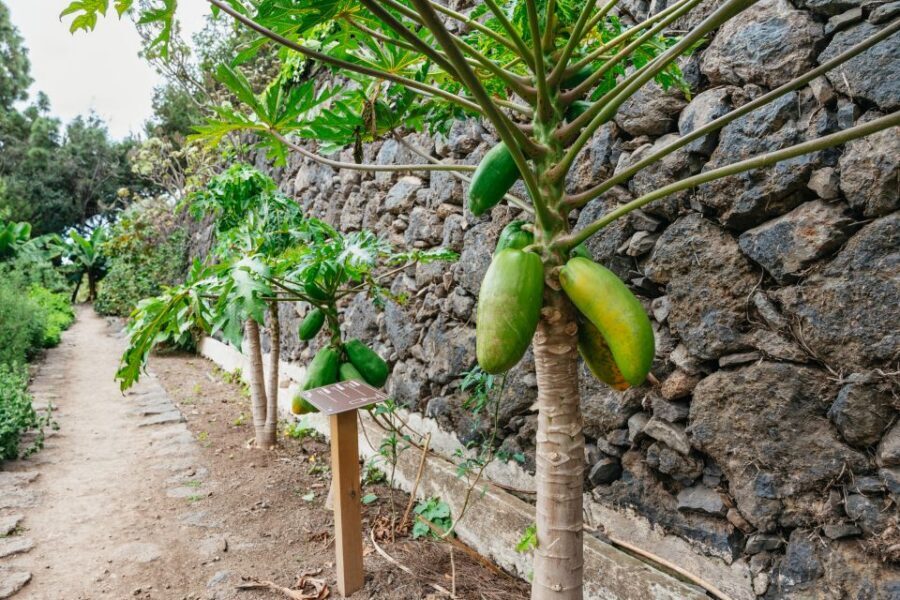
After you’ve taken your time at the monument, the rest of the ticket is about letting the park do its job. You don’t need to rush because the botanical garden is laid out for wandering at leisure. The ticket gives you full access to the botanical garden and entrance to park zones including laurel forests and an orchard, so you can choose what to linger over.
Think of this visit as two layers:
- Layer one: the dragon tree moment, where you slow down and look.
- Layer two: the botanical garden walk, where you slow down again and pay attention to plants and zones.
That approach is why this ticket is good value. For a low price, you’re not paying for transportation to multiple sites or for a long scripted experience. You’re paying for entry to a compact park where the main attraction is still the focus, but the garden adds time and variety.
In terms of pacing, wear comfortable shoes and plan for a stroll, not a quick photo run. There’s enough here to make a full 1-day window feel appropriate, especially if you like reading panels and walking slowly between plant areas.
Botanical garden zones: laurel forest and orchard in one ticket

The botanical garden covers 3 hectares, and it’s filled with endemic plant species. That word matters in a place like this: endemic plants are those adapted to local conditions and found naturally in that area. Even if you don’t know botany, you’ll usually spot the difference in the way the garden is organized—plants aren’t arranged randomly. They’re grouped and presented as part of an ecosystem you can actually sense while walking.
Two zones are called out clearly: laurel forests and an orchard.
Laurel forests (in the way this park presents them) are interesting because they often feel cooler and more shaded than open areas, even when the sun is strong elsewhere. In a garden setting, that translates to a different mood: more layered growth, more “green” depth, and more reasons to stop and look closely at leaves and branches.
Then you get the orchard. Orchards change the experience because you shift from forest-style growth to more structured cultivation. Instead of just admiring plants as a forest would, you’re seeing fruit-oriented planting patterns. Even if you’re not focused on harvesting or agriculture, an orchard area gives you something practical: a visual contrast that helps you feel like you’re moving through real zones rather than one continuous garden.
The park also includes displays about local customs. You don’t need to treat it like a museum. Use those displays like context. They help explain why the park’s story isn’t only about plants, but also about people and how local culture connected to nature.
The resin legend, connected to what you see

The dragon tree story includes a detail that’s easy to miss if you rush: the resin is described as dense and blood-colored. The park also frames it as something already worshiped in Roman times and considered a health benefactor.
Here’s why that matters to you on-site. If you go in with nothing but the idea of seeing an old tree, you might leave thinking, “Cool. Ancient tree.” If you go with the resin story in mind, your attention shifts. You start looking for evidence of the tree’s “famous material” and you understand why people would treat it as more than just decoration.
This is also where that Canarian aborigine angle makes the experience feel grounded. The dragon tree isn’t presented as an isolated curiosity. It’s part of the island’s cultural memory—sacred enough to be worshiped, significant enough to be associated with health and desired for all.
So yes, you’ll walk through a botanical garden. But the garden works like a setting for that main moment. The cultural layer turns the visit from pretty to memorable.
Viewpoint break and a vending snack you don’t have to plan around
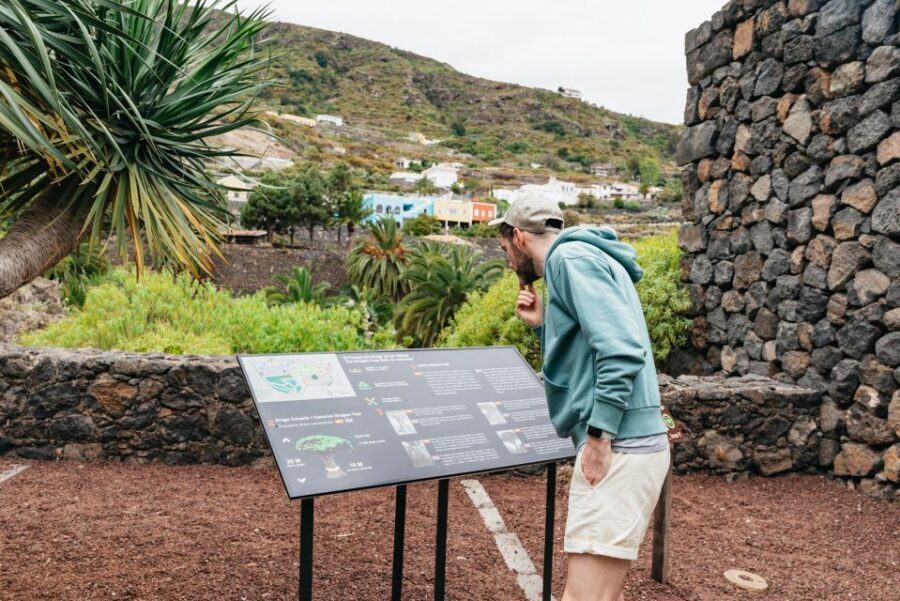
One of the nicest practical perks is the ability to take a break inside the park. There’s a viewpoint area designed for slowing down and enjoying the surroundings. If you’re traveling in warm conditions, that matters: you don’t want to be hunting for refreshments right after you’ve stared up at an ancient tree.
The park also has a vending area for snacks, so you can grab something without leaving the park grounds. It’s not a full restaurant, but that’s also part of the logic of the visit. This is a walk-and-look experience. Keeping food simple helps the day stay low-stress.
If you plan your time around that break, you’ll usually enjoy the experience more. Start with the dragon tree, walk the garden zones, then return for the viewpoint when you feel your feet slowing down.






Price and value: a low-cost ticket with enough time built in
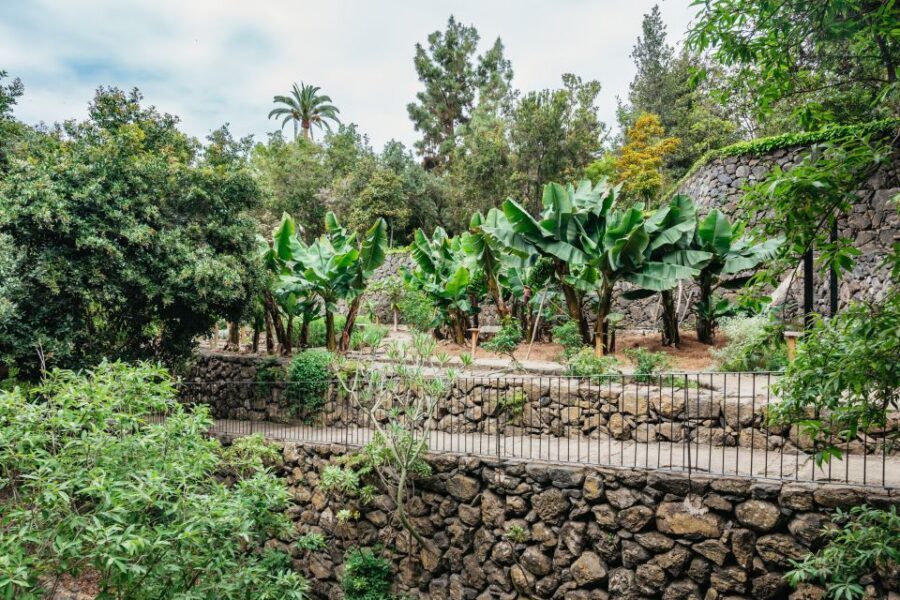
At $5 per person for a 1-day ticket, this is one of the more affordable “entry to a focused site” experiences you can book in Spain. The value isn’t only the price tag. It’s the mix: one national monument tree plus access to a 3-hectare botanical garden with multiple zones.
A $5 ticket works best when:
- the main attraction is strong enough to anchor your time (the dragon tree does), and
- the secondary experience adds real walking and variety (the laurel forest and orchard zones do).
If you want a full-day itinerary with lots of separate stops far apart, this might feel too compact. But if your goal is to see something truly unusual, then spend the rest of the time gently wandering plants and park areas, this ticket fits that style perfectly.
Also, skip-the-line entry can make a difference in perceived value. Even a short wait can eat into your best hours for looking. Here, you keep that time for yourself instead.
What to bring (and what can ruin the day)

This is a simple visit, but a couple of details can change your comfort level.
Bring:
- Comfortable shoes (you’re walking through park zones)
- Sunscreen (the walk can be sun-exposed)
Not allowed:
- Smoking
- Drones
Those rules are straightforward, but the shoes and sun advice are the ones I’d actually plan around. If you show up in sandals that aren’t supportive, you’ll feel it on the laurel forest and orchard sections. If you forget sunscreen, you’ll end up cutting your walk short just to recover.
Who this ticket suits best in Icod de los Vinos

This is a great fit if you like:
- seeing one major attraction up close and then spending time wandering at your own pace
- botanical gardens that feel tied to place rather than generic landscaping
- cultural context around natural features (the resin story and historical worship angle)
It’s less ideal if you need:
- step-free wheelchair access (this activity is not suitable for wheelchair users)
- a long, fully guided, lecture-heavy format (the experience is built around access and walking)
If you’re traveling with kids, it can work because the dragon tree visuals are memorable and the botanical garden gives space to roam. Just keep expectations realistic: this is still mainly a walk.
If you’re traveling solo, you’ll likely enjoy it more because you can pause whenever the tree, plants, or viewpoint catches your attention. The ticket format supports that kind of freedom.
Should you book the Dragon Tree & Botanical Garden Ticket?

Book it if you want a low-cost, high-impact experience built around an ancient, famous tree and a walk through a real botanical garden. You’ll get the core monument experience, plus enough garden zones—laurel forest and orchard—to make the day feel complete without being exhausting.
Skip it (or consider other options) if your priority is a long, multi-stop tour with lots of different attractions, or if you need wheelchair-friendly access. This one shines when you’re happy with a focused site, comfortable walking, and a slow look at something genuinely strange and old.
FAQ
Where do I meet for the Icod de los Vinos Dragon Tree & Botanical Garden Ticket?
Meet at the main entrance. Bring your voucher to enter.
How long is the ticket valid?
The ticket is valid for 1 day.
What’s included with admission?
Your ticket includes admission to the Drago Milenario, full access to the Botanical Garden, and entrance to all park zones including Laurel Forests and the Orchard.
Is there skip-the-line access?
Yes. You enter through a separate entrance for skip-the-line access.
Is the experience suitable for wheelchair users?
No. It is not suitable for wheelchair users.
What should I bring?
Bring comfortable shoes and sunscreen.
Are smoking or drones allowed?
No. Smoking and drones are not allowed.
Can I get a refund if my plans change?
Yes. Free cancellation is available up to 24 hours in advance for a full refund.
What languages is the activity available in?
The information lists cancellation details in multiple languages, but it does not specify a full language list beyond that note.