REVIEW · TENERIFE
Eco Adapted Diving in Tenerife
Book on Viator →Operated by Atlantic Eco Experience · Bookable on Viator
A first scuba try in Tenerife can feel like science class in the best way. I liked how this is built for comfort, with an adapted boat and a one-on-one instructor approach that keeps things calm.
Two things I especially enjoyed: the species-focused coaching (so you’re not just floating and hoping for fish), and the way the team blends safety, natural history, and respect for marine life. One thing to consider up front: this experience depends on good weather, so conditions can affect what’s possible on the day.
In This Review
- Key things to know before you go
- Why Tenerife’s Southwest Waters Make This First Time Feel Manageable
- Getting Started at Av. de Colón and Boarding the Jacaré
- The Safety Briefing: Where David and Eugenio Set the Tone
- Your Underwater Baptism: Depth, Control, and Comfort
- Species Spotting and Taking Data Without Feeling Like a Scientist
- Eco Projects: Why Contributing On-Site Feels Better Than Souvenirs
- Price and Value: What $144.70 Buys You in Real Terms
- Group Size, Weather, and What Might Affect Your Day
- Who Should Book This Underwater Baptism in Tenerife
- Should You Book Eco-Adapted Underwater Baptism in Tenerife?
- FAQ
- FAQ
- Where does the experience start?
- How long is the experience?
- What boat will you use?
- How deep do you go?
- Is there an instructor, or is it a group activity?
- How big is the group?
- What should I expect on the day?
- Is good weather required?
- Will I need a paper ticket?
- Can service animals go on the tour?
- How soon do I get confirmation after booking?
Key things to know before you go
- Adapted boat comfort for people who want an easier, more supportive setup on the water
- Instructor just for you during the whole underwater session, not a rushed group shuffle
- Southwest Tenerife conditions where coastal waters are typically more sheltered from wind and strong currents
- Depth range of 2 to 8 meters geared to recreational comfort and first-timer control
- Eco projects and data collection so you help with observations, not just sightseeing
- Max 10 people for a smaller, more personal feel
Why Tenerife’s Southwest Waters Make This First Time Feel Manageable
Tenerife’s south west coast is a smart place for a first underwater baptism. The water here is often sheltered from the stronger stuff you can get elsewhere, like wind chop and faster currents. That matters because your biggest job at first is staying relaxed, equalizing comfortably, and following cues. When the sea cooperates, you spend more time learning and less time bracing yourself.
What I like about this setup is that it’s clearly aimed at “recreational diving baptism” vibes, not a sporty endurance challenge. You’re between 2 and 8 meters, so the goal is to build confidence, get your buoyancy basics sorted, and start noticing the living things around you. If you’re hoping to see marine life without feeling like you’re fighting the environment, this location choice helps.
Also, the experience is designed for people at all levels. That doesn’t mean you’ll never get challenged. It means the team expects different starting points and builds the session around what you can do, what you need, and how you respond in the water.
You can also read our reviews of more tours and experiences in Tenerife.
Getting Started at Av. de Colón and Boarding the Jacaré
The experience starts at Av. de Colón, 4, 38660 Costa Adeje, on Tenerife’s south side. That’s a useful starting point if you’re already staying in the Costa Adeje area. The activity also ends back at the meeting point, so you’re not stuck figuring out transport at the end while tired and damp.
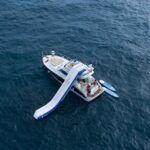
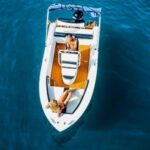
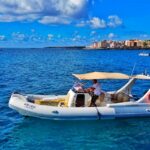
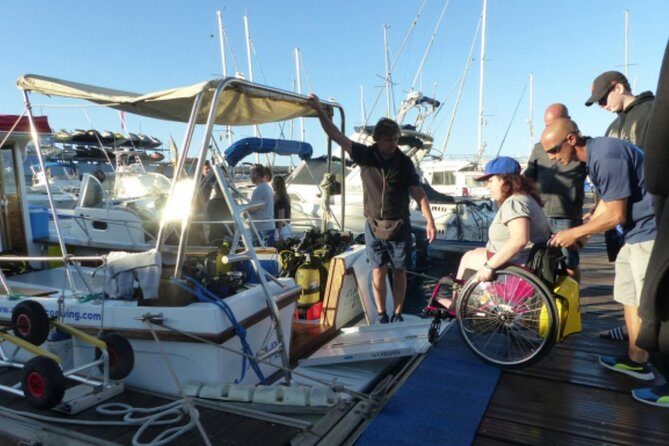
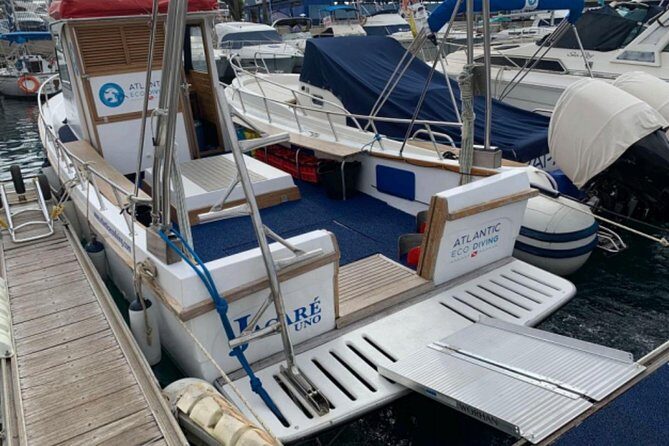
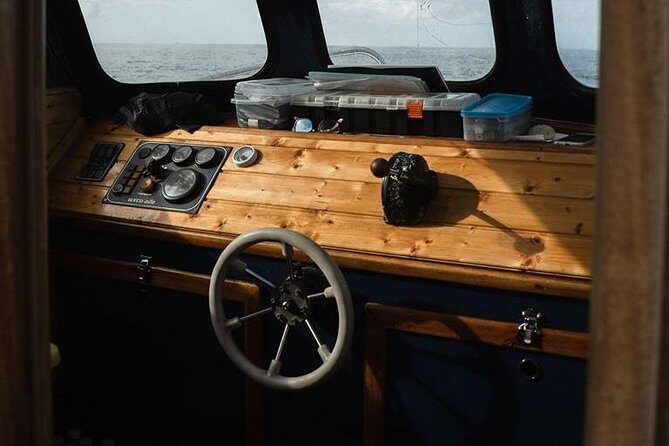
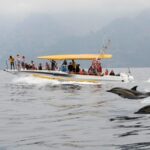
From there, you head to Puerto Colón on the southwest coast. The boat is named Jacaré, and it’s described as properly equipped for this kind of adapted underwater experience. This is one of those details that matters more than it sounds. A comfortable boat setup affects the whole mood of the day. If loading and getting stable is easier, you’re more likely to show up feeling ready instead of nervous.
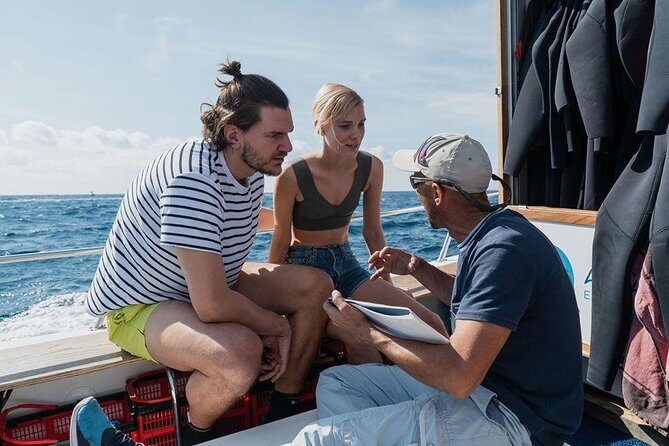
Once you’re on board, the session begins with a briefing. The team gives the safety talk and also frames the underwater part with natural history context—what you might see and how to look for it. I find that helps a lot. If you go in with no clue what you’re seeing, it can turn into a blur. If you go in with a few targets, your brain stays engaged and you spot more.
The Safety Briefing: Where David and Eugenio Set the Tone
In an underwater baptism, safety instructions aren’t just formalities. They set the pace. Here, the briefing is detailed, and the coaching style comes through in the feedback: people mention clear explanations and strong English, and they also highlight a mindset focused on respect for the ocean.
Two names pop up in the trip feedback: David and Eugenio. Both are described as professional, and the overall vibe is that you’re taught rather than thrown in. That’s exactly what you want for a first time underwater.
Here’s what you should expect in practice from the way they run the session:
- You’ll get specific safety guidance before water time
- You’ll learn how the team expects you to behave underwater so it stays calm
- You’ll get context about the marine environment you’re approaching
- You’ll be supported throughout, because the instructor stays with you during the entire dive session
One-on-one instruction is a big deal. A lot of “intro” experiences still mean an instructor bouncing between participants. This one is built differently: you’ll have an instructor just for you for the duration of the underwater part. That reduces confusion and gives you time to ask small questions that can otherwise snowball into anxiety.
Your Underwater Baptism: Depth, Control, and Comfort
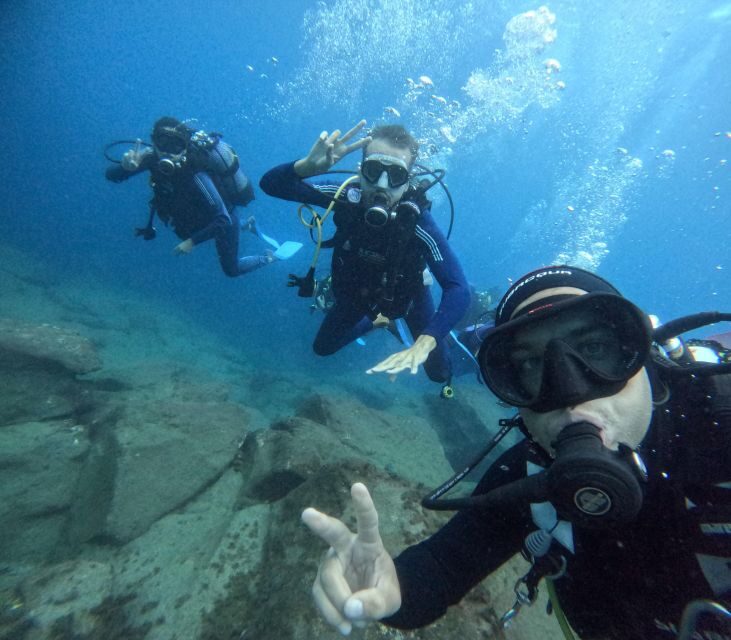
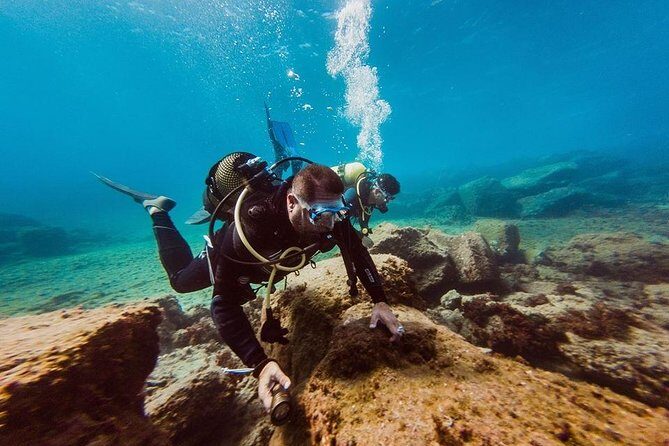
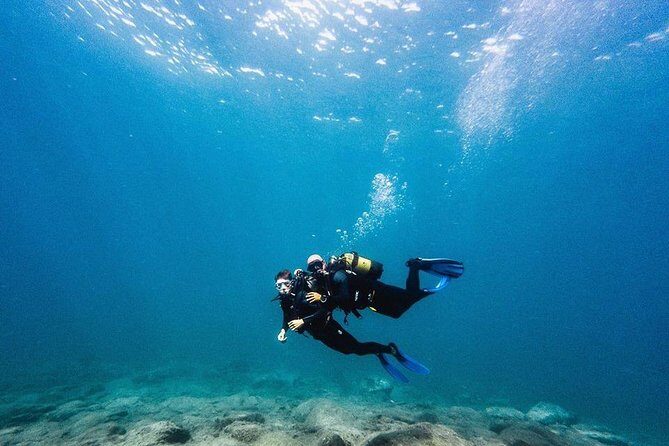
The underwater portion is planned for 2 to 8 meters. That range is often ideal for first-time scuba experiences because it’s shallow enough to feel in control while still offering real underwater viewing. You’re not just looking at the surface. You’re in the habitat.
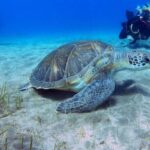
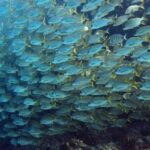
The focus is not only on breathing techniques and basic positioning. The goal is also to help you identify the species of fish and invertebrates around the bay. That’s where the experience becomes more than a bucket-list moment. You’re learning what the ocean is showing you.
You’ll also be encouraged to collaborate by taking part in data collection for the environmental projects the team runs. In other words, you’re not a passive passenger. You’re an observer contributing to what the team is studying.
One practical thing to keep in mind: if you’re expecting the same depth every single time, you might be surprised. The tour states a 2 to 8 meter range, but one piece of feedback mentions being taken around 10 meters. The most sensible takeaway is this: depth can vary depending on conditions and your comfort level. If you’re booking because you’re very depth-specific, ask what range they expect on the day.
Also, since this is described as eco-adapted and supported by an adapted boat, the session is built to help people dive comfortably. That doesn’t automatically mean it’s effortless for everyone, but it usually means they account for real-world needs, not just standard fitness requirements.
Species Spotting and Taking Data Without Feeling Like a Scientist
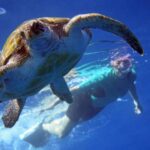
Here’s the cool part: the experience is designed to blend your first underwater scuba attempt with real marine appreciation. You’re guided to support identify and take data on emblematic species in the bay. That means the team is thinking about learning goals, not just whether you can make it down safely.
What you’re likely to do during the session (based on how it’s described) includes:
- Learning what marine life to look for
- Practicing calm observation while following instructor cues
- Participating in data collection efforts as you see species
- Getting feedback so you understand what you’re doing and why it matters
If you’ve ever done an activity where you’re handed a camera and told to hope for the best, you’ll appreciate the difference here. You’re being taught how to look. That makes the underwater time feel longer and more rewarding, even if the session is short.
And since the underwater water is sheltered in this area, you’re more likely to enjoy the process instead of constantly wrestling the elements. That matters for first timers, and it also helps you retain what you’re learning.

Eco Projects: Why Contributing On-Site Feels Better Than Souvenirs
This experience isn’t sold as a “just for fun” swim with no follow-up. The team explicitly mentions environmental projects and data collection as part of your participation. That changes your role in a subtle way.
Instead of buying a memory magnet, you become part of the observation effort. Even if you’re just helping with basic data gathering, it gives the experience meaning beyond the photo moment. You’re also more likely to go home thinking about the local marine environment, because the coaching is aimed at recognition and respect.
This also fits Tenerife well. The island has a lot of marine life, and the sheltered bay conditions make it practical for recreational underwater sessions. The eco angle works best when the experience helps you slow down and notice what’s around you, and that’s exactly what the structure supports.
Price and Value: What $144.70 Buys You in Real Terms
The price is listed at $144.70 per person for about 3 hours. On paper, that can look like a standard intro cost. In value terms, the real question is: what’s included that makes it worth it?
Here are the value drivers that stand out:
- Small group size: maximum 10 travelers means less crowd pressure and more attention
- Instructor dedicated to you during the underwater session, which is rare at many intro levels
- Adapted boat so you’re set up for comfort from the start
- Species ID + data collection, so you’re learning, not just spectating
- A structured briefing on safety and natural history, which usually leads to fewer mistakes in-water
For me, the strongest value is the instruction ratio plus the learning focus. If you care about doing a first scuba baptism correctly—calmly, safely, and with real observation—this seems aimed right at that.
If you’re simply looking for the cheapest way to see fish for a quick moment, there may be cheaper options on the island. But if you want an experience that teaches you to actually recognize what you see, the price starts to make sense.
Group Size, Weather, and What Might Affect Your Day
This is generally built to be smooth, but a few realities are worth planning around.
Weather matters. The activity requires good weather, and if it’s canceled due to poor conditions, you’ll be offered a different date or a full refund. That’s standard for ocean activities, but it affects how you schedule your trip.
Also, remember that underwater conditions can affect depth, timing, and what you can safely do. The experience is planned for 2 to 8 meters, but day-of adjustments can happen. The best way to stay relaxed is to treat this as a guided learning session, not a rigid checklist.
Who Should Book This Underwater Baptism in Tenerife
This experience fits best if you:
- Want your first underwater scuba session to be guided, not chaotic
- Like the idea of learning species and contributing to eco data
- Appreciate small group settings with a low-pressure atmosphere
- Want a calmer coastal environment where conditions are typically more sheltered
It may not be the best match if you want a very long underwater time or a very extreme depth profile. The goal here is comfort, safety, and learning at shallow to mid depth ranges.
If you have mobility or comfort needs, the adapted boat setup is a big plus. And if English clarity is important to you, one review specifically notes a strong English level and clear explanations.
Should You Book Eco-Adapted Underwater Baptism in Tenerife?
I think it’s worth booking if you want your Tenerife ocean time to feel guided and meaningful. The combination of an adapted boat, a dedicated instructor, and a species-focused approach is the kind of recipe that turns a first attempt into a real skill-building memory.
Also, the fact that the team includes eco data participation means you leave with more than photos. You leave knowing what to look for next time.
Before you book, I’d only double-check one thing in your own planning: build flexibility for weather. If you’re the type who hates schedule changes, pick a date with some breathing room.
FAQ
FAQ
Where does the experience start?
It starts at Av. de Colón, 4, 38660 Costa Adeje, Santa Cruz de Tenerife, Spain, and it ends back at the same meeting point.
How long is the experience?
The duration is about 3 hours.
What boat will you use?
You board the Jacaré, a perfectly equipped boat for the first underwater experience.
How deep do you go?
The plan is for a depth between 2 and 8 meters.
Is there an instructor, or is it a group activity?
There is an instructor just for you during the entire underwater session.
How big is the group?
The maximum group size is 10 travelers.
What should I expect on the day?
You’ll get a detailed briefing on diving safety and on the natural history of the species around you before the underwater part.
Is good weather required?
Yes. The activity requires good weather, and if it’s canceled due to poor weather, you’ll be offered a different date or a full refund.
Will I need a paper ticket?
No. The experience includes a mobile ticket.
Can service animals go on the tour?
Yes, service animals are allowed.
How soon do I get confirmation after booking?
Confirmation is received within 48 hours of booking, subject to availability.